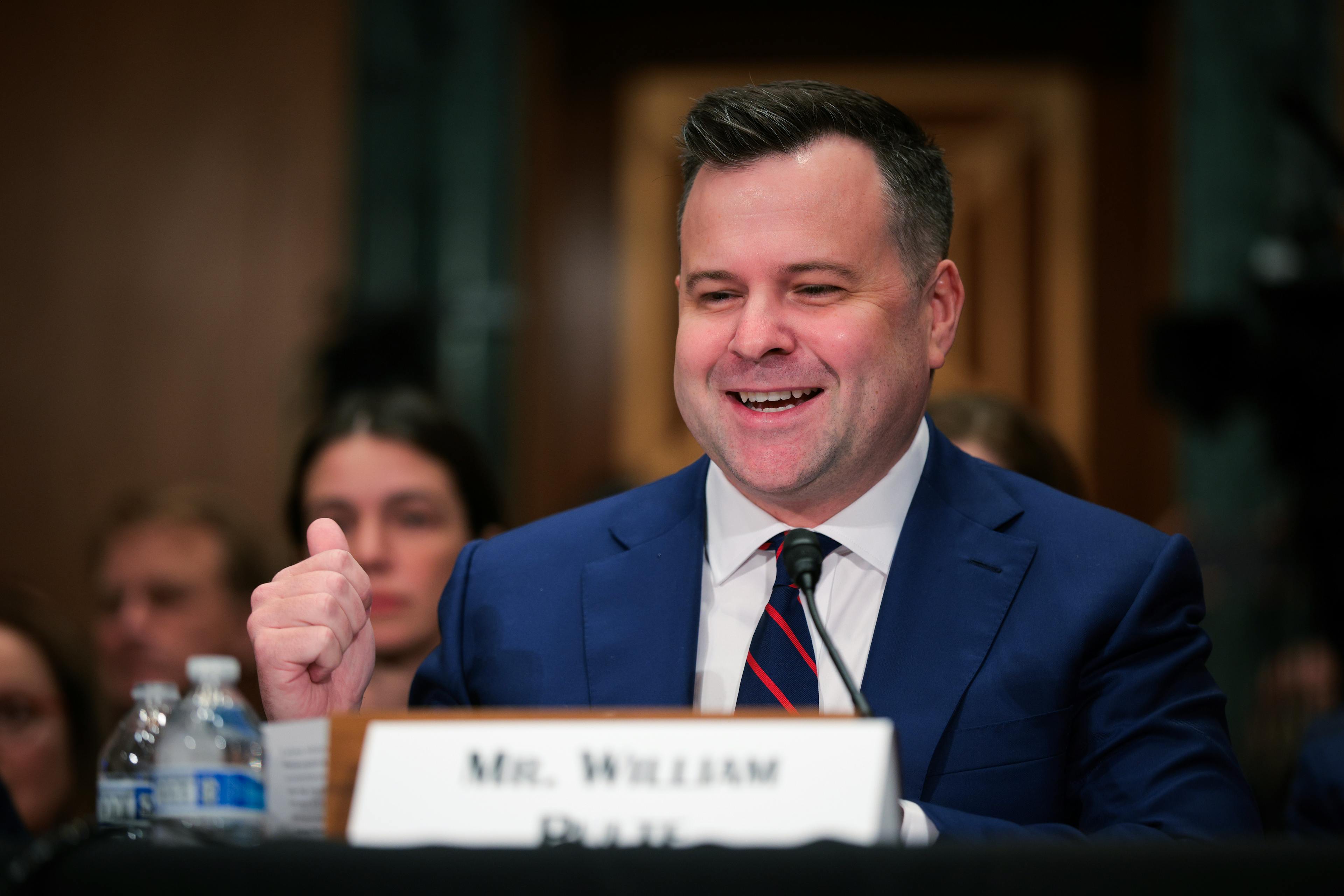
What it means that FHFA has ordered Fannie and Freddie to “count cryptocurrency” for home loans
The director of the Federal Housing Finance Agency ordered the mortgage giants to prepare a proposal on the matter.
William Pulte, the director of the Federal Housing Finance Agency, instructed mortgage heavyweights Fannie Mae and Freddie Mac to prepare a proposal for their businesses to include cryptocurrency as an asset for a home mortgage “without conversion of said cryptocurrency to U.S. dollars,” the order stated.
Fannie Mae and Freddie Mac, government-sponsored mortgage companies that provide liquidity to the mortgage market, guarantee the majority of the 51 million mortgages in the US.
Pulte’s order is a stark contrast from Fannie Mae’s 2025 Selling Guide, which states “virtual currency may not be used for the deposit on the sales contract (earnest money) for the purchase of the subject property.”
Move could change home ownership
“This is a really revolutionary moment that’s going to change home ownership forever,” according to Jason Brett, a former Federal Deposit Insurance Corporation regulator who also worked the treasury on the Home Affordable Modification Program.
Members of Gen Z, who have a higher inclination to hold cryptocurrencies compared to previous generations, have been dismayed about home affordability, but the order could allow them to leverage their crypto to get a single-family mortgage loan, Brett told Sherwood News.
Yaël Ossowski, deputy director at the Consumer Choice Center and a fellow at the Bitcoin Policy Institute, told Sherwood that the order is a massive signal to entrepreneurs, lenders, and potential homebuyers that cryptocurrency assets can act as “an explicit entry point in the mortgage finance industry.”
Ossowski continued, “This reform simply recognizes the thriving and revolutionary potential of bitcoin and crypto assets, unlocking the potential of home ownership for millions of American savers, investors, and technology enthusiasts.”
He expects that the order will set guidelines for the rest of the industry, with Brett arguing that private loan providers will follow Freddie and Fannie’s lead and start allowing cryptocurrency assets in their loan assessments.
The time frame is “probably” about a year away, as it’s a first step in a long process, Brett said, which includes the loan giants learning more about how to measure the risks in the asset class.
Austin Campbell, adjunct professor at NYU Stern School of Business and founder of Zero Knowledge Consulting, told Sherwood, “If done well, this is likely a good thing… The question will be implementation. Like all volatile assets, there should be haircuts.”
He continued, “If I’m trying to assess creditworthiness based on ability and willingness to pay, an asset with 60%-plus drawdowns needs a haircut — as in, if you value cash at 100% of the amount, you might value BTC at 50% of the amount.”
Bitcoin, which is the largest crypto by market cap at over $2 trillion, has experienced many substantial drops in price. For example, in 2021, the cryptocurrency was trading near the $69,000 mark before falling below $17,000 in 2022.
Self-custodied crypto not included
The order also directs Fannie Mae and Freddie Mac “to consider only cryptocurrency assets that can be evidenced and stored on a U.S.-regulated centralized exchange.”
Nick Neuman, the CEO and cofounder of self-custody provider Casa, took issue with this element. He told Sherwood that this “is a mistake because self-custody is fundamentally about property rights. And property rights are a core American value.”
“It’s easy to think that only assets held on exchange can be verified as actually owned by the individual. But thanks to cryptography, it’s trivial to verify that assets held in self-custody are owned by a given individual,” Neuman said. “I hope we can help the FHFA and Director Pulte understand that people holding their own keys is the future of asset security, and the US can continue to be forward-thinking by recognizing that right in its regulatory framework.”