Crypto
Bitcoin counter
(Lam Yik Fei/Getty Images)
when bad is good

Grayscale: Tariffs and inflation could be good for bitcoin

“Tariffs are a shock to equities, not bitcoin.”

Tariffs and inflation are not bad for everything, according to a Grayscale report that argues both can actually be beneficial for bitcoin. As the manager of one of the biggest bitcoin ETFs, Grayscale Bitcoin Trust ETF certainly has skin in the game, but the report found some interesting data points to support its thesis.

Grayscale head of research and the report’s principal author, Zach Pandl, wrote that bitcoin’s drawdown is less than one-third of what might be expected given the decline in equity markets and bitcoin’s typically higher volatility (though it has moved in step with equities this week).

Grayscale analysts argue that while the price dropped since the reciprocal tariffs announcement on April 2, “trade tensions will ultimately be positive for bitcoin adoption over the medium term.​​​​‌‍​‍​‍‌‍‌​‍‌‍‍‌‌‍‌‌‍‍‌‌‍‍​‍​‍​‍‍​‍​‍‌​‌‍​‌‌‍‍‌‍‍‌‌‌​‌‍‌​‍‍‌‍‍‌‌‍​‍​‍​‍​​‍​‍‌‍‍​‌​‍‌‍‌‌‌‍‌‍​‍​‍​‍‍​‍​‍‌‍‍​‌‌​‌‌​‌​​‌​​‍‍​‍​‍‌​‌‌​‌‌‌‌‍‌​‌‍‍‌‌‍​‍‍‌‍‌‌​‍‌‍​‌‌‍‌‌​‌‍​‌‍​‌‌‍​‌‍‌‌​‍‍‌‍​‌‍‌‍‌​‍‌‍‍‌‌‍‍‌‌​‌‍‌‌‌‍‍‌‌​​‍‌‍‌‌‌‍‌​‌‍‍‌‌‌​​‍‌‍‌‌‍‌‍‌​‌‍‌‌​‌‌​​‌​‍‌‍‌‌‌​‌‍‌‌‌‍‍‌‌​‌‍​‌‌‌​‌‍‍‌‌‍‌‍‍​‍‌‍‍‌‌‍‌​​‌‌‍‌‌​‌‍​​​‌‍‌​​​‌​‌​‌‍‌​‌‍​‌​‍‌​‌​​​‍​​​​‍‌​‍‌​‌​‌‍​‍‌‍​‍​‍​​‍‌​‍‌​‌‌​​‌​‌​‍‌‌‍​‍‌‍‌‍‌‍‌‌​​​​‍‌‍​‌‍​‌​‌‍‌‍‌‌‌‍​​​​‌‍‌‍​‍‌‌​‌‍‌‌​​‌‍‌‌​‌‌‍​‌‌​‍‌‌​‌‍‍‌‌‍​‌‍​‌‍‌‌​‍‌​​‌‍​‌‌‌​‌‍‍​​‌‌‍​‌‌​‍‌‌​‌‍‍‌‌‍​‌‍​‌‍‌‌‌​​‍‌‍‌‍‌​‌‍‌​‍‌‌​‌‌‌​​‍‌‌‌‍‍‌‍‌‌‌‍‌​‍‌‌​​‌​‌​​‍‌‌​​‌​‌​​‍‌‌​​‍​​‍​​​‍​​​‌‌‍​‍‌‍​‌‍​​​‍​‌‍‌‍‌‍‌‍​​​‍‌‍​‌​‍‌‌​​‍​​‍​‍‌‌​‌‌‌​‌​​‍‍‌‍​‌‍‍​‌‍‍‌‌‍​‌‍‌​‌​‍‌‍‌‌‌‍‍​‍‌‌​‌‌‌​​‍‌‌‌‍‍‌‍‌‌‌‍‌​‍‌‌​​‌​‌​​‍‌‌​​‌​‌​​‍‌‌​​‍​​‍‌‍‌‌​‌‌‌‍​‍​​​​​​​​‌‍​‌‌‍‌​​‌​​​‌​​‍​‌​​‍‌‌​​‍​​‍​‍‌‌​‌‌‌​‌​​‍‍‌‌​‌‍‌‌‌‍​‌‌​​‌‍​‍‌‍​‌‌​‌‍‌‌‌‌‌‌‌​‍‌‍​​‌‌‍‍​‌‌​‌‌​‌​​‌​​‍‌‌​​‌​​‌​‍‌‌​​‍‌​‌‍​‍‌‌​​‍‌​‌‍‌​‌‌​‌‌‌‌‍‌​‌‍‍‌‌‍​‍‍‌‍‌‌​‍‌‍​‌‌‍‌‌​‌‍​‌‍​‌‌‍​‌‍‌‌​‍‍‌‍​‌‍‌‍‌​‍‌‍‌‍‍‌‌‍‌​​‌‌‍‌‌​‌‍​​​‌‍‌​​​‌​‌​‌‍‌​‌‍​‌​‍‌​‌​​​‍​​​​‍‌​‍‌​‌​‌‍​‍‌‍​‍​‍​​‍‌​‍‌​‌‌​​‌​‌​‍‌‌‍​‍‌‍‌‍‌‍‌‌​​​​‍‌‍​‌‍​‌​‌‍‌‍‌‌‌‍​​​​‌‍‌‍​‍‌‍‌‌​‌‍‌‌​​‌‍‌‌​‌‌‍​‌‌​‍‌‌​‌‍‍‌‌‍​‌‍​‌‍‌‌​‍‌‍‌​​‌‍​‌‌‌​‌‍‍​​‌‌‍​‌‌​‍‌‌​‌‍‍‌‌‍​‌‍​‌‍‌‌‌​​‍‌‍‌‍‌​‌‍‌​‍‌‌​‌‌‌​​‍‌‌‌‍‍‌‍‌‌‌‍‌​‍‌‌​​‌​‌​​‍‌‌​​‌​‌​​‍‌‌​​‍​​‍​​​‍​​​‌‌‍​‍‌‍​‌‍​​​‍​‌‍‌‍‌‍‌‍​​​‍‌‍​‌​‍‌‌​​‍​​‍​‍‌‌​‌‌‌​‌​​‍‍‌‍​‌‍‍​‌‍‍‌‌‍​‌‍‌​‌​‍‌‍‌‌‌‍‍​‍‌‌​‌‌‌​​‍‌‌‌‍‍‌‍‌‌‌‍‌​‍‌‌​​‌​‌​​‍‌‌​​‌​‌​​‍‌‌​​‍​​‍‌‍‌‌​‌‌‌‍​‍​​​​​​​​‌‍​‌‌‍‌​​‌​​​‌​​‍​‌​​‍‌‌​​‍​​‍​‍‌‌​‌‌‌​‌​​‍‍‌‌​‌‍‌‌‌‍​‌‌​​‍‌‍‌​​‌‍‌‌‌​‍‌​‌​​‌‍‌‌‌‍​‌‌​‌‍‍‌‌‌‍‌‍‌‌​‌‌​​‌‌‌‌‍​‍‌‍​‌‍‍‌‌​‌‍‍​‌‍‌‌‌‍‌​​‍​‍‌‌” 

“Tariffs are a shock to equities, not bitcoin: the VIX is now at a level comparable to bitcoin option-implied volatility,” Pandl said. “In a nutshell, bitcoin’s price is down, but our conviction in its medium-term outlook has never been higher.” 
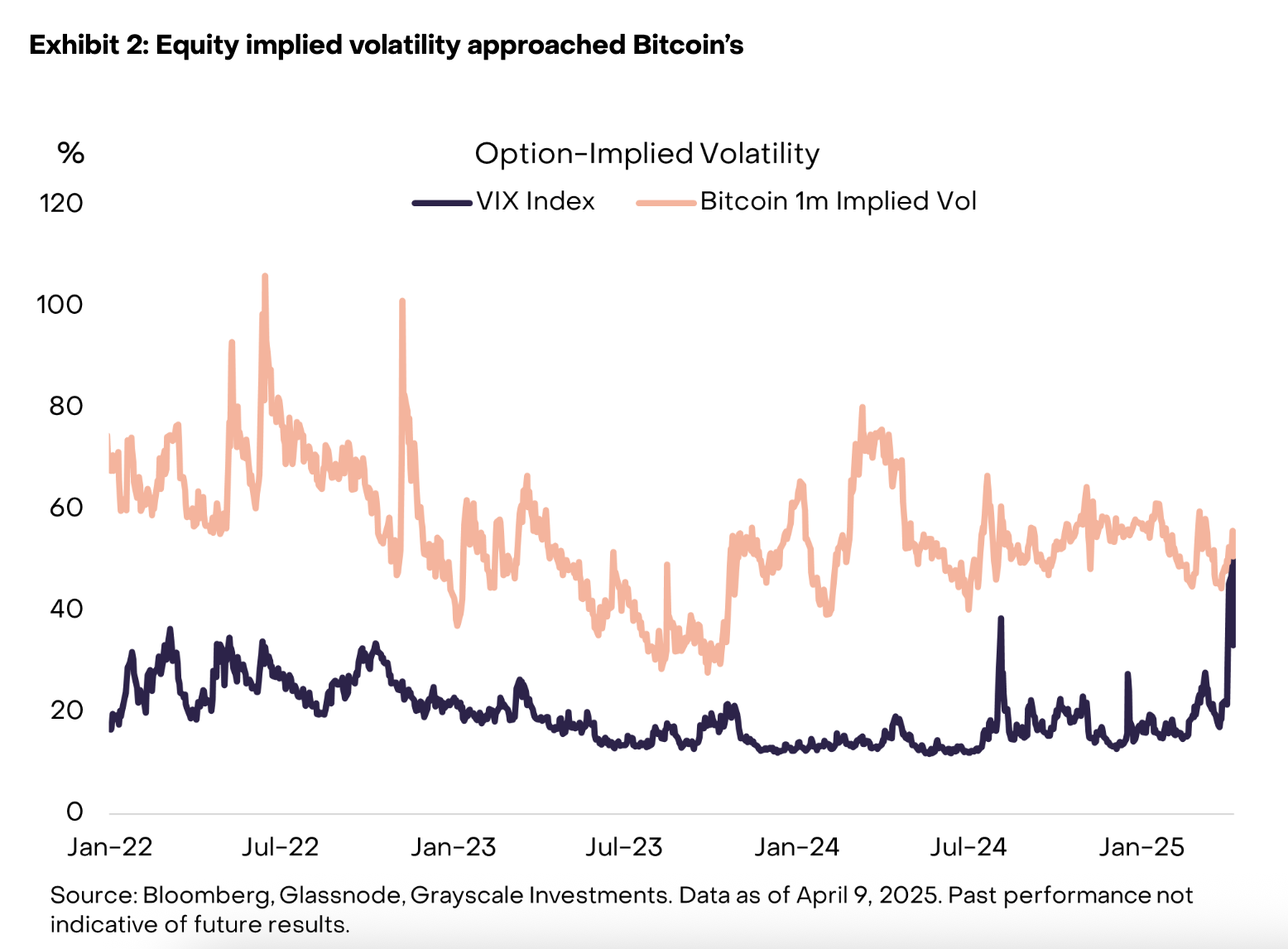
Grayscale chart on btc IV and VIX
Source: Grayscale report

According to the report, from April 2 to April 8 (pre-90-day pause announcement), the S&P 500 declined 12%.
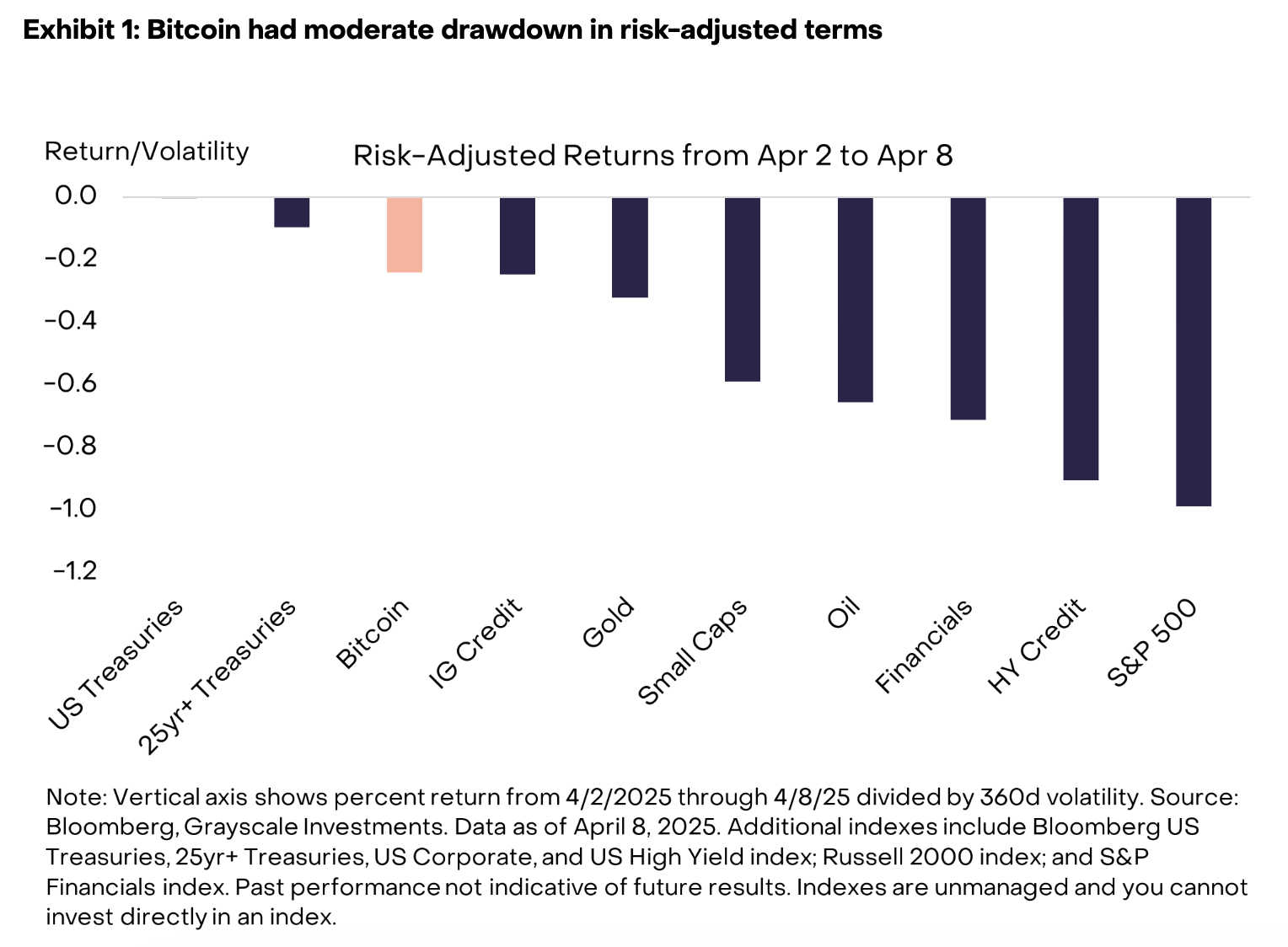
Grayscale chart
Source: Grayscale report

“Bitcoin’s price volatility is typically around three times higher than the S&P 500. Therefore, if Bitcoin had a 1:1 correlation with equity returns, the decline in the S&P 500 would have implied a 36% drop in the price of Bitcoin,” the report reads. 

Following President Donald Trump’s announcement of a 90-day tariff pause on most countries yesterday, bitcoin, which started the day at about $76,000, jumped to over $82,000. (It’s still down 26% from its all-time high of $109,114 on Inauguration Day.)

Tariffs may also further weaken the US dollar, the report adds, boosting bitcoin’s appeal as a store of value. ‍​‍​‍‌‍‌​‍‌‍‍‌‌‍‌‌‍‍‌‌‍‍​‍​‍​‍‍​‍​‍‌​‌‍​‌‌‍‍‌‍‍‌‌‌​‌‍‌​‍‍‌‍‍‌‌‍​‍​‍​‍​​‍​‍‌‍‍​‌​‍‌‍‌‌‌‍‌‍​‍​‍​‍‍​‍​‍‌‍‍​‌‌​‌‌​‌​​‌​​‍‍​‍​‍‌​‌‌​‌‌‌‌‍‌​‌‍‍‌‌‍​‍‍‌‍‌‌​‍‌‍​‌‌‍‌‌​‌‍​‌‍​‌‌‍​‌‍‌‌​‍‍‌‍​‌‍‌‍‌​‍‌‍‍‌‌‍‍‌‌​‌‍‌‌‌‍‍‌‌​​‍‌‍‌‌‌‍‌​‌‍‍‌‌‌​​‍‌‍‌‌‍‌‍‌​‌‍‌‌​‌‌​​‌​‍‌‍‌‌‌​‌‍‌‌‌‍‍‌‌​‌‍​‌‌‌​‌‍‍‌‌‍‌‍‍​‍‌‍‍‌‌‍‌​​‌‌‍‌‌​‌‍​​​‌‍‌​​​‌​‌​‌‍‌​‌‍​‌​‍‌​‌​​​‍​​​​‍‌​‍‌​‌​‌‍​‍‌‍​‍​‍​​‍‌​‍‌​‌‌​​‌​‌​‍‌‌‍​‍‌‍‌‍‌‍‌‌​​​​‍‌‍​‌‍​‌​‌‍‌‍‌‌‌‍​​​​‌‍‌‍​‍‌‌​‌‍‌‌​​‌‍‌‌​‌‌‍​‌‌​‍‌‌​‌‍‍‌‌‍​‌‍​‌‍‌‌​‍‌​​‌‍​‌‌‌​‌‍‍​​‌‌‍​‌‌​‍‌‌​‌‍‍‌‌‍​‌‍​‌‍‌‌‌​​‍‌‍‌‍‌​‌‍‌​‍‌‌​‌‌‌​​‍‌‌‌‍‍‌‍‌‌‌‍‌​‍‌‌​​‌​‌​​‍‌‌​​‌​‌​​‍‌‌​​‍​​‍‌‍‌‍‌‍​‍‌‍‌‍‌‍​‌‌‍​‍​‌​​​‍​‌‌‌‍‌​​‍​‌‍‌‌​‌‍​‍‌‌​​‍​​‍​‍‌‌​‌‌‌​‌​​‍‍‌‍​‌‍‍​‌‍‍‌‌‍​‌‍‌​‌​‍‌‍‌‌‌‍‍​‍‌‌​‌‌‌​​‍‌‌‌‍‍‌‍‌‌‌‍‌​‍‌‌​​‌​‌​​‍‌‌​​‌​‌​​‍‌‌​​‍​​‍‌‍​‌​‌‌‍‌‍​‌​​​​​​​​​‌‍​‍‌‍‌‍‌‍‌‌​‍​​‍‌‌​​‍​​‍​‍‌‌​‌‌‌​‌​​‍‍‌‌​‌‍‌‌‌‍​‌‌​​‌‍​‍‌‍​‌‌​‌‍‌‌‌‌‌‌‌​‍‌‍​​‌‌‍‍​‌‌​‌‌​‌​​‌​​‍‌‌​​‌​​‌​‍‌‌​​‍‌​‌‍​‍‌‌​​‍‌​‌‍‌​‌‌​‌‌‌‌‍‌​‌‍‍‌‌‍​‍‍‌‍‌‌​‍‌‍​‌‌‍‌‌​‌‍​‌‍​‌‌‍​‌‍‌‌​‍‍‌‍​‌‍‌‍‌​‍‌‍‌‍‍‌‌‍‌​​‌‌‍‌‌​‌‍​​​‌‍‌​​​‌​‌​‌‍‌​‌‍​‌​‍‌​‌​​​‍​​​​‍‌​‍‌​‌​‌‍​‍‌‍​‍​‍​​‍‌​‍‌​‌‌​​‌​‌​‍‌‌‍​‍‌‍‌‍‌‍‌‌​​​​‍‌‍​‌‍​‌​‌‍‌‍‌‌‌‍​​​​‌‍‌‍​‍‌‍‌‌​‌‍‌‌​​‌‍‌‌​‌‌‍​‌‌​‍‌‌​‌‍‍‌‌‍​‌‍​‌‍‌‌​‍‌‍‌​​‌‍​‌‌‌​‌‍‍​​‌‌‍​‌‌​‍‌‌​‌‍‍‌‌‍​‌‍​‌‍‌‌‌​​‍‌‍‌‍‌​‌‍‌​‍‌‌​‌‌‌​​‍‌‌‌‍‍‌‍‌‌‌‍‌​‍‌‌​​‌​‌​​‍‌‌​​‌​‌​​‍‌‌​​‍​​‍‌‍‌‍‌‍​‍‌‍‌‍‌‍​‌‌‍​‍​‌​​​‍​‌‌‌‍‌​​‍​‌‍‌‌​‌‍​‍‌‌​​‍​​‍​‍‌‌​‌‌‌​‌​​‍‍‌‍​‌‍‍​‌‍‍‌‌‍​‌‍‌​‌​‍‌‍‌‌‌‍‍​‍‌‌​‌‌‌​​‍‌‌‌‍‍‌‍‌‌‌‍‌​‍‌‌​​‌​‌​​‍‌‌​​‌​‌​​‍‌‌​​‍​​‍‌‍​‌​‌‌‍‌‍​‌​​​​​​​​​‌‍​‍‌‍‌‍‌‍‌‌​‍​​‍‌‌​​‍​​‍​‍‌‌​‌‌‌​‌​​‍‍‌‌​‌‍‌‌‌‍​‌‌​​‍‌‍‌​​‌‍‌‌‌​‍‌​‌​​‌‍‌‌‌‍​‌‌​‌‍‍‌‌‌‍‌‍‌‌​‌‌​​‌‌‌‌‍​‍‌‍​‌‍‍‌‌​‌‍‍​‌‍‌‌‌‍‌​​‍​‍‌‌

Opinions vary regarding how the economic uncertainty and the dizzying pace of the administration’s tariff announcements (and enactments) could affect the crypto market and bitcoin’s trajectory. 

Today’s CPI figures, which came softer than anticipated, didn’t budge bitcoin’s price. Nic Puckrin, founder of Coin Bureau, said that this suggests investors may be too shell-shocked after yesterday’s tariff announcement.

Puckrin added that bitcoin holding steady above the $81,000 resistance line after yesterday’s rebound is a positive sign.

“However, the jubilance needed to push it into a more sustained rally past $88,000 and then $93,000 just isn’t there,” Puckrin said. “The 90-day tariff reprieve doesn’t spell the end of the trade war — it’s simply kicking the can down the road.”

And any setback would send markets hurtling back into correction territory, he added. 

“It’s not unusual to see such huge moves during the last stages of a bull run,” he said, “but it makes any short-term trading decision more akin to gambling at this stage.”

More Crypto

See all Crypto
crypto

Altcoin trading activity has lost its mojo

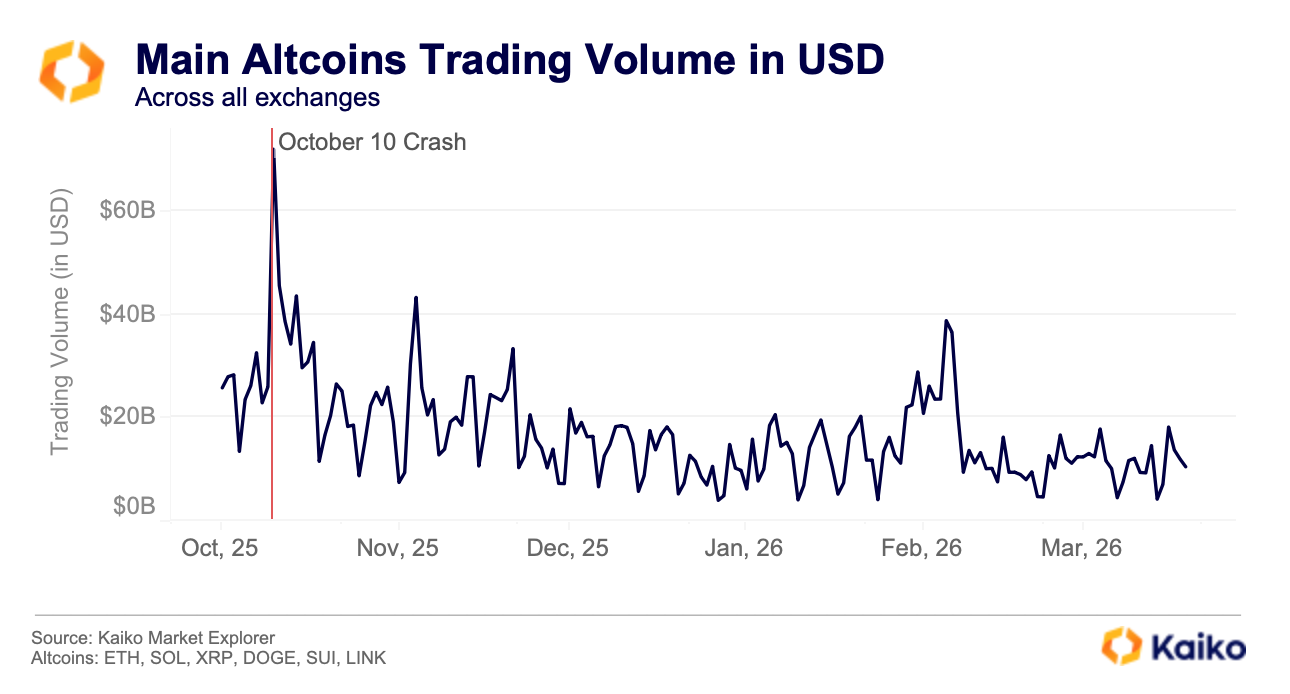
Non-bitcoin cryptocurrencies have seen their trading volume plummet in the past five months. The combined trading volume of ethereum, XRP, solana, dogecoin, SUI, and chainlink has decreased by 60% since crypto’s October 10 liquidation event, according to Thomas Probst, a research analyst at crypto markets data provider Kaiko.

Main Altcoins Trading Volume in USD
The trading volume of ETH, SOL, XRP, DOGE, SUI, and LINK.

For all altcoins, spot trading volume on Binance has declined between 80% and 85% to $7.7 billion, while altcoin volume on other exchanges has dropped to $18.8 billion, down from a range of $63 billion to $91 billion in October, a Friday report from Decrypt found, citing data from CryptoQuant.

“This trend may be explained by a contraction in market liquidity over the same period,” Probst told Sherwood News. “This phenomenon is also reflected in the average 1% market depth, which stood at approximately $2.6 million before the October 10 crash and is now closer to $1.7 million when aggregated across ETH, XRP, SOL, SUI, and LINK.” 

Market depth is used by investors and traders to gauge the scale of liquidity in a market. 1% market depth refers to the amount of liquidity needed to move the market by 1%. 

CoinGlass’s Altcoin Season Index, a measure to assess the performance of non-bitcoin cryptocurrencies, has been sitting above 50 this week, suggesting that the current market is neither in a bitcoin dominant phase nor an altcoin season.

crypto

Payward, parent company of crypto exchange Kraken, puts plans for IPO on hold

Payward, crypto exchange Kraken’s parent company, has paused its plans for an initial public offering until market conditions improve, according to a report from CoinDesk that cited two people with knowledge of the matter. 

Since the firm announced in November its preparation for an IPO of its common stock, the total market capitalization of the crypto industry has shed around $652.2 billion, from $3.2 trillion to $2.5 trillion as of Wednesday, data from CoinGecko shows. 

The news comes two weeks after Kraken received approval for a master account from the Federal Reserve Bank of Kansas City, allowing the crypto exchange to connect to the Fed’s payment infrastructure used by traditional banks and credit unions. 

Last year, Kraken raised $800 million at a $20 billion valuation from institutional investors such as Jane Street and Citadel Securities.

The news comes two weeks after Kraken received approval for a master account from the Federal Reserve Bank of Kansas City, allowing the crypto exchange to connect to the Fed’s payment infrastructure used by traditional banks and credit unions. 

Last year, Kraken raised $800 million at a $20 billion valuation from institutional investors such as Jane Street and Citadel Securities.

Latest Stories

Sherwood Media, LLC produces fresh and unique perspectives on topical financial news and is a fully owned subsidiary of Robinhood Markets, Inc., and any views expressed here do not necessarily reflect the views of any other Robinhood affiliate, including Robinhood Markets, Inc., Robinhood Financial LLC, Robinhood Securities, LLC, Robinhood Crypto, LLC, Robinhood Derivatives, LLC, or Robinhood Money, LLC. Futures and event contracts are offered through Robinhood Derivatives, LLC.