Crypto
crypto

Crypto firm Ripple applies for a national banking license

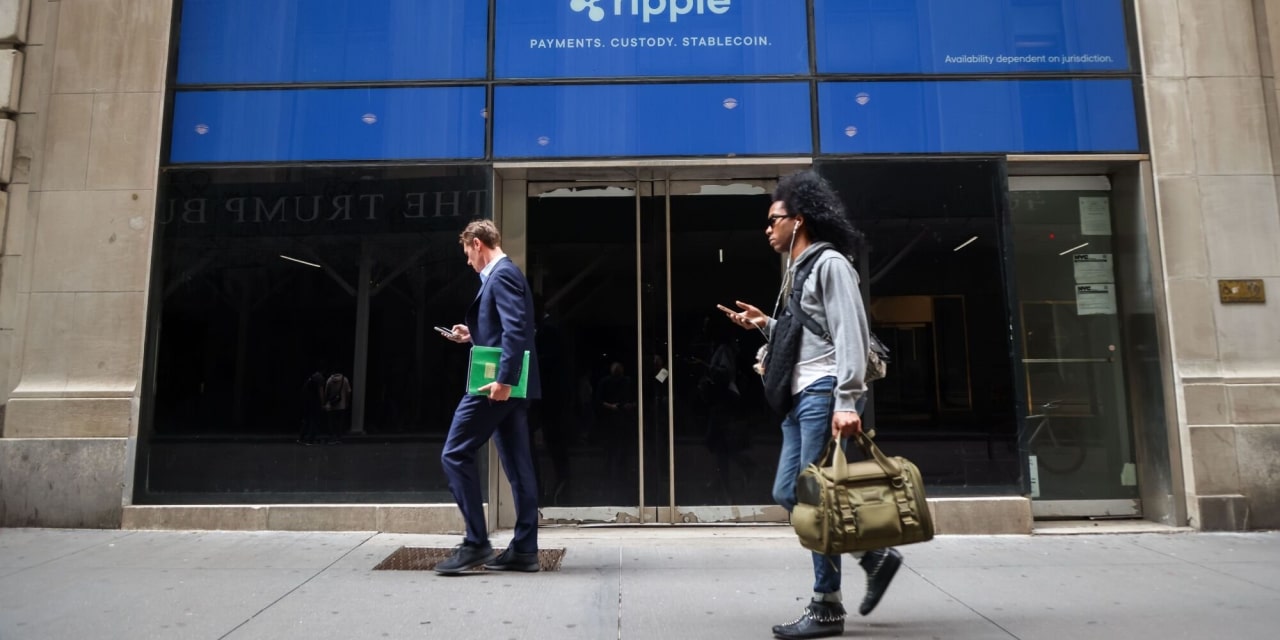
Ripple, a firm focused on cross-border payments using blockchain technology, applied for a national banking license Wednesday, according to The Wall Street Journal

The company is known for two cryptocurrencies: dollar-backed stablecoin RLUSD and the fourth-largest token by market capitalization, XRP.

Ripple filed its application with the US Office of the Comptroller of the Currency, which regulates and supervises national banks and federal savings associations. With a national bank charter, the firm’s RLUSD stablecoin would be regulated under the OCC in addition to the New York Department of Financial Services. The NYDFS approved the public rollout of RLUSD last year. 

“True to our long-standing compliance roots, @Ripple is applying for a national bank charter from the OCC. If approved, we would have both state (via NYDFS) and federal oversight, a new (and unique!) benchmark for trust in the stablecoin market,” Ripple CEO Brad Garlinghouse posted on X.

The national banking license application comes in the same week as Ripple’s subsidiary Standard Custody & Trust Company applied for a Federal Reserve master account. “This access would allow us to hold $RLUSD reserves directly with the FED and provide an additional layer of security to future proof trust in RLUSD,” Garlinghouse said. 

Meanwhile, stablecoin giant Circle, the firm behind the second-largest stablecoin, USDC, submitted a national bank charter application with the OCC on Monday. Ripple and Circle’s applications highlight an ongoing convergence between the traditional finance world and the on-chain economy. 

Anchorage Digital is currently the only crypto bank in the US to receive a charter from the OCC. 
Ripple filed its application with the US Office of the Comptroller of the Currency, which regulates and supervises national banks and federal savings associations. With a national bank charter, the firm’s RLUSD stablecoin would be regulated under the OCC in addition to the New York Department of Financial Services. The NYDFS approved the public rollout of RLUSD last year. 

“True to our long-standing compliance roots, @Ripple is applying for a national bank charter from the OCC. If approved, we would have both state (via NYDFS) and federal oversight, a new (and unique!) benchmark for trust in the stablecoin market,” Ripple CEO Brad Garlinghouse posted on X.

The national banking license application comes in the same week as Ripple’s subsidiary Standard Custody & Trust Company applied for a Federal Reserve master account. “This access would allow us to hold $RLUSD reserves directly with the FED and provide an additional layer of security to future proof trust in RLUSD,” Garlinghouse said. 

Meanwhile, stablecoin giant Circle, the firm behind the second-largest stablecoin, USDC, submitted a national bank charter application with the OCC on Monday. Ripple and Circle’s applications highlight an ongoing convergence between the traditional finance world and the on-chain economy. 

Anchorage Digital is currently the only crypto bank in the US to receive a charter from the OCC. 

More Crypto

See all Crypto
crypto

Payward, parent company of crypto exchange Kraken, puts plans for IPO on hold

Payward, crypto exchange Kraken’s parent company, has paused its plans for an initial public offering until market conditions improve, according to a report from CoinDesk that cited two people with knowledge of the matter. 

Since the firm announced in November its preparation for an IPO of its common stock, the total market capitalization of the crypto industry has shed around $652.2 billion, from $3.2 trillion to $2.5 trillion as of Wednesday, data from CoinGecko shows. 

The news comes two weeks after Kraken received approval for a master account from the Federal Reserve Bank of Kansas City, allowing the crypto exchange to connect to the Fed’s payment infrastructure used by traditional banks and credit unions. 

Last year, Kraken raised $800 million at a $20 billion valuation from institutional investors such as Jane Street and Citadel Securities.

The news comes two weeks after Kraken received approval for a master account from the Federal Reserve Bank of Kansas City, allowing the crypto exchange to connect to the Fed’s payment infrastructure used by traditional banks and credit unions. 

Last year, Kraken raised $800 million at a $20 billion valuation from institutional investors such as Jane Street and Citadel Securities.

crypto

SEC and CFTC issue new guidance on how securities laws apply to crypto assets

On Tuesday, the US Securities and Exchange Commission, together with the Commodity Futures Trading Commission, issued an interpretation clarifying how federal securities law applies to crypto assets, a first step toward developing a clearer regulatory framework. 

The interpretive guidance introduces a token taxonomy for different types of cryptocurrencies, with SEC Chairman Paul S. Atkins adding that “most crypto assets are not themselves securities.”

Examples of a digital commodity, “a crypto asset that is intrinsically linked to and derives its value from the programmatic operation of a crypto system that is ‘functional,’” include:

The guidance also includes definitions of digital collectibles (such as NFTs), stablecoins, digital tools, and digital securities (such as tokenized real-world assets and stocks).

This is a monumental step in the mainstream adoption of the industry and clears a hurdle in how crypto can operate going forward, according to David Pakman, head of venture investments at CoinFund. “This will allow new token designs with the confidence that their existence does not require registration with the SEC, etc.,” Pakman told Sherwood News.

Despite the clarification efforts from the two organizations, the market capitalization of the crypto industry has dropped about 2% in the last 24 hours as each of the tokens mentioned in the guidance are trading lower in the period, data from CoinGecko shows.

The joint agency action also complements congressional efforts to turn a crypto market structure framework into law. With the goal of providing regulations on the offer and sale of digital commodities, the CLARITY Act passed the House of Representatives last year and is now sitting in the Senate.

Latest Stories

Sherwood Media, LLC produces fresh and unique perspectives on topical financial news and is a fully owned subsidiary of Robinhood Markets, Inc., and any views expressed here do not necessarily reflect the views of any other Robinhood affiliate, including Robinhood Markets, Inc., Robinhood Financial LLC, Robinhood Securities, LLC, Robinhood Crypto, LLC, Robinhood Derivatives, LLC, or Robinhood Money, LLC. Futures and event contracts are offered through Robinhood Derivatives, LLC.