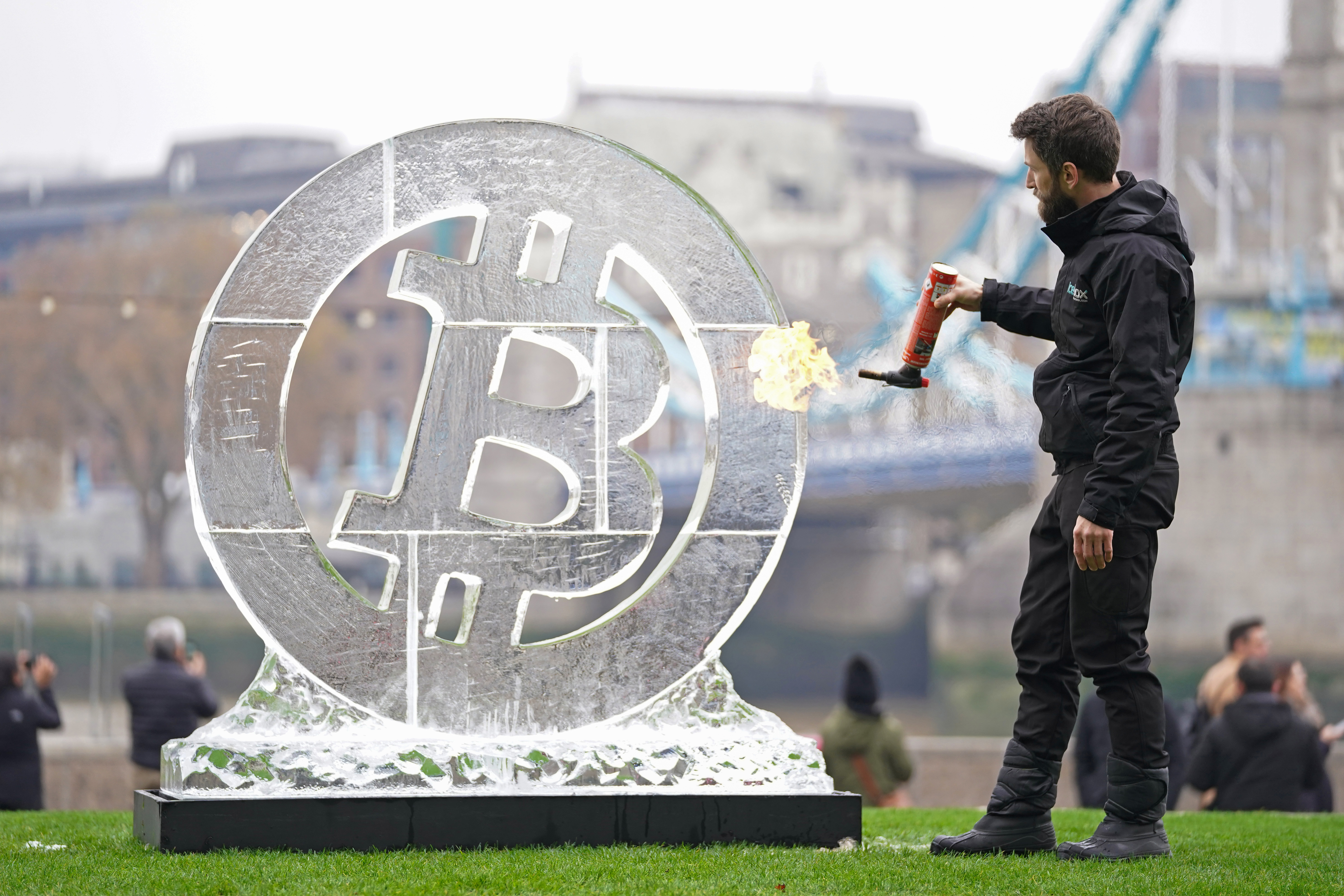
Bitcoin’s bloodbath slowed by Fed optimism, but as Citi analysts put it, crypto is “having a bit of a meltdown”
Bitcoin ETFs have seen $1.45 billion leave the funds this week so far.
Bitcoin fell to below $81,000 early Friday morning, its lowest level since April and its worst monthly decline since the 2022 crypto winter. It slightly rebounded after a Fed governor’s comments upped hopes for a rate cut, but is down over $40,000 from its October 6 all-time high of $126,080.
Bitcoin ETFs saw a massive $903 million in outflows on Thursday, one of the largest since their inception, bringing the total outflows so far this week to $1.45 billion, according to SoSoValue. Meanwhile, CoinMarketCap’s Fear and Greed Index dropped to 11, signaling “extreme fear,” its lowest level since March.
As Citi analysts put it: crypto is “having a bit of a meltdown.”
Timothy Misir, head of research at Blockhead Research Network, said bitcoin’s break below the Active Investors Mean shifts the structural debate decisively.
“The next major cost-basis cluster sits at the True Market Mean of $81.9k, a level that historically separates deep corrections from full bear confirmation,” he said.
Crypto liquidations reached $2 billion in the past 24 hours, Coinglass data shows, with bitcoin suffering more than $1 billion in liquidations, the bulk of them in long positions.
Finally, the overall crypto market cap fell to $2.85 trillion from $4.3 trillion on October 6, bitcoin’s all-time high.
How low will bitcoin go, and how long will it take to bounce back?
Nic Puckrin, cofounder of Coin Bureau, told Sherwood News that all of this suggests an eventual reversal, but when this will happen is anyone’s guess.
“Regardless, we’re still looking at strong support around $75k, but $74.4k is a level of concern as this is Strategy’s cost basis,” he said.
James Butterfill, head of research at CoinShares, also noted that opinion in the crypto community is clearly split, as smaller whales appear comfortable absorbing the coins being sold by larger and theoretically older holders.
“Some are referring to this as bitcoin’s IPO moment, where long-standing early holders pass supply to a newer generation. It also aligns with the four-year cycle narrative. For now, there is little evidence that large whale selling has run its course,” he said, adding that it’s up to macro data to improve the situation.
Finally, in a note titled, “Having a ‘Bit’ of a Meltdown,” Citi analysts said that while they still anticipate demand for crypto-related products to bounce back, as bitcoin “long-term holders are cautious, and new investors [are] in no rush, flows may not pick up very soon.”
“We do not expect investors to accelerate redemptions, but Bitcoin would realize closer to our bear case of $82k for year-end, which had a zero incremental flows assumption. We see the $80k level as important as this is around the average price of US ETF holders based on flow data,” they wrote in a Friday report.