Crypto
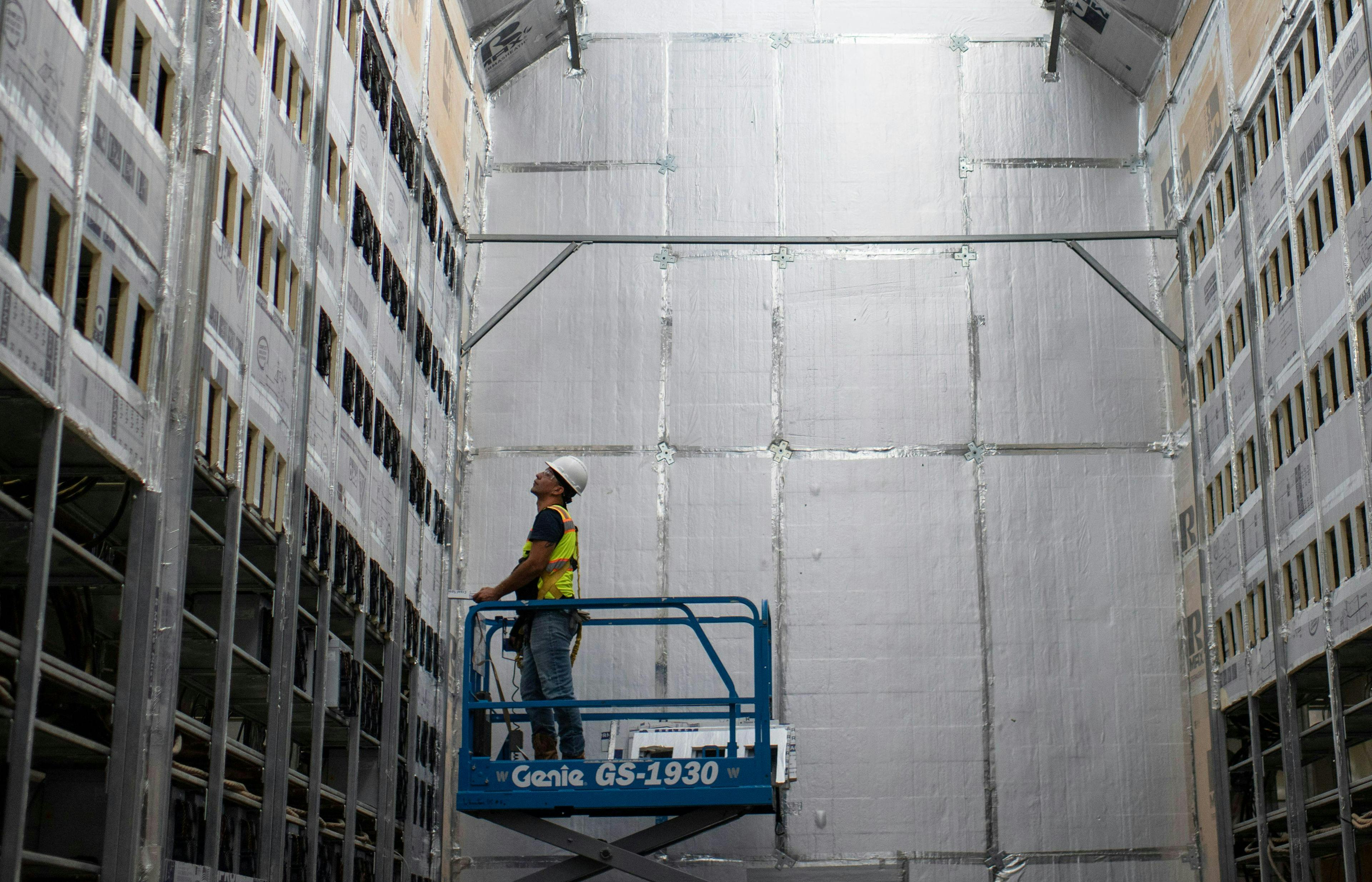
A worker installs a new row of Bitcoin mining machines
A worker installs a new row of Bitcoin mining machines (Mark Felix/Getty Images)
Mine over matter

The math behind the misery: How much bitcoin mines make while torturing neighbors

You own a loud, obnoxious money printer producing over $1 million a day. Could you turn it off?

Jack Morse

Bitcoin has been dominating news cycles again following a record-setting price rally and former President Donald Trump’s move to latch onto crypto as a “wedge issue” in his presidential campaign.

But as traders debate price moves and politicians argue over the tech’s place in the economy, folks in small towns across the country are increasingly butting heads with the companies that keep bitcoin running behind the scenes. 

It’s not going well. 

Earlier this month, Time magazine published a piece focusing on one town’s struggles with a bitcoin-mining facility. The story, “‘We’re Living in a Nightmare,’” explains how residents of Granbury, Texas, believe that the local bitcoin mine is making them ill. Specifically, they pointed to the noise and spoke of bouts of vertigo, nausea, vomiting, and fainting.

The process of mining bitcoin, which involves specialized computers competing for the right to add the next block to the blockchain (and score a bitcoin reward), generates lots of heat. Fans work to dissipate that heat so that the complicated machinery doesn’t overheat. 

Marathon Digital, the world’s largest bitcoin-mining company, owns and operates a mining facility near Granbury, which has over 12,000 people along the Brazos river. The location runs thousands of fans, which are so loud that Time compared them to a jet engine.

Marathon Digital said it’s working to replace the fans with a presumably quieter cooling system by the end of the year, using immersion containers to reduce the noise. Immersion cooling systems typically have higher upfront costs than air-cooled ones. 

But as the company works to overhaul its facility, one thing it will likely be loath to do is spin its mining rigs down. That’s because large-scale mines like the one in Granbury generate substantial revenue for their owners. According to Marathon’s most recent quarterly report (the business is set to report second-quarter earnings on August 1), last month the company earned 590 bitcoin, coming out to 19.7 bitcoin a day. 

With the price of bitcoin ranging between $55,000 and $71,000 in June, the machines have been essentially printing money — at that price range, Marathon is making $1.1 million to $1.4 million a day.

And though the April halving (a pre-programmed shift in bitcoin’s code) reduced miner revenues, it hasn’t slowed Marathon. The company said it “energized” 13,000 additional miners last month, bringing its total to 250,000 bitcoin miners. 

Marathon isn’t the only bitcoin miner in the US. According to The New York Times, as of last year there were 34 large-scale bitcoin-mining operations in the country run by companies like Marathon, Riot Platforms, and Hut 8. In the first quarter, Riot said it had mined 1,364 bitcoin (about 15 bitcoin a day) with a gross margin of 52%. Hut 8 reported that it had mined 716 BTC in Q1, at a cost of $24,594 a coin. On March 31, the final day of Hut 8’s first quarter, one bitcoin could be sold on the open market for $71,333.

While the residents of Granbury may be living in a nightmare, it’s one they share with those living near similarly fan-cooled mining sites around America. Bitcoin-mining operations in Arkansas, North Carolina, and Ohio have all angered neighbors — some of whom have filed lawsuits — with fans that can spin 24 hours a day, 365 days a year. 

“It was like torture,” Gladys Anderson, of Bono, Arkansas, told CBS News earlier this year. “Like a form of military-grade torture.” 

Unfortunately for folks like Anderson, in many cases the law leaves them with few options. That’s because states including Montana, Mississippi, Oklahoma, and Arkansas have passed “right-to-mine” laws that in some instances allow miners to bypass local zoning rules. 

Still, there are technical options — primarily the form of liquid cooling that Marathon said it’s investing in — that could eliminate many neighbors’ concerns. Other methods include building sound barriers and equipment that adjusts mining based on sound readings. Bitcoin Magazine called noise from bitcoin mining a “solved problem” two years ago

But if taking your system offline for upgrades means losing out on a stream of crypto revenue, solved problems may tend to stay broken.

More Crypto

See all Crypto
crypto

Crypto IPOs hit pause as “appetite has been sold to AI”

The rule of three means we can now declare 2026 will not be the year of crypto IPOs:

  • Ethereum development firm Consenys,

  • Security hardware company Ledger,

  • And crypto exchange Kraken are pausing plans to go public, according to reports from CoinDesk.

The companies have delayed their IPOs due to tough market conditions, the report said, including declined trading volume in digital assets, weak price performance of tokens, and investor interest in other sectors.

Kay Kyeongsik Woo, the founder of blockchain ride-hailing application Tada, told Sherwood News, “The market is cooled down and investors’ appetite has been sold to AI.”

Just today, AI chipmaker Cerebras Systems went public and is this year’s largest IPO so far, and investors are excited about potential IPOs for OpenAI and Anthropic as their valuations soar.

“It’s a fair decision on behalf of all the crypto firms,” according to Kairos Research cofounder Ian Unsworth. “For one thing, they will ultimately be dwarfed by some of the other massive IPOs coming up.”

Unsworth also pointed to how the CLARITY Act, if passed, could be a strong tailwind for these companies. “A better regulatory environment could make these companies more appealing to potential investors,” he said.

Consensys, Ledger, and Kraken did not confirm to Sherwood if they had put their IPO plans on hold. A Consensys spokesperson told Sherwood, “As a matter of policy, we do not comment on market speculation,” while a Ledger representative declined to comment on the story.

Meanwhile, Lauren Post, Kraken’s vice president of corporate communications, told Sherwood that the company did not put out any public statements on freezing IPO plans.

crypto

XRP tops 24-hour chart on South Korean crypto exchange

XRP is among South Korea’s favorite coins.

In the last 24 hours, XRP saw the highest trading volume on South Korean exchange Upbit at over $105.3 million, a figure exceeding bitcoin’s $102.6 million, ethereum’s $62.9 million, and dogecoin’s $27.7 million, data from CoinGecko shows.

Meanwhile, spot XRP ETFs saw $5.3 million worth of inflows on Tuesday, bringing monthly inflows to more than $65.3 million, according to SoSoValue.

The activity has not, however, translated into positive momentum for the token, with XRP remaining flat at the $1.43 level in the period.

Prediction market-implied odds of XRP rising above $1.50 in May (a level that hasn’t been surpassed in over two months) now stand at 70%, up from as low as 9% at the start of the week.

(Event contracts are offered through Robinhood Derivatives, LLC — probabilities referenced or sourced from KalshiEx LLC or ForecastEx LLC.)

Loading...
 

XRP returning to Upbit’s leadership position in trading volume follows the news earlier this week that Ripple’s prime brokerage unit secured a $200 million debt facility from global investment management firm Neuberger Berman to aid with the unit’s margin financing solutions.

Elsewhere, the XRP Ledger notched a new record of 332,000 addresses holding at least 10,000 tokens, worth $14,300, per data analytics platform Santiment. “Historically, rising numbers of mid-to-large wallets suggest increasing conviction from investors who are less focused on short-term price swings and more interested in long-term positioning,” Santiment posted Tuesday night on X.

“This is especially notable because XRP has spent much of 2026 trading below previous highs, meaning many holders appear willing to accumulate during fear rather than chase momentum,” Santiment added.

Loading...
 

XRP returning to Upbit’s leadership position in trading volume follows the news earlier this week that Ripple’s prime brokerage unit secured a $200 million debt facility from global investment management firm Neuberger Berman to aid with the unit’s margin financing solutions.

Elsewhere, the XRP Ledger notched a new record of 332,000 addresses holding at least 10,000 tokens, worth $14,300, per data analytics platform Santiment. “Historically, rising numbers of mid-to-large wallets suggest increasing conviction from investors who are less focused on short-term price swings and more interested in long-term positioning,” Santiment posted Tuesday night on X.

“This is especially notable because XRP has spent much of 2026 trading below previous highs, meaning many holders appear willing to accumulate during fear rather than chase momentum,” Santiment added.

Latest Stories

Sherwood Media, LLC and Chartr Limited produce fresh and unique perspectives on topical financial news and are fully owned subsidiaries of Robinhood Markets, Inc., and any views expressed here do not necessarily reflect the views of any other Robinhood affiliate, including Robinhood Markets, Inc., Robinhood Financial LLC, Robinhood Securities, LLC, Robinhood Crypto, LLC, Robinhood Money, LLC, Robinhood U.K. Ltd, Robinhood Derivatives, LLC, Robinhood Gold, LLC, Robinhood Asset Management, LLC, Robinhood Credit, Inc., Robinhood Ventures DE, LLC and, where applicable, its managed investment vehicles.