Crypto
crypto

Bitcoin miners feel tariff sting

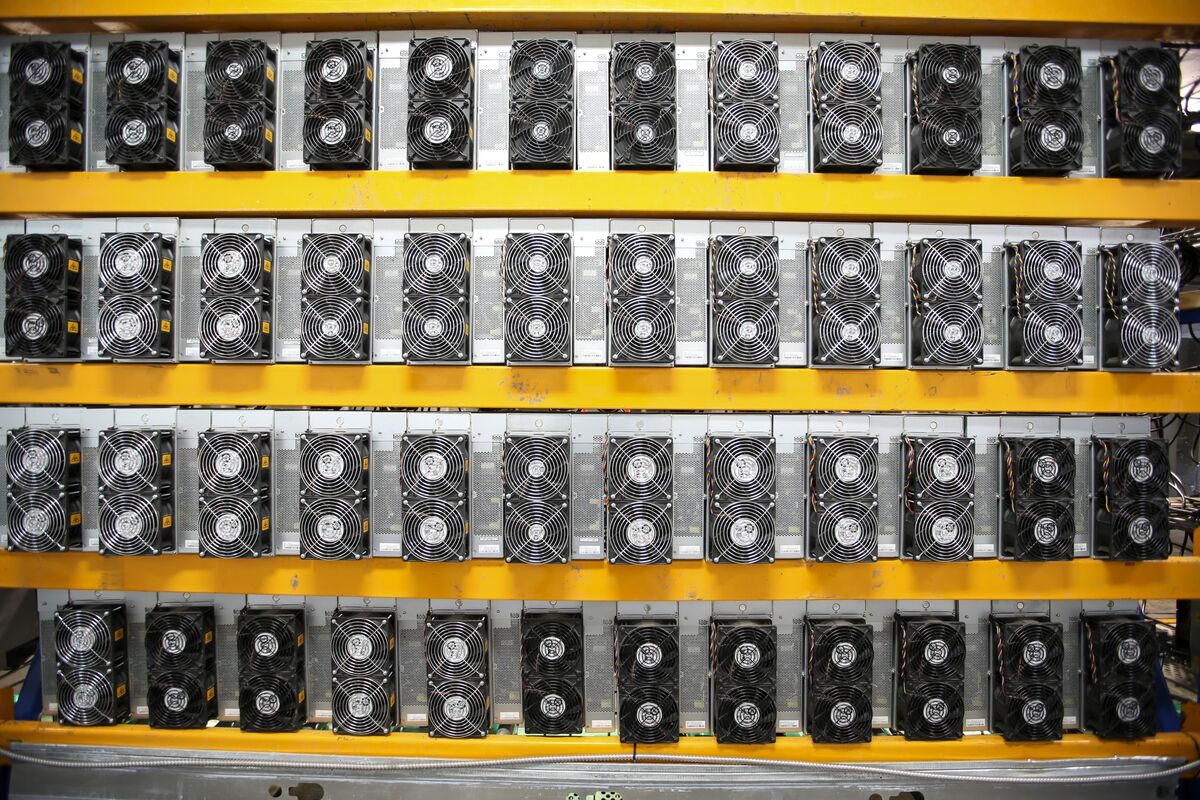
Bitcoin mining companies are feeling the tariff sting again today. MARA Holdings, Hut 8, Riot Platforms, and CleanSpark all sank double digits in early trading Friday, though they’ve since recovered some of those losses.

“The bitcoin mining industry depends exclusively on ASIC computer chips from China,” Alexander Blume, CEO of Two Prime Digital Assets, said. “Hikes on tariffs for these products will make production costs for miners higher and their businesses less profitable.”

As a result, these stocks may struggle to compete with their non-US peers, including Canadian firms HIVE and Bitfarms and UK-based Argo, Blume said. 

But it’s not just about chips. As Bloomberg reported, while the largest bitcoin mining companies are in the US, the supply chain they rely on is in Asia. And tariffs on some of these countries are pretty steep: 46% on Vietnam, 37% on Thailand, and 24% on Malaysia.

Bitcoin mining software and services company Luxor Technology told Bloomberg it was rushing to “ship about 5,600 Bitcoin mining machines from Thailand to the US before tariffs imposed on the Southeast Asian country by President Donald Trump kick in.”

“Ideally we can charter a flight and get machines over — just trying to be as creative as possible to get these machines out,” Lauren Lin, head of hardware at Luxor, said.
As a result, these stocks may struggle to compete with their non-US peers, including Canadian firms HIVE and Bitfarms and UK-based Argo, Blume said. 

But it’s not just about chips. As Bloomberg reported, while the largest bitcoin mining companies are in the US, the supply chain they rely on is in Asia. And tariffs on some of these countries are pretty steep: 46% on Vietnam, 37% on Thailand, and 24% on Malaysia.

Bitcoin mining software and services company Luxor Technology told Bloomberg it was rushing to “ship about 5,600 Bitcoin mining machines from Thailand to the US before tariffs imposed on the Southeast Asian country by President Donald Trump kick in.”

“Ideally we can charter a flight and get machines over — just trying to be as creative as possible to get these machines out,” Lauren Lin, head of hardware at Luxor, said.
More Crypto

See all Crypto
crypto

Altcoin trading activity has lost its mojo

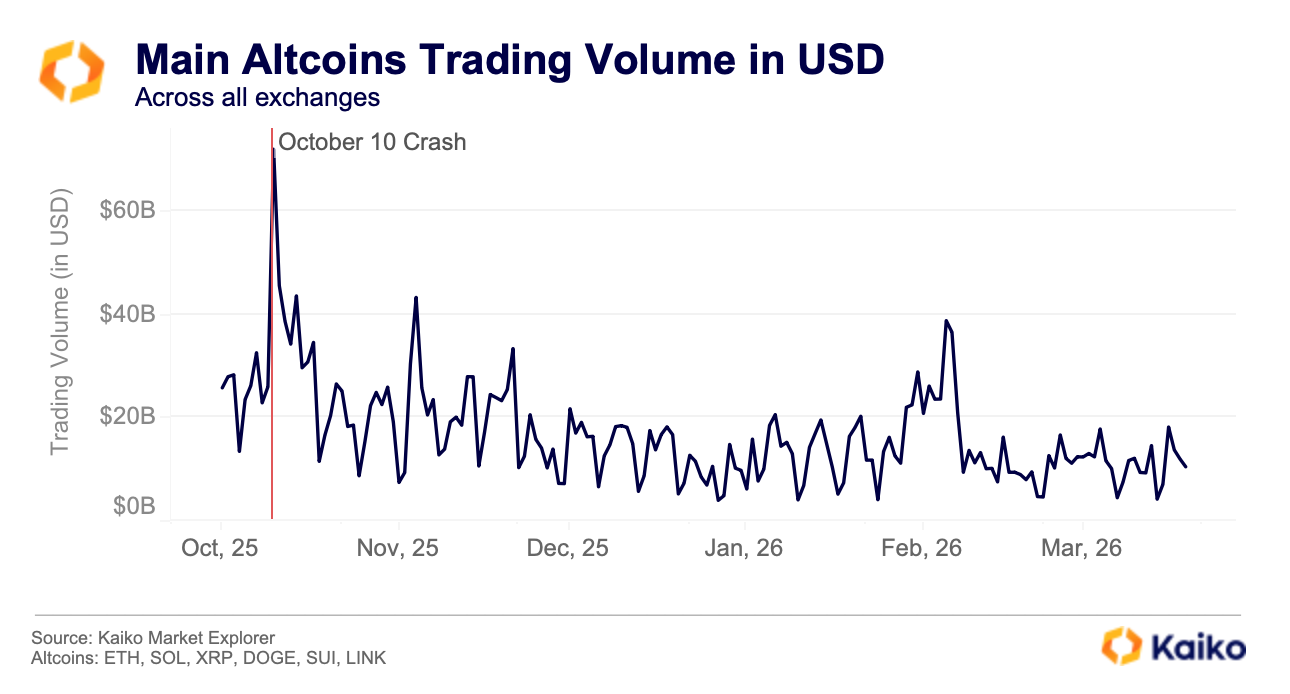
Non-bitcoin cryptocurrencies have seen their trading volume plummet in the past five months. The combined trading volume of ethereum, XRP, solana, dogecoin, SUI, and chainlink has decreased by 60% since crypto’s October 10 liquidation event, according to Thomas Probst, a research analyst at crypto markets data provider Kaiko.

Main Altcoins Trading Volume in USD
The trading volume of ETH, SOL, XRP, DOGE, SUI, and LINK.

For all altcoins, spot trading volume on Binance has declined between 80% and 85% to $7.7 billion, while altcoin volume on other exchanges has dropped to $18.8 billion, down from a range of $63 billion to $91 billion in October, a Friday report from Decrypt found, citing data from CryptoQuant.

“This trend may be explained by a contraction in market liquidity over the same period,” Probst told Sherwood News. “This phenomenon is also reflected in the average 1% market depth, which stood at approximately $2.6 million before the October 10 crash and is now closer to $1.7 million when aggregated across ETH, XRP, SOL, SUI, and LINK.” 

Market depth is used by investors and traders to gauge the scale of liquidity in a market. 1% market depth refers to the amount of liquidity needed to move the market by 1%. 

CoinGlass’s Altcoin Season Index, a measure to assess the performance of non-bitcoin cryptocurrencies, has been sitting above 50 this week, suggesting that the current market is neither in a bitcoin dominant phase nor an altcoin season.

Witch

“Triple witching” day may put further pressure on bitcoin’s price

This is not “a favorable environment for risk assets.”

crypto

Payward, parent company of crypto exchange Kraken, puts plans for IPO on hold

Payward, crypto exchange Kraken’s parent company, has paused its plans for an initial public offering until market conditions improve, according to a report from CoinDesk that cited two people with knowledge of the matter. 

Since the firm announced in November its preparation for an IPO of its common stock, the total market capitalization of the crypto industry has shed around $652.2 billion, from $3.2 trillion to $2.5 trillion as of Wednesday, data from CoinGecko shows. 

The news comes two weeks after Kraken received approval for a master account from the Federal Reserve Bank of Kansas City, allowing the crypto exchange to connect to the Fed’s payment infrastructure used by traditional banks and credit unions. 

Last year, Kraken raised $800 million at a $20 billion valuation from institutional investors such as Jane Street and Citadel Securities.

The news comes two weeks after Kraken received approval for a master account from the Federal Reserve Bank of Kansas City, allowing the crypto exchange to connect to the Fed’s payment infrastructure used by traditional banks and credit unions. 

Last year, Kraken raised $800 million at a $20 billion valuation from institutional investors such as Jane Street and Citadel Securities.

Latest Stories

Sherwood Media, LLC produces fresh and unique perspectives on topical financial news and is a fully owned subsidiary of Robinhood Markets, Inc., and any views expressed here do not necessarily reflect the views of any other Robinhood affiliate, including Robinhood Markets, Inc., Robinhood Financial LLC, Robinhood Securities, LLC, Robinhood Crypto, LLC, Robinhood Derivatives, LLC, or Robinhood Money, LLC. Futures and event contracts are offered through Robinhood Derivatives, LLC.