

Greener linings
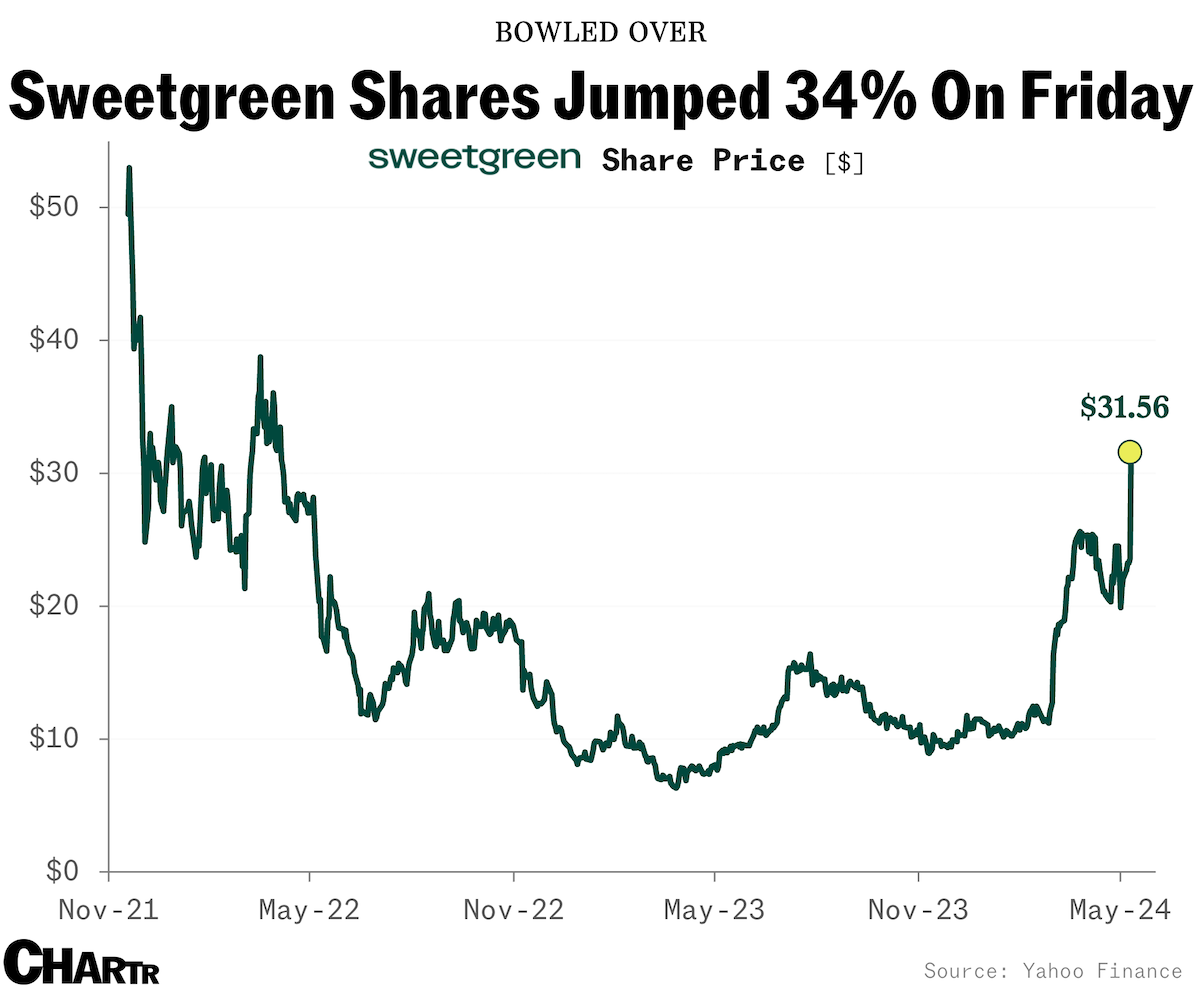
Shares in salad seller Sweetgreen jumped a whopping 34% on Friday, after the company beat Wall Street’s expectations, as revenues rose 26% year-on-year to hit $158M in the first quarter.
That makes Sweetgreen — popular for peddling premium salads that can cost as much as $20 — one of the best performing stocks in America this year, having soared more than 185% in 2024.
Raw deal
Investors were buoyed by the company raising both its revenue and adjusted EBITDA guidance for the rest of 2024. However, despite selling more salads than ever before in Q1, Sweetgreen still isn’t profitable... which may come as a shock to anyone who’s paid $15-20 for a salad and left feeling like they could have made it themselves for a fraction of the price.
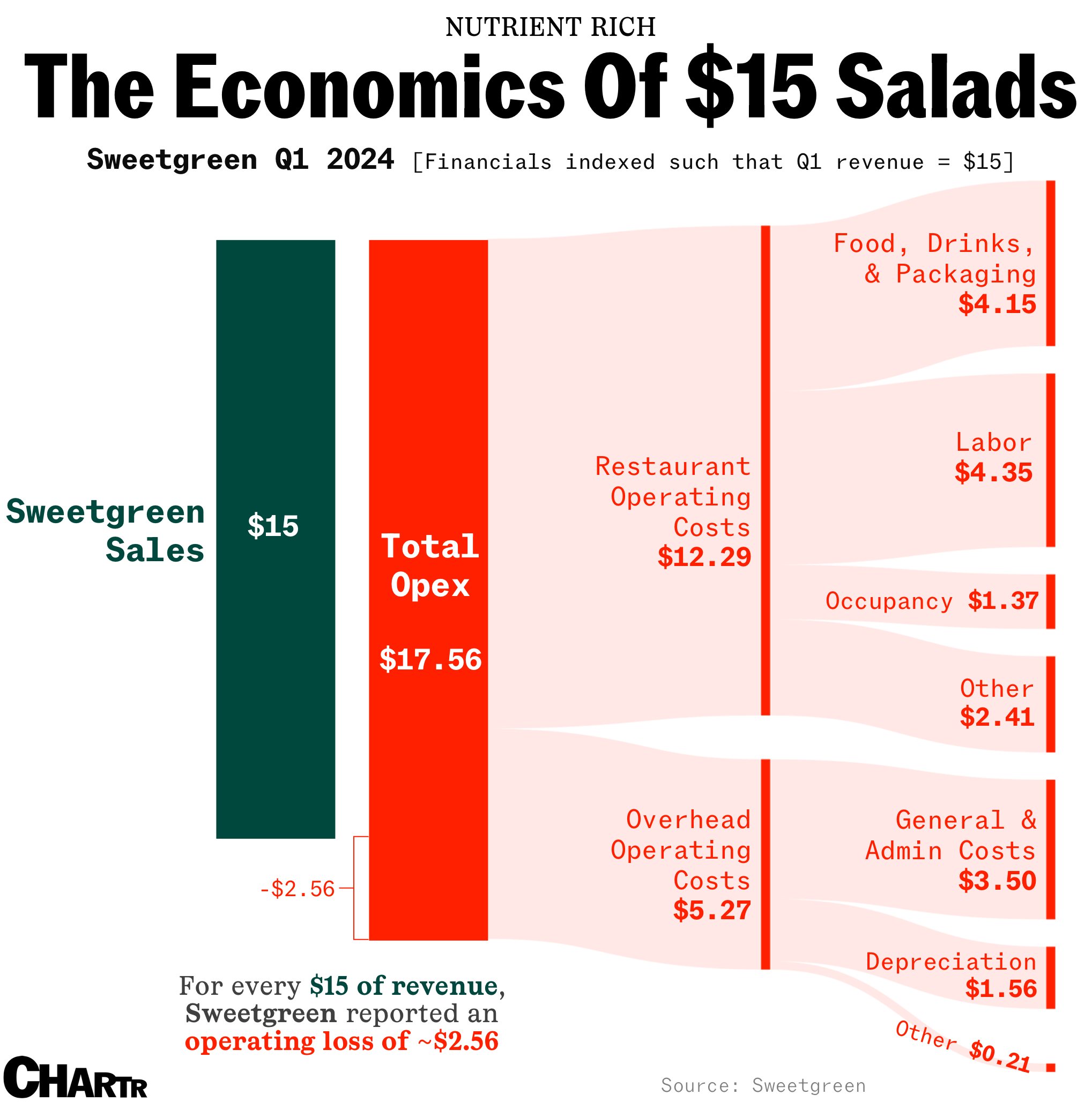
By indexing Sweetgreen’s earnings to $15 — roughly the price of a typical salad at the chain — it’s easy to see exactly where the leafy costs are coming from. In fact, for every $15 of revenue in Q1, the company incurred operating expenses of more than $17.50.
Interestingly, the cost of the actual food, drinks, and packaging is only a fraction (about $4.15 out of $15 in our example) of the final sale price. Labor costs take another $4.35 bite out of the earnings, and then rent, property costs, and other expenses swallow $3.78. Those total costs tally just over $12 — great! Sweetgreen’s restaurant operations, in isolation, are very profitable for a food service business… but, of course, there are overheads to consider. Those overheads take Sweetgreen well into the red.
Over the hot summer months, Sweetgreen is likely to sell more salads (who doesn’t love a light lunch when it’s hot?), which might finally get the premium salad chain’s bottom line into the black. Other things that might help the rest of this year? Robots and steak.
Beefing up
Last year, Sweetgreen began deploying robots in the kitchen to mix salads, dispense ingredients, and take orders. Indeed, its first automated location opened in Illinois last May, following rivals in the quick-serve sector that were already tinkering with automated stores. That’s good for the “labor” part of Sweetgreen’s costs on the chart above… and less good for employment prospects. In fact, the two locations that are automated, which Sweetgreen calls its “Infinite Kitchens”, posted profit margins (at the restaurant level) of 28%... some 10% higher than all of the others, per QSR.
The other innovation is more recent: Sweetgreen has started selling a number of steak-heavy salads. Those have quickly become best-sellers in initial testing, according to the company, although they jar with the company’s very public push to be sustainable.



