Business
The economics of cruises

The largest cruise company in the world is back in the black, but profit margins aren’t quite what they used to be

On Monday, the world’s largest cruise company, Carnival Corp., announced that it’s retiring one of its flagship enterprises — P&O Cruises Australia — and folding it into the wider Carnival Cruises brand.

The boats that rocked

Carnival said the move should help further optimize “the company's brand portfolio creating operational efficiencies”... which is just the kind of corporate jargon that investors love. In turn, the company’s shares rose 6% yesterday amidst a strong day for cruise stocks in general — an industry that, after nearly collapsing 4 years ago, has sailed back into profitable territory and is seeking to cut costs wherever it can.

Indeed, 2023 was the first fiscal year since the pandemic that Carnival Corp. reported an operating profit (~$2B), after accruing cumulative operating losses of more than $20B between 2020-2022. So, if you were one of Carnival’s 12.5 million passengers last year, where exactly did your money go?
The economics of a cruise

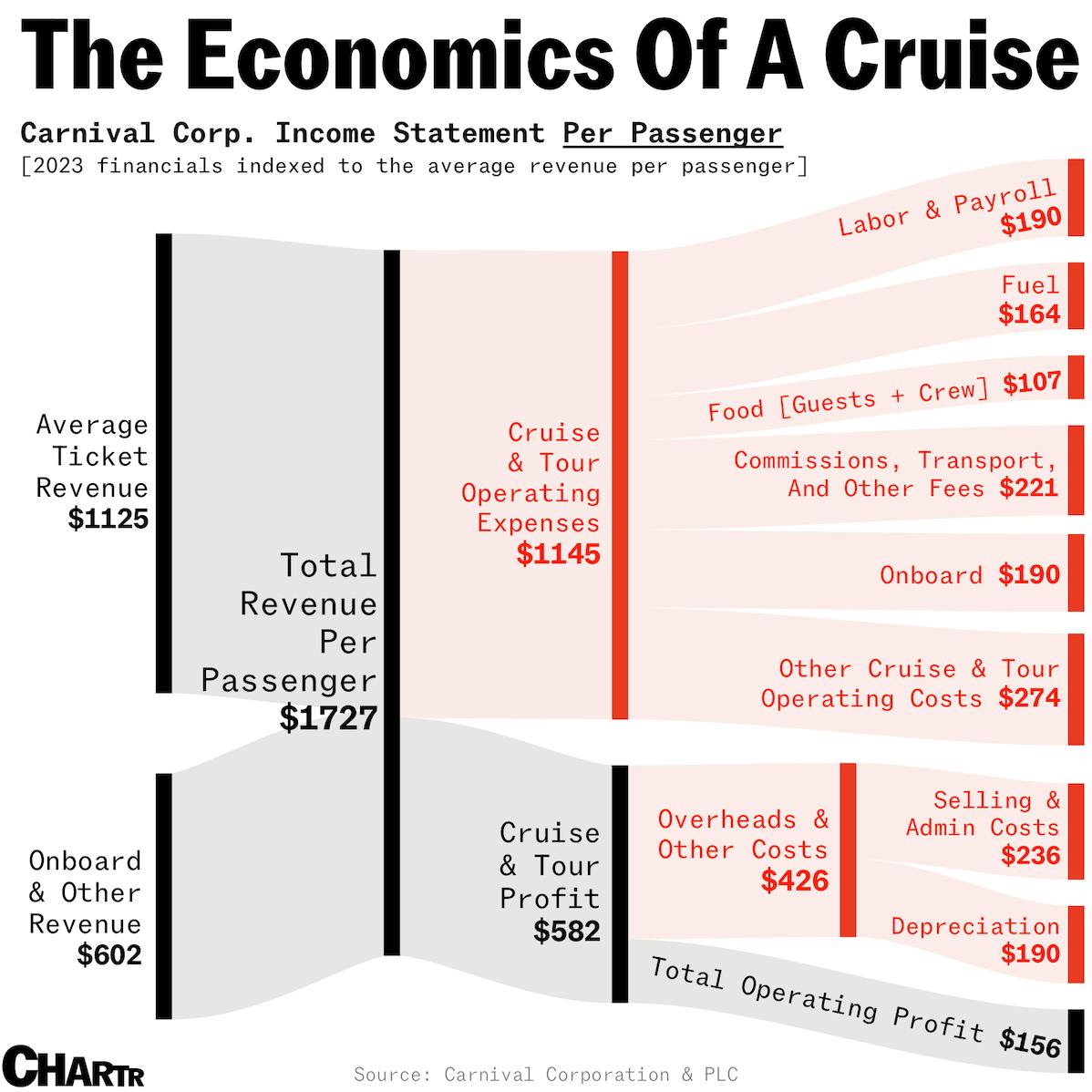
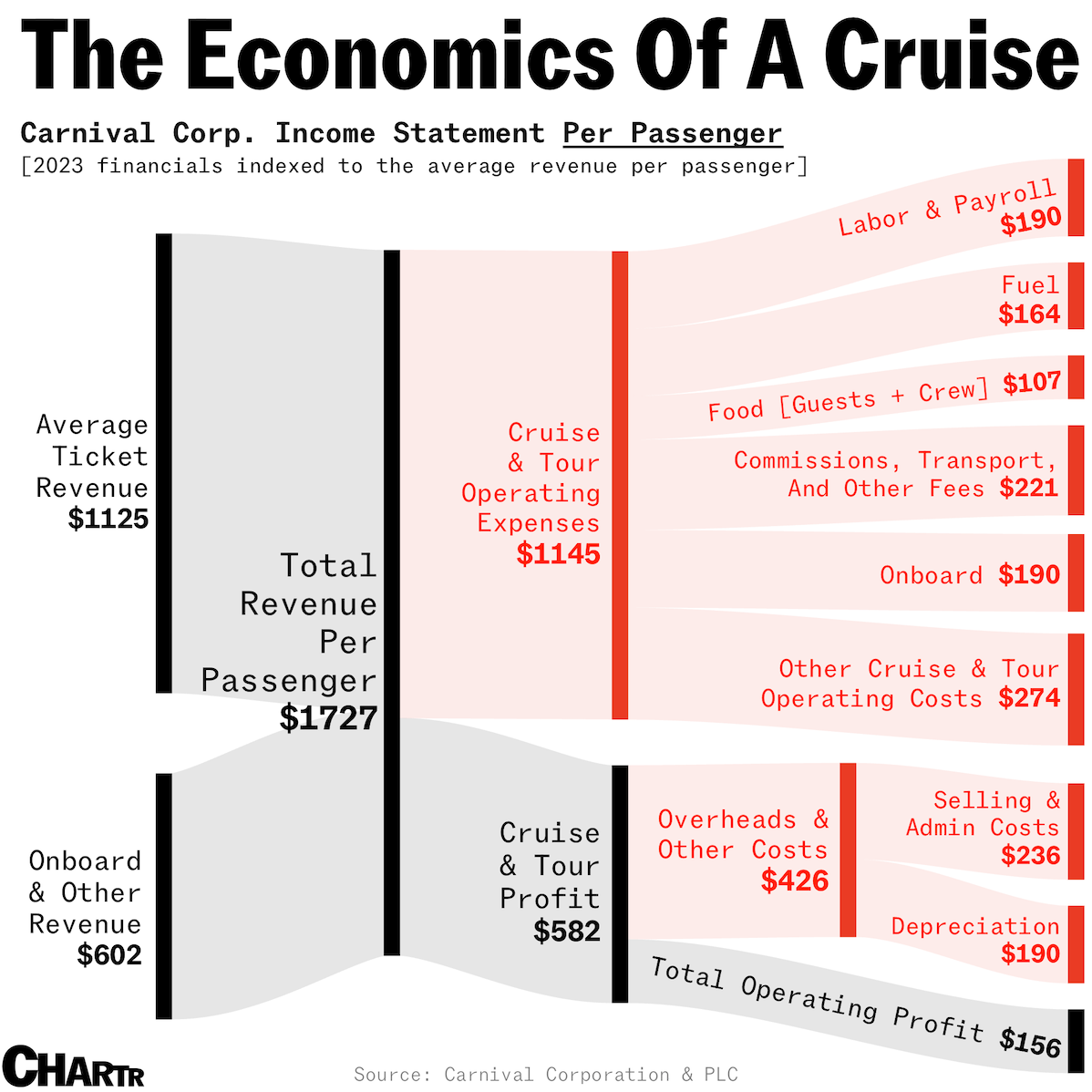
Per company filings, the average ticket in 2023 would have cost about $1,125. But your wallet doesn’t get off that lightly, with Carnival banking another $600 or so per customer on top of that thanks to excursions, food, drinks, casino games, retail sales, spa treatments, laundry services, internet access, and other onboard concessions.

Actually operating the cruise and tours cost the company $1,145 in our example, leaving a healthy $582 left to cover overheads. Of course, one major cost we’ve ignored until now is the ships themselves. That shows up predominantly in “depreciation”, with the company spreading the cost of its ships over a 30-year lifespan. So, what’s Carnival left with? About $150 out of the original $1,700, or a 9% margin. Company execs will be hoping that cutting less profitable routes will get it back to the 15-16% margins that were common pre-pandemic.

More Business

See all Business
Apple Store in Shanghai, China

Apple is back in the big time in China

The iPhone maker logged its strongest China sales in years as upgrades and switchers surged.

Tesla To Convert Fremont Car Factory Into It's Optimus Robot Factory

The economics of Tesla the company are still all about cars. The economics of Tesla the stock are not.

The company is ditching some of its EV models as it doubles down on robots, AI, energy, and self-driving.

business

Paramount+ wants to look a lot more like TikTok, leaked documents reveal

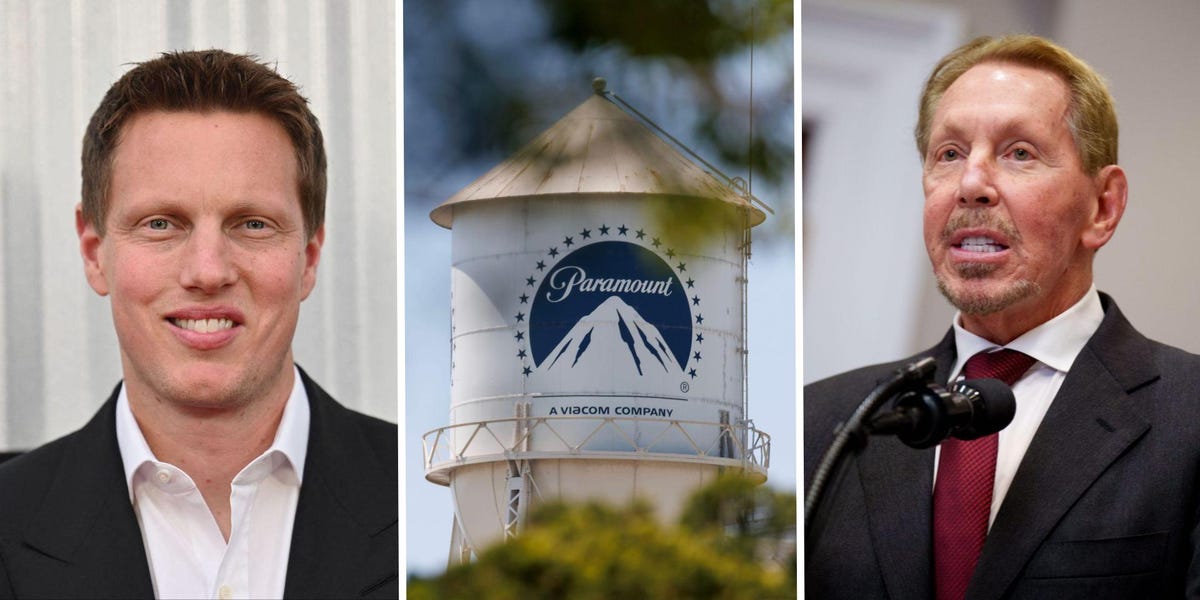
Larry Ellison’s Oracle just took a 15% stake in TikTok’s US arm. David Ellison’s Paramount streaming service could soon look a lot more like it.

According to leaked documents seen by Business Insider, Paramount+ is planning a big push into short-form, user-generated video in the vein of the addictive feeds of TikTok, Instagram Reels, and YouTube Shorts.

Per Business Insider, the documents reveal that short-form videos are a top priority for the streamer in the first quarter of 2026, and executives are working on adding a personalize feed of clips to the mobile app.

The move would follow similar mobile-centric plans from Disney, which earlier this month announced that it would bring vertical video to Disney+ this year, and Netflix, which during its earnings call said it would revamp its mobile app toward vertical video feeds and expand its short-form video features.

Streamers are increasingly competing for user attention with popular apps. YouTube is regularly the most popular streaming service by time spent.

Per Business Insider, the documents reveal that short-form videos are a top priority for the streamer in the first quarter of 2026, and executives are working on adding a personalize feed of clips to the mobile app.

The move would follow similar mobile-centric plans from Disney, which earlier this month announced that it would bring vertical video to Disney+ this year, and Netflix, which during its earnings call said it would revamp its mobile app toward vertical video feeds and expand its short-form video features.

Streamers are increasingly competing for user attention with popular apps. YouTube is regularly the most popular streaming service by time spent.

The Memorial Tournament presented by Workday - Previews

Starbucks’ CEO, Brian Niccol, made $30.9 million in 2025

That includes $997,392 in expenses related to his use of the company’s private jet.

Latest Stories

Sherwood Media, LLC produces fresh and unique perspectives on topical financial news and is a fully owned subsidiary of Robinhood Markets, Inc., and any views expressed here do not necessarily reflect the views of any other Robinhood affiliate, including Robinhood Markets, Inc., Robinhood Financial LLC, Robinhood Securities, LLC, Robinhood Crypto, LLC, or Robinhood Money, LLC.