Business
Air marshaller waving in a plane
(Emmanuele Contini/Getty Images)

The big four US airline stocks have collectively shed about $24 billion in value over the past month

Delta, United, American, and Southwest have all sunk in the past 30 days as tariffs send investors running.

The seatbelt sign hasn’t turned off for a solid month at the big four US airlines.

The market caps of Delta Air Lines, United Airlines, American Airlines, and Southwest Airlines have fallen by roughly $24 billion combined over the past month. Together, the companies control roughly 80% of the US market when accounting for their regional partners.

For context, that’s about the equivalent of losing a Best Buy plus a Mattel, three-ish years of Delta’s Amex credit card income, or roughly 180 737 Max 10s.

Delta, United, and American have dropped by more than 28% each since early February, while Southwest has shed more than 7%. JetBlue, Spirit, and Alaska Air shares are also down significantly.

Sending the oxygen masks down: Trump administration tariffs, which certainly haven’t helped an industry already plagued by accidents this year.

25% levies on steel and aluminum, materials that are key to making things that fly, are set to go into effect on Wednesday. It’s estimated those tariffs could hike the production cost of a narrow-body aircraft by up to $2.5 million. Other duties (delayed or not) have Wall Street fearing a downturn in discretionary spending and travel.

Depending on how long tariffs last, the airline manufacturing supply chain could be in for rough skies. Carriers may lease more jets (as opposed to buying them outright), sending leasing rates higher. Ultimately, that could bump up ticket prices for passengers.

Understandably, the aviation industry isn’t thrilled about the situation. Boeing, which itself is down more than 18% over the past month, could be hit harder than its European rival Airbus due to retaliatory tariffs. The Airbus CEO called the levies a “lose-lose” late last month.

More Business

See all Business
Television Set

Streamers continued retreating from original shows in 2025

The death of “peak TV” has not been exaggerated, per a new report from Luminate.

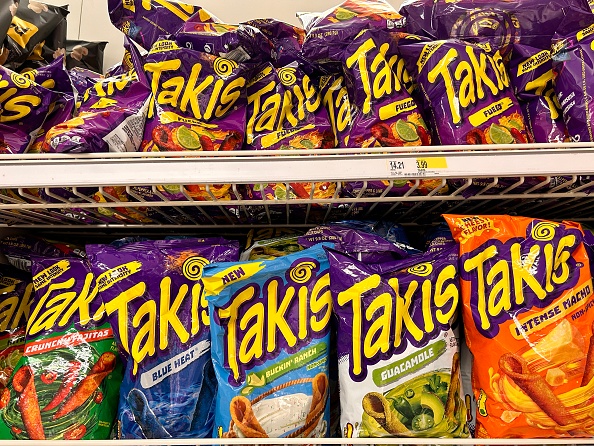
Retail display of Takis snack food in various spicy flavors in Target store, Queens, New York

America’s love for spicy food and mouth-tingling sauces has surged, but are we approaching “peak heat”?

Takis doesn’t think so, as it searches for a “Chief Intensity Officer.”

business
Tom Jones

OpenAI’s ARR reached over $20 billion in 2025, CFO says

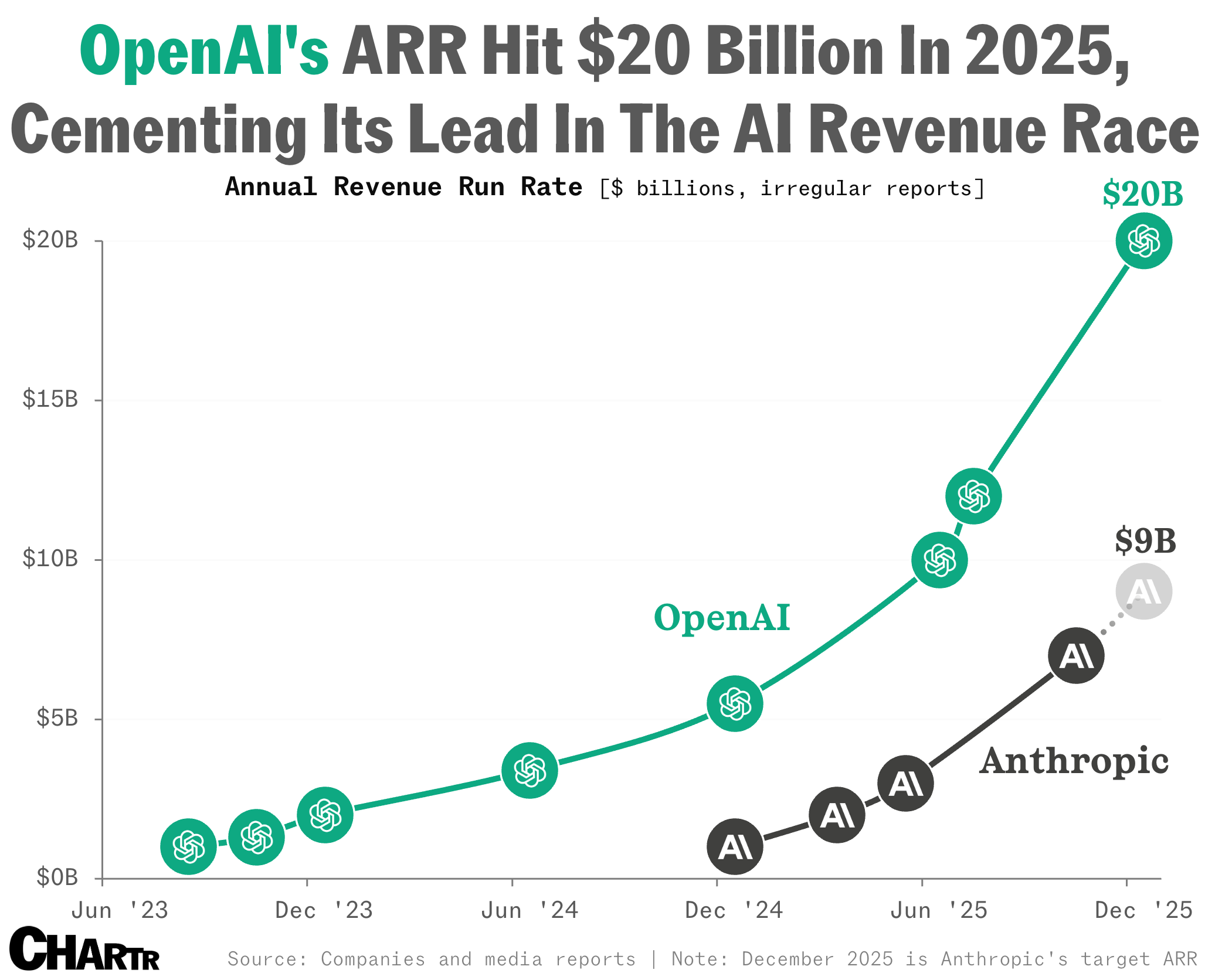
Sam Altman’s $500 billion artificial intelligence behemoth hit a major financial milestone last year, according to a new blog post over the weekend from OpenAI CFO Sarah Friar, as the company confirmed it had hit a more than $20 billion annual revenue run rate at the end of 2025.

Elsewhere in the blog post, Friar spent time addressing the company’s shifting goals, referencing plans to “close the distance between where intelligence is advancing and how individuals, companies, and countries actually adopt and use it.” As has become customary in the AI company press release genre, the CFO was also keen to tout the unending growth of the business, writing:

  • Both our Weekly Active User (WAU) and Daily Active User (DAU) figures continue to produce all-time highs. This growth is driven by a flywheel across compute, frontier research, products, and monetization.

  • Compute grew 3X year over year or 9.5X from 2023 to 2025: 0.2 GW in 2023, 0.6 GW in 2024, and ~1.9 GW in 2025.

And, perhaps most importantly for current backers and those keeping an eye on the private company before its rumored mega IPO:

  • Revenue followed the same curve growing 3X year over year, or 10X from 2023 to 2025: $2B ARR in 2023, $6B in 2024, and $20B+ in 2025. This is never-before-seen growth at such scale.

That latest figure has certainly set tongues in the tech world wagging, just as the company announced it would begin rolling out ads to free and ChatGPT Go users. It also puts the chatbot giant a fair way ahead of competitors like Anthropic, the company behind Claude.

OpenAI Anthropic ARR race
Sherwood News

Elsewhere in the blog post, Friar spent time addressing the company’s shifting goals, referencing plans to “close the distance between where intelligence is advancing and how individuals, companies, and countries actually adopt and use it.” As has become customary in the AI company press release genre, the CFO was also keen to tout the unending growth of the business, writing:

  • Both our Weekly Active User (WAU) and Daily Active User (DAU) figures continue to produce all-time highs. This growth is driven by a flywheel across compute, frontier research, products, and monetization.

  • Compute grew 3X year over year or 9.5X from 2023 to 2025: 0.2 GW in 2023, 0.6 GW in 2024, and ~1.9 GW in 2025.

And, perhaps most importantly for current backers and those keeping an eye on the private company before its rumored mega IPO:

  • Revenue followed the same curve growing 3X year over year, or 10X from 2023 to 2025: $2B ARR in 2023, $6B in 2024, and $20B+ in 2025. This is never-before-seen growth at such scale.

That latest figure has certainly set tongues in the tech world wagging, just as the company announced it would begin rolling out ads to free and ChatGPT Go users. It also puts the chatbot giant a fair way ahead of competitors like Anthropic, the company behind Claude.

OpenAI Anthropic ARR race
Sherwood News

Latest Stories

Sherwood Media, LLC produces fresh and unique perspectives on topical financial news and is a fully owned subsidiary of Robinhood Markets, Inc., and any views expressed here do not necessarily reflect the views of any other Robinhood affiliate, including Robinhood Markets, Inc., Robinhood Financial LLC, Robinhood Securities, LLC, Robinhood Crypto, LLC, or Robinhood Money, LLC.