


Saks Global nears bankruptcy as department stores lose ground in America
On top of its debt-laden luxury merger, the retailer’s operating in a sector that’s been in retreat for over 20 years.
Saks Global is on the brink of filing for Chapter 11 bankruptcy, according to multiple reports Friday, just a year after the group was stitched together in a $2.7 billion deal that was meant to create a luxury retail powerhouse, but instead left it saddled with debt.
The 2024 merger combined Saks Fifth Avenue — the more than 150-year-old flagship — with Neiman Marcus, financed with about $2.2 billion in debt as the company bet on scale. That left little room for error when a softer luxury market and falling foot traffic set in. By October, Saks posted a 13% year-on-year revenue drop, while leaving some vendors unpaid for months and prompting many to halt shipments.
The squeeze came to a head in late December, when the retailer missed a $100 million interest payment, pushing a bankruptcy filing firmly into view. Saks is now seeking a $1.25 billion lifeline loan to keep its stores running during the legal process, per Bloomberg.
But while its immediate crisis may be debt-driven, Saks’ troubles also reflect a longer trend: America’s department stores are dying.
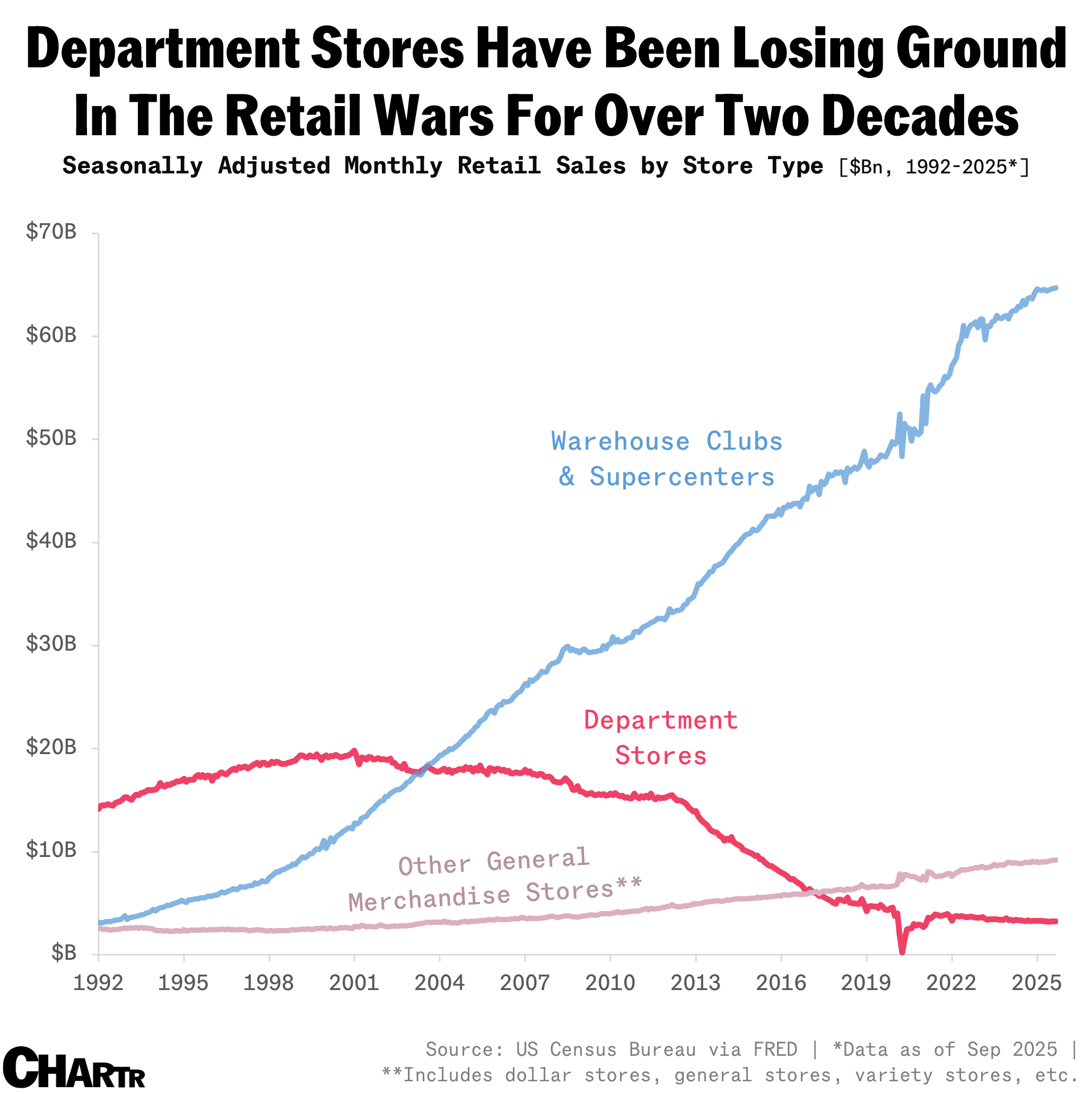
Per US Census Bureau data, department store sales peaked around the turn of the century and have trended lower ever since, as retail supercenters, warehouse clubs, and e-commerce ate into their business.
Saks may be an extreme case with its debt problem, but it’s hardly alone: Macy’s just announced plans to close 14 more stores this year, part of a turnaround plan to shutter ~150 underperforming locations by the end of 2026. Kohl’s warned in November that net sales would drop 3.5% to 4.0% in full-year 2025 amid shifting consumer habits. And recent Placer.ai data shows that off-price and warehouse retailers once again drew more foot traffic than traditional department stores this past holiday season.