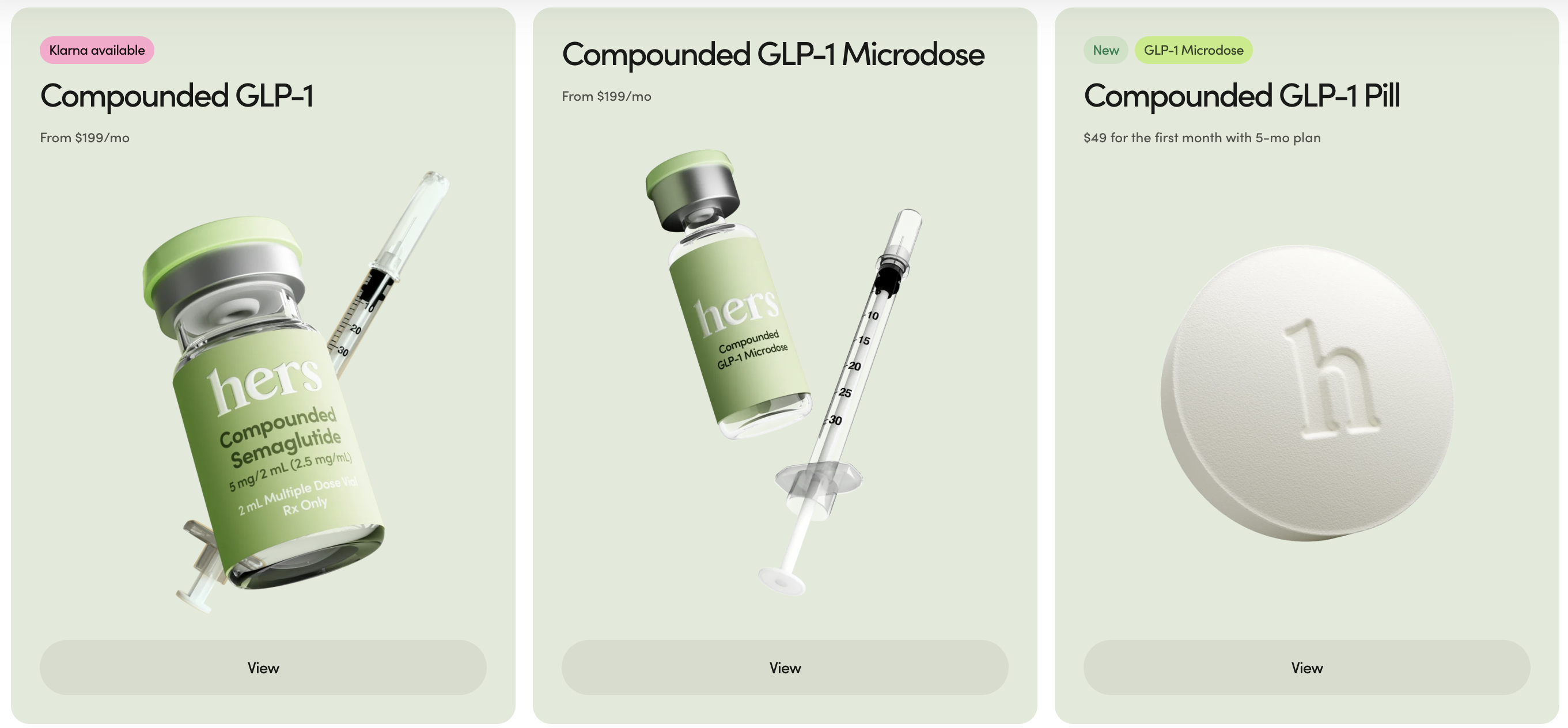
Before Hims’ GLP-1 pill fallout, its pharmacy partner was already drawing scrutiny from state regulators
Strive has already been probed over the timing of its GLP-1 compounding. Now, Arizona regulators are looking into complaints about ketamine misuse and improper distribution of prescription drugs.
Arizona state regulators had already raised concerns about the compounding practices of the pharmacy behind Hims & Hers’ short-lived copy of Novo Nordisk’s Wegovy pill. Now, state officials are looking into two complaints against the pharmacy, one involving alleged ketamine misuse.
Documents obtained by Sherwood News through public records requests show that Arizona regulators documented concerns about Strive Pharmacy’s compounding of GLP-1 weight-loss drugs as recently as September. The Arizona Board of Pharmacy is also taking up complaints alleging misuse of ketamine at its facilities and providing prescription drugs to a clinic that was selling them over the counter, according to pharmacy board proceedings this week.
State pharmacy boards police compounding pharmacies, whose products are often sold nationwide. Strive is one of the country’s largest compounders, providing GLP-1s for several telehealth companies, including Hims & Hers. The company recently broke ground on a new 350,000-square-foot compounding facility in Mesa, Arizona, to “meet growing demand.”
Records show the Arizona BOP found that Strive began compounding Eli Lilly and Novo Nordisk’s blockbuster weight-loss drugs before they were added to the Food and Drug Administration’s shortage list, and later flagged what appeared to be templated clinical rationales for prescriptions of compounded GLP-1s.
Outside of a drug shortage, compounding pharmacies are permitted to dispense patient-specific medications — such as customized dose sizes or doses with additives — when prescribed by a physician. Lilly and Novo have argued that telehealth companies and compounders are stretching that exemption to mass-produce cheaper copycat versions of their weight-loss drugs.
Lilly sued Strive last year, accusing it of false and deceptive online marketing. In January, Strive sued Lilly and Novo, alleging the drugmakers used exclusive telehealth deals and other tactics to squeeze compounding pharmacies out of the GLP-1 market.
Hims announced February 5 that it would sell compounded oral semaglutide, a product similar to Novo’s Wegovy pill launched weeks earlier. It stopped offering the product two days later after coming under scrutiny from the federal government, and is now also facing a patent infringement lawsuit from Novo Nordisk. Hims did not immediately respond to a request for comment for this story.
Questions also arose about whether the Wegovy pill copy sold by Hims and made by Strive would work without Novo’s patented coating. Hims and Strive directed questions to information on Strive’s website describing its “liposomal technology.” The method has not been proven in clinical trials to be effective on humans.

Strive has since removed those pages and deleted related posts on X, saying the language was “being misunderstood” and that it is updating its descriptions.
“Strive stands behind its solid-state lipid tablet formulation,” a spokesperson said in a statement to Sherwood.
GLP-1 compounding
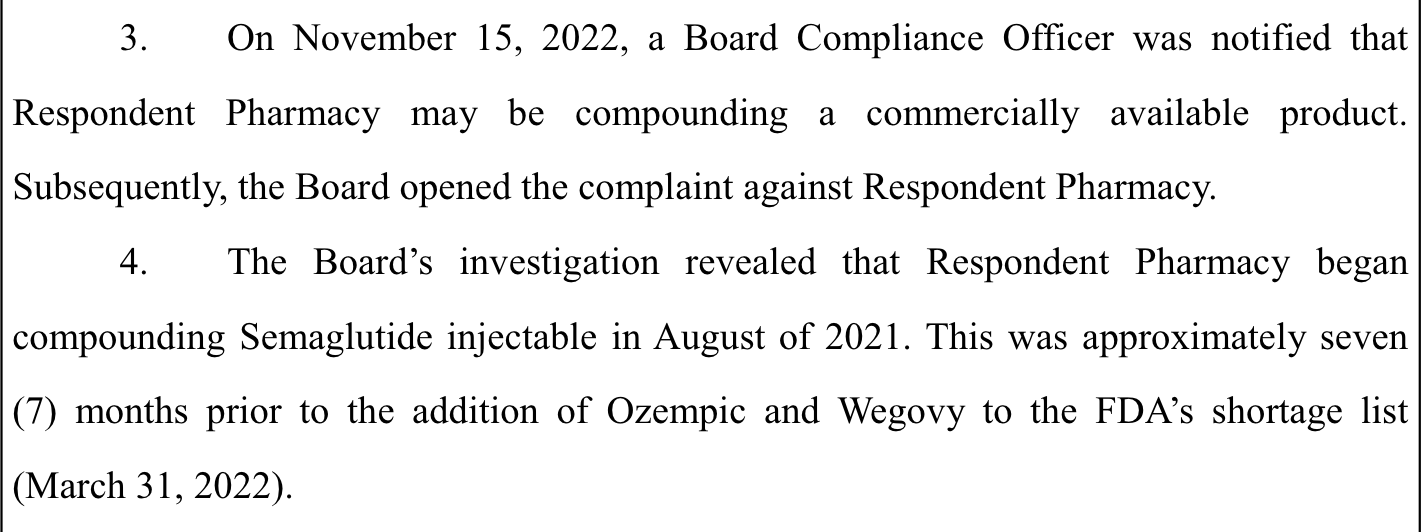
In a February 2024 consent agreement, the Arizona BOP stated that Strive began compounding injectable semaglutide, the active ingredient in Novo’s Ozempic and Wegovy, in August 2021 — about seven months before the drugs were added to the FDA’s drug shortage list. Strive agreed to pay a $1,000 fine.
Strive told Sherwood the board did not discipline the company for the original allegation that it had improperly compounded a commercially available product. Instead, the company said the February 2024 consent agreement addressed a documentation issue identified during the inspection.
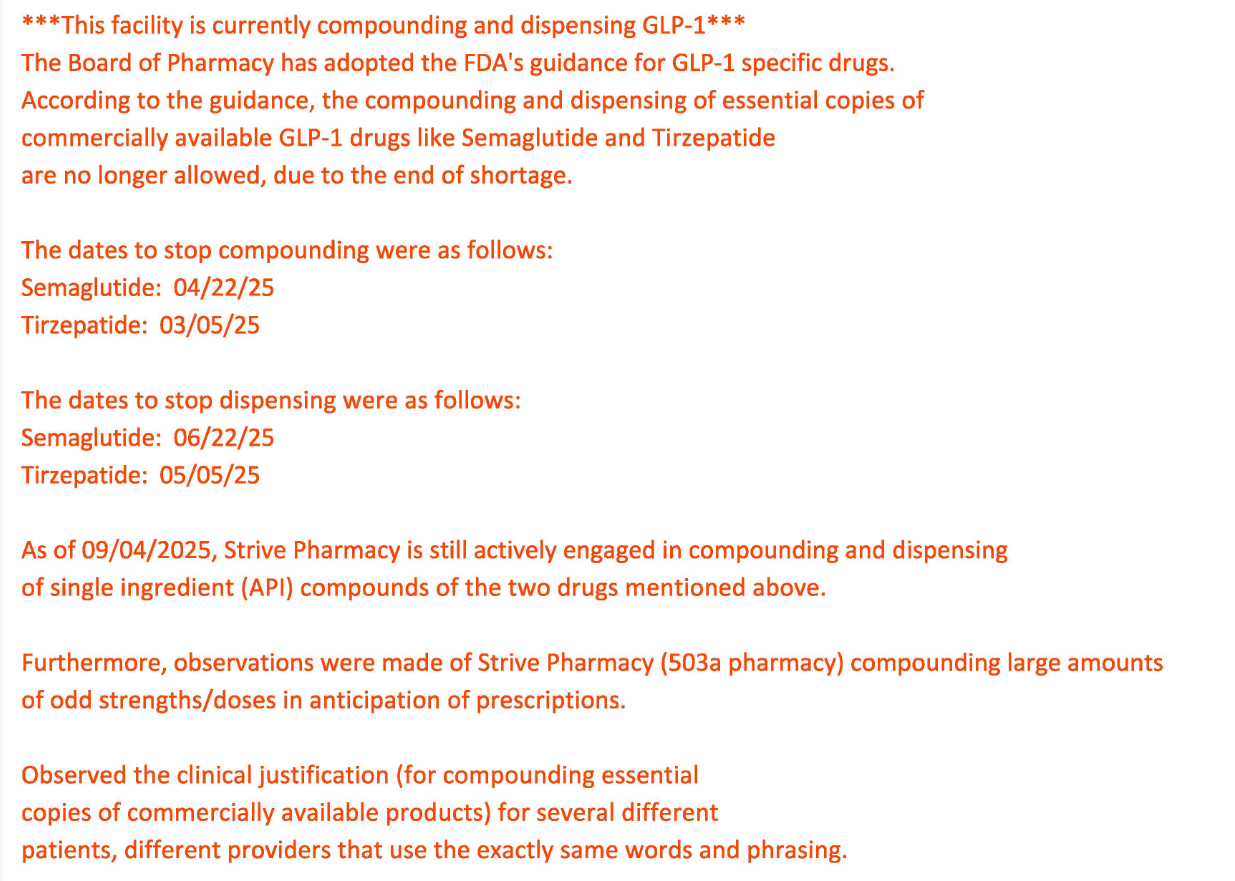
More recently, a September 4, 2025, inspection found that Strive continued to compound and dispense single-ingredient versions of semaglutide and tirzepatide (the key ingredient in Eli Lilly’s weight-loss shot) even after the federal shortage exemption period ended earlier that year.
Strive and Hims have maintained that their GLP-1 products are tailored to individual patients, which is allowed even when branded versions aren’t in a shortage.
But an inspector wrote that Strive produced “large amounts of odd strengths/doses in anticipation of prescriptions.” They also wrote that different providers whose prescriptions were fulfilled by Strive used identical language to justify the compounding of what regulators described as “essential copies” of commercially available, FDA-approved GLP-1 drugs.
Strive told Sherwood that it “respectfully disagrees with that characterization of Strive’s GLP-1 compounding activities in the September 4, 2025 inspection report and does not believe it accurately reflects Strive’s compliance with applicable guidance and compounding law.”
“Strive has requested that the Board amend or update the report to correct the inaccuracies in the inspector’s notes,” a spokesperson said.
New complaints
At a December 2 meeting, the Arizona BOP’s Complaint Review Committee voted to advance two complaints investigated by board staff alleging that Strive “inappropriately compounded and tested ketamine patches on an employee” and “knowingly provided prescription medication to a provider that was selling them over the counter.”
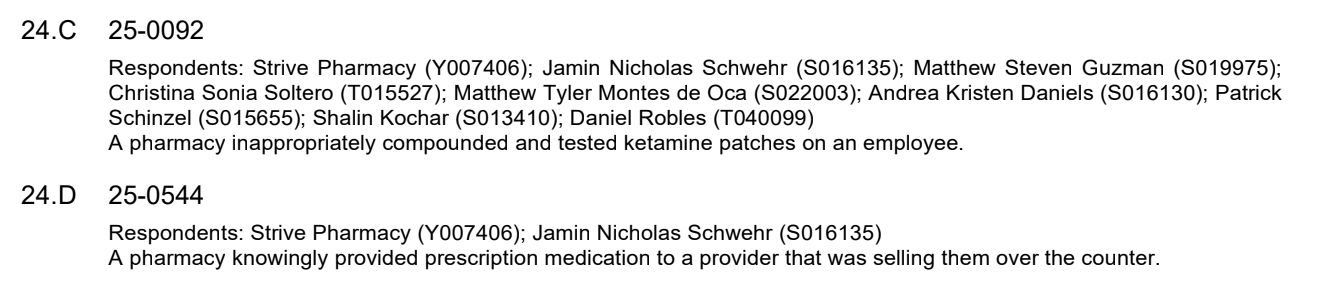
Complaints are investigated by staff before the board votes on next steps. The board has not yet made findings in either case, and details of the complaints remain limited; the agency declined to release documents related to the complaints in response to a public records request.
“Strive Pharmacy takes these allegations very seriously and is committed to fully cooperating with the AZ BOP to address these allegations,” the company said.
At the live-streamed December 2 complaint review meeting, Stephanie Spark, a member of the board, said her briefing materials mentioned technicians were “leaving the ketamine patches in the office for others to use.”
“It indicated to me that there’s something a lot more broader that’s going on,” she said.
Arizona BOP Compliance Officer Max Jacobson told the board he believed senior leadership was involved, stating, “There’s no way this technician acted alone.”
At a full board meeting on Thursday, the board did not discuss that case, which is being jointly investigated with California officials, and voted to revisit it at a later meeting.
Slimming Grace
The second complaint centers on allegations that Strive supplied prescription drugs to a weight-loss clinic, Slimming Grace, which was selling them over the counter rather than dispensing them to specific patients.
The complaint originated from a notification by the Arizona Attorney General’s Office, which later issued a notice warning of expired medications being sold at the clinic. (Strive said that it is not under investigation by the attorney general.)
Jacobson told the board on Thursday that Strive took 30 days to stop dispensing to Slimming Grace after being tipped off that it wasn’t selling the drugs to specific patients. Strive leadership, sitting with their attorneys, told the board its compliance department has grown and its policies have changed in the year since the incident.
The board also voted to revisit this issue, saying they needed more information about how Strive’s sales team is compensated. The evidence discussed included a text from a Strive sales representative to Slimming Grace, acknowledging that the company’s compliance team called her about the issue the same day more than 80 prescriptions were sent.
“I want to make sure there isn’t a culture inside of this organization to just get more sales when they could be knowingly breaking the law,” said Lorri Walmsley, president of the Arizona BOP.