Business
business

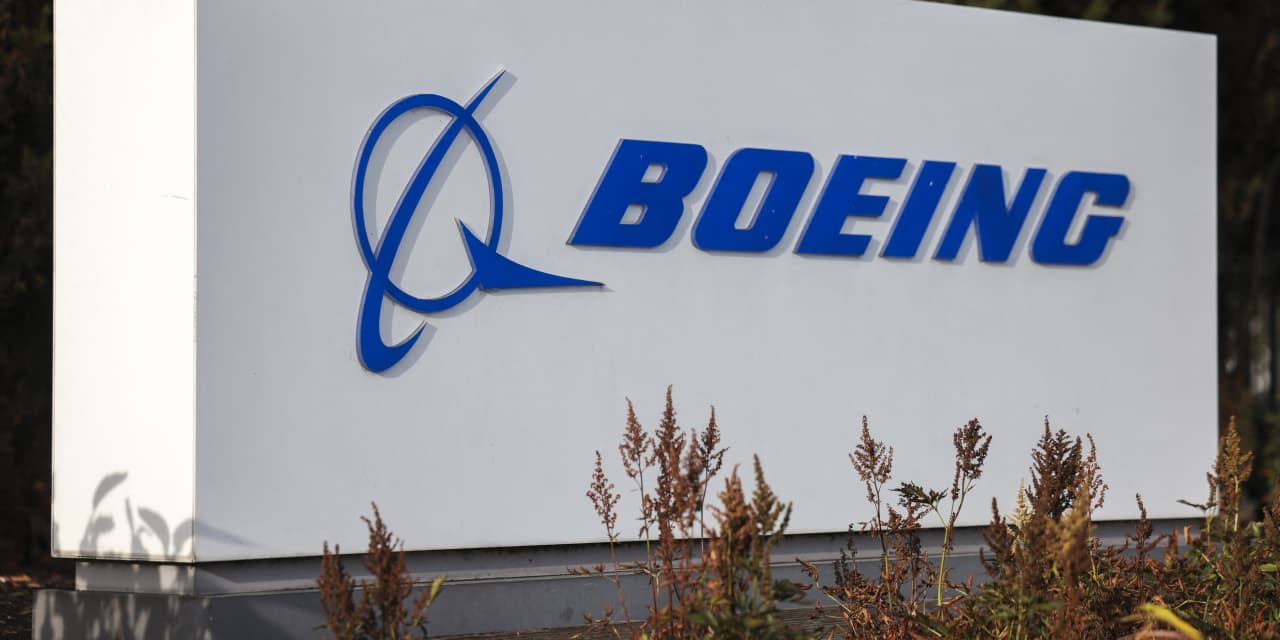
Everyone expected Boeing’s Q4 earnings to be bad — they were even worse

Yesterday, Boeing dropped the headlines of its Q4 earnings a little early. Not expected until January 28, Boeing reported preliminary revenue of $15.5 billion, far below Wall Street’s forecast of $16.5 billion. The bottom line didn’t fare much better, with a per-share loss of $5.46, nearly triple the $1.55 analysts had anticipated, according to Barrons.

A clear sign of just how much pain is already priced into Boeing’s stock, the company’s shares are only 1.6% lower in premarket trading, despite the preannouncement and large losses.

The muted reaction may be because the disappointing results largely stem from a well-publicized seven-week labor strike that ended in November, which halted production, delayed deliveries, and resulted in a new labor agreement raising wages by 38%, contributing to $1.1 billion in charges.

With 2024 now officially another year in the red, Boeing hasn’t turned an annual profit in six years, after the fatal crashes of its bestselling 737 Max in 2018 and 2019 set off years of struggles. The challenges continued last year, starting with a midair door plug failure in January that reignited safety concerns. The company ended up delivering roughly half the number of planes that analysts had expected at the start of 2024, per Barrons.

A clear sign of just how much pain is already priced into Boeing’s stock, the company’s shares are only 1.6% lower in premarket trading, despite the preannouncement and large losses.

The muted reaction may be because the disappointing results largely stem from a well-publicized seven-week labor strike that ended in November, which halted production, delayed deliveries, and resulted in a new labor agreement raising wages by 38%, contributing to $1.1 billion in charges.

With 2024 now officially another year in the red, Boeing hasn’t turned an annual profit in six years, after the fatal crashes of its bestselling 737 Max in 2018 and 2019 set off years of struggles. The challenges continued last year, starting with a midair door plug failure in January that reignited safety concerns. The company ended up delivering roughly half the number of planes that analysts had expected at the start of 2024, per Barrons.

More Business

See all Business
business

Ford says it will take $19.5 billion in charges in a massive EV write-down

The EV business has marked a long stretch of losing for Ford, and today the automaker announced it will take $19.5 billion in charges tied, for the most part, to its EV division.

Ford said it’s launching a battery energy storage business, leveraging battery plants in Kentucky and Michigan to “provide solutions for energy infrastructure and growing data center demand.”

According to Ford, the changes will drive Ford’s electrified division to profitability by 2029. The company will stop making its electric F-150, the Lightning, and instead shift to an “extended-range electric vehicle” that includes a gas-powered generator.

The Detroit automaker also raised its adjusted earnings before interest and taxes outlook to “about $7 billion” from a range of $6 billion to $6.5 billion.

Ford’s write-down is one of the largest taken by a company as legacy automakers scale back on EVs, giving EV-only automakers a market share boost.

business

GM adds Apple Music to select new vehicles, racing to fill the gap left by CarPlay’s absence

Earlier this year, General Motors said it plans to end support for in-vehicle phone projection systems like Apple CarPlay and Android Auto on all of its vehicles (a big expansion of the move it announced for its EVs back in 2023).

Now, the automaker appears to be stocking its replacement system with native apps to fill the void. On Monday, GM announced it was rolling out Apple Music to select 2025 Chevrolet and Cadillac models.

Losing CarPlay is a sore subject for many drivers: 39% of respondents to an American Trucks survey this month said a lack of the system (or Android Auto) is a “deal-breaker” when it comes to buying a new vehicle.

Many automakers appear willing to risk alienating those potential customers in exchange for access to lucrative data. Others, including Tesla, are working to allow CarPlay to boost sagging sales, according to reporting by Bloomberg.

Losing CarPlay is a sore subject for many drivers: 39% of respondents to an American Trucks survey this month said a lack of the system (or Android Auto) is a “deal-breaker” when it comes to buying a new vehicle.

Many automakers appear willing to risk alienating those potential customers in exchange for access to lucrative data. Others, including Tesla, are working to allow CarPlay to boost sagging sales, according to reporting by Bloomberg.

Latest Stories

Sherwood Media, LLC produces fresh and unique perspectives on topical financial news and is a fully owned subsidiary of Robinhood Markets, Inc., and any views expressed here do not necessarily reflect the views of any other Robinhood affiliate, including Robinhood Markets, Inc., Robinhood Financial LLC, Robinhood Securities, LLC, Robinhood Crypto, LLC, or Robinhood Money, LLC.