
Business
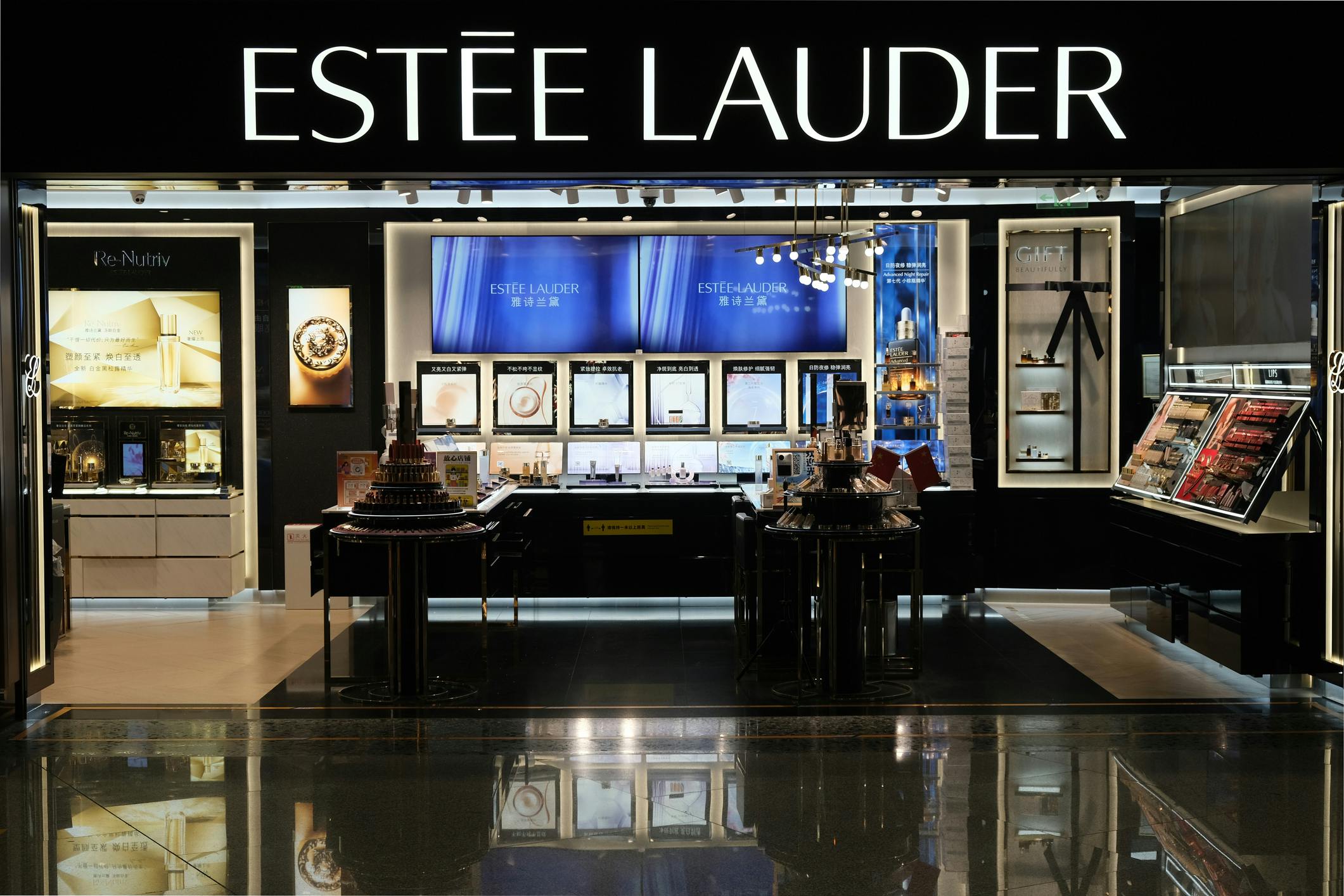
ESTĒE LAUDER store at Beijing Daxing International Airport
Front of Estée Lauder retail store at Beijing Daxing International Airport (Getty Images)
Beauty and the Bust

Estée Lauder has worst day ever after withdrawing guidance and slashing dividend

Disappointing outlook, dividend cut, and leadership pick rattled investors, dragging the stock down more than 20%.

Yiwen Lu

We’ve heard the story before: businesses that rely on Chinese consumers are struggling. But Estée Lauder was hit especially hard. Shares of the beauty conglomerate were down over 20% on Thursday afternoon, on track for their biggest one-day drop on record. The stock has plunged more than 50% this year and has opened at its lowest price since April 2014.

The company reported adjusted earnings per share of $0.14 per share, better than expected. Overall, net sales of $3.36 billion was modestly below analyst estimates of $3.37 billion.

However, facing an uncertain future, Estée Lauder withdrew its outlook for fiscal 2025 and reduced its dividend by nearly half.

China was Estée Lauder’s biggest market when its stock peaked in late 2021, making up about 35% of the company’s sales by regions in 2021 and 2022. Yet the worsening sentiment surrounding Chinese consumers amid the postpandemic economic malaise has turned many of them away from prestige skin care and beauty products. In the latest quarter, net sales in Asia Pacific decreased 11%, including double-digit decline in Mainland China and Hong Kong. 

And just like other companies that had their heydays in China, Estée Lauder was facing fierce competition from cheap local alternatives. 

“While we believe the new economic stimulus measures in China present medium- to long-term potential for stabilization and ultimately growth in prestige beauty, we anticipate still-strong declines near-term for the industry in China and Asia travel retail,” the company said in a press release. When China announced a slew of fiscal and monetary stimulus in late September, shares of Estée Lauder — along with luxury giants like LVMH — rose on the optimistic sentiment.

Beyond challenges in China, Estée Lauder’s real-life “Succession” drama also disappointed investors. Some members of the board were dissatisfied with the company’s current CEO Fabrizio Freda, but the board and the Lauder family were split on who should succeed Freda, The Wall Street Journal reported. Some preferred external candidates who may be better suited to lead turnaround efforts, while others wanted an insider. On Wednesday, the company announced that Stéphane de La Faverie, a longtime insider, would take over from Freda as CEO. 

But Wall Street doesn’t seem happy. Investors were concerned that an internal hire isn’t able to offer a fresh, differentiated perspective, Barron’s reported

More Business

See all Business
9.3%

As the war with Iran produces the biggest spike in US gas prices since Hurricane Katrina, car retailer CarMax is continuing to see heightened interest in EVs, hybrids, and plug-in hybrids.

“From Feb 1st - March 1st (inclusive), compared to March 2nd to March 15th (inclusive), we saw a 9.3% lift in page views for these vehicles,” a spokesperson for the company told Sherwood News.

As industry insiders recently told us, EV interest climbs when gas prices rise. That appears to be holding true even without EV tax credits, which the Trump administration ended under its new budget package.

CarMax also saw EV searches spike in 2022, amid Russia’s invasion of Ukraine and the resulting oil price spike.

Walt Disney Chairman And CEO Bob Iger Rings Opening Bell At NY Stock Exchange

It’s the end of Disney’s Iger era (again)

Incoming CEO Josh D’Amaro is replacing Bob Iger on Wednesday, though Iger will remain a senior adviser through the end of the year.

$35.4B

The tariffs imposed by the Trump administration have cost automakers at least $35.4 billion since the start of 2025, according to a new analysis by Automotive News.

That total will continue to climb this year, since the Supreme Court’s February tariff ruling largely leaves the 25% levy on vehicles and auto parts untouched.

Toyota has taken the biggest hit, projecting more than $9 billion in tariff costs in its fiscal year ending this month, while Detroit’s big three automakers — Ford, GM, and Stellantis — were hit with a combined $6.5 billion tariff charge in 2025.

In the fourth quarter, automakers sold about 8% fewer imported vehicles in the US compared to the same period a year ago, per the Automotive News Research & Data Center.

Tariff charges come at a rough time for legacy carmakers, which are also scaling back EV plans following the Trump administration’s elimination of tax credits and fuel standard goals. According to Automotive News, the cost of EV write-downs and restructuring is, so far, nearly $70 billion.

Universal Studios Orlando Theme Park

Universal Studios is giving theaters a longer minimum exclusive run

Universal will now guarantee a minimum of five weekends before a movie hits home screens — which might help theater companies like AMC finally get back to profitability.

Latest Stories

Sherwood Media, LLC produces fresh and unique perspectives on topical financial news and is a fully owned subsidiary of Robinhood Markets, Inc., and any views expressed here do not necessarily reflect the views of any other Robinhood affiliate, including Robinhood Markets, Inc., Robinhood Financial LLC, Robinhood Securities, LLC, Robinhood Crypto, LLC, Robinhood Derivatives, LLC, or Robinhood Money, LLC. Futures and event contracts are offered through Robinhood Derivatives, LLC.