

DiscountDreams
Another day, another dollar
Dollar Tree wants a richer, “$125k” customer, so Family Dollar has to go
For more than 30 years, Dollar Tree sold nearly everything in its stores for $1. Then the upsell started.
Discount retailer Dollar Tree said last month that it would look into selling its Family Dollar line of stores. On its face, that might just seem like a reversal of a terrible business decision — the company spent $9 billion to buy Family Dollar in 2015, outbidding its key rival, Dollar General. It certainly won’t recoup that amount in a sale.
A deeper look, though, shows that selling the stores would be yet another way Dollar Tree is continually pushing to target consumers who have more money in their pockets in an era when inflation continues to squeeze consumers, especially low-income shoppers.
Dollar Tree-branded stores typically sit in the suburbs and cater to middle-class consumers who are on the lookout for deals and want to buy party supplies, toys, crafts, and other discretionary items. On a recent earnings call, the company said that in 2023, the Dollar Tree chain added 3.4 million new customers “mostly from households earning over $125,000 a year.”
Family Dollar stores, on the other hand, are usually in urban areas and sell more of the essentials at multiple price points. In recent earnings calls, the company cited last year’s reduction in SNAP benefits as a headwind for the chain.
“The go-to-market strategies for both brands are totally different,” Dollar Tree CEO Richard Dreiling said on an earnings call in November. One is “the thrill of the treasure hunt,” he said, referring to Dollar Tree. Family Dollar, meanwhile, “is traditional consumable retailing where there’s an expectation of what has to be in that store, and has got to be there every time I come in to get it.”
Family Dollar struggled with its operations for years before it was bought out, and Dollar Tree has had a tough time trying to fix those issues. Case in point: the chain was fined more than $40 million by the Justice Department this year for distributing products from a rat-infested warehouse.
While they are both dollar stores, the two brands have little synergy when it comes to purchasing power because they sell different products. Even as profits have gone up for Dollar Tree-branded stores, the company as a whole hasn’t widened its margins much since the merger, a sign Family Dollar may be weighing the company down.
“They’ve tried things, and there are some inherent cultural issues with the Family Dollar business, [and] the Dollar Tree guys since 2015 have not been able to crack the nut and turn it around,” Telsey Advisory Group analyst Joe Feldman said.
Telsey estimated that Family Dollar would likely sell for between $3.5 billion and $7.5 billion, compared to the $9 billion that Dollar Tree paid for it in 2015. Even at that price, Wall Street seems to think selling Family Dollar would be a good idea, rather than continuing to put good money after bad. Last month, UBS estimated that if the company were able to jettison the Family Dollar brand, the Dollar Tree chain by itself would be worth $160 a share, much higher than the $107.25 per share the company closed at on Monday.
A 25% price increase across the board
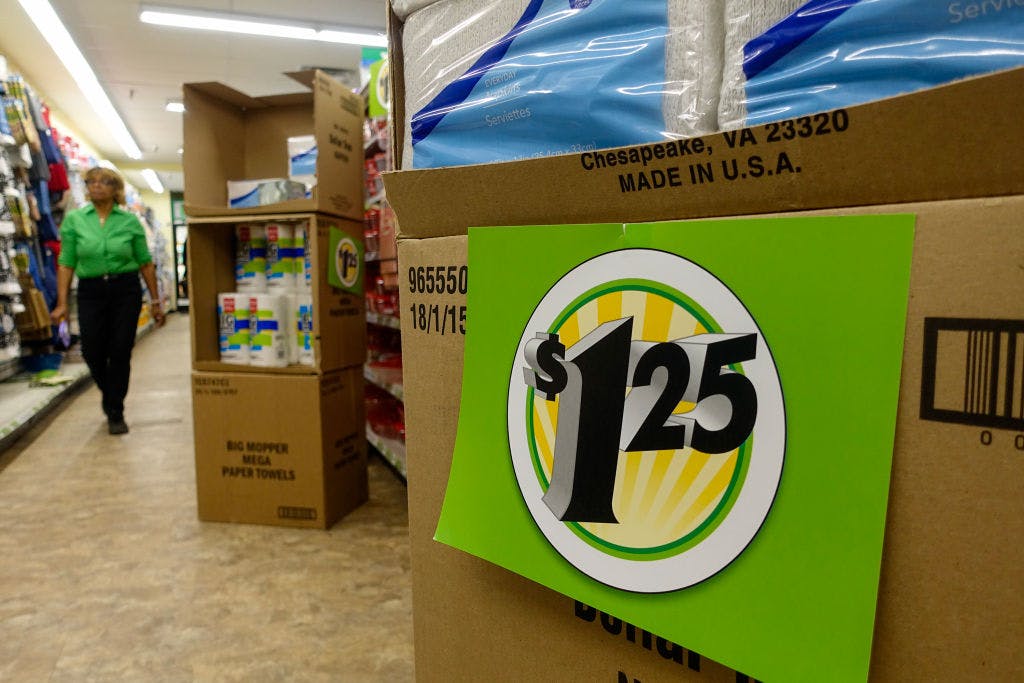
For more than 30 years, Dollar Tree sold nearly everything in its self-branded stores for $1. Then the upsell started. In 2019, Dollar Tree started exploring selling items for $3 or $5. Two years later, it raised its baseline price to $1.25, which sounds small until you consider: what other companies have been able to raise prices across the board by 25% in one fell swoop?
Earlier this year, Dollar Tree said it would raise its maximum price for an item to $7. It’s part of a strategy the company calls “multi-price,” which it is clearly banking on to turn its stock-price performance around. There were 41 mentions of “multi-price” on the company’s earnings call last month.
While it keeps steering shoppers toward higher price tags, the company is also shifting its mix of stores toward higher-income shoppers. It has closed hundreds of Family Dollar stores already, and now it’s looking at selling the chain altogether. Meanwhile, the company just struck a deal to buy 170 stores from 99 Cents Only Stores out of bankruptcy, the vast majority of them in California.
Why close stores you already own and pay more money to buy new ones? It’s simple: “The acquisition in California, to be very frank, is going to generate returns above our average in the overall chain,” Dreiling said during the company’s earnings call on Wednesday. He added that the deal would help attract a “higher-income consumer.”





