Business
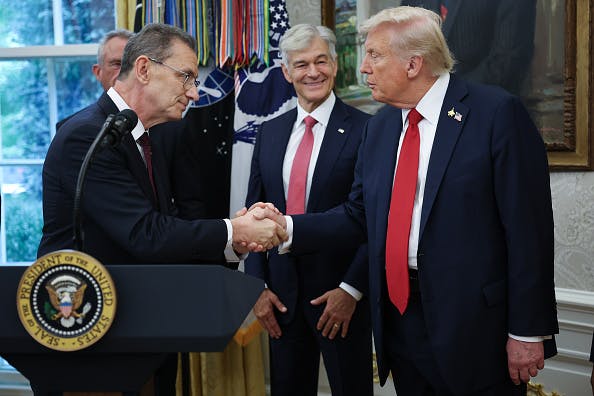
President Trump Delivers An Announcement From The Oval Office
Pfizer CEO Albert Bourla shakes hands with US President Donald Trump on September 30, 2025, in the Oval Office (Win McNamee/Getty Images)

Can pharma companies put tariff threats behind them?

Big Pharma may have gotten Trump off its back for now. But are drug prices coming down?

For the past nine months, pharmaceutical companies have been paralyzed by uncertainty over the threat of US tariffs. It appears that regulatory haze is starting to clear. 

Pfizer CEO Albert Bourla stood with President Trump on Tuesday and announced that his company had agreed to sell drugs through Medicaid at prices lower than other wealthy countries and to offer cash-pay discounts on some of its drugs. Pfizer shares rallied along with the entire sector as Wall Street took the announcement as a sign that companies could get the administration off their backs without shrinking margins, in part by cutting out middlemen. 

Boardrooms are now in a place to take more decisive actions, Stephen Farrelly, the global lead for ING's pharma and healthcare research. “The biggest problems that boardrooms have faced over the past nine months is: what do we do with all of this?” 

President Trump has threatened to impose tariffs on pharmaceuticals, which are typically shielded from trade wars, since he took office. 

Trump’s tariff threats have taken many forms this year, but most recently, on September 25, he said that starting on October 1, there would be a 100% tariff on patented, branded pharmaceuticals “unless a Company IS BUILDING their Pharmaceutical Manufacturing Plant in America.” A July 31 letter sent to 17 drugmakers asked them to commit to lowering prices by the same deadline. 

Most drugmakers have already committed to investing in US manufacturing. And Pfizer “may have done the rest of the industry a favor by giving a framework for a bespoke solution that we feel would be very tenable” for most drugmakers with little impact on their business, analysts at Jefferies wrote in an October 1 note. 

“I think we can almost put the tariff conversation to bed,” Farrelly said. 

So, are drug prices going to fall?

The Pfizer deal applies only to brand-name drugs, which are typically manufactured in Europe. Generics, which account for more than 90% of prescriptions filled in the US, are predominantly made in China and India by other manufacturers. The Trump administration is still considering tariffs on those, citing national security concerns.

Pfizer also agreed to participate in “TrumpRx,” which is not live yet, but has been described as a website that will point people to direct-to-consumer options from manufacturers — allowing Trump to put his stamp on a trend well underway in the industry.

“You might think of it as an overlay on what was already happening with the DTC prices,” said Miriam Paramore, CEO of RxUtility, a service that helps patients find affordable prescriptions. “Anything that focuses on lowering prescription prices is good. On the other hand, I think it’s going to add confusion for the consumer.”

Novo Nordisk and Eli Lilly were the first drugmakers to wade into DTC sales by offering cash-pay options for their popular weight-loss shots, which are often not covered by insurance. Several other drugmakers have followed suit, offering direct cash-pay options for brand-name drugs. 

Let’s say you have a prescription for Lilly’s Zepbound, the hottest weight-loss drug on the market right now. Here are the prices you might pay:

Your insurance, if you have it, will be billed roughly $1,200 for a month’s supply. If they don’t cover it, this is what you would be charged at the pharmacy counter.

If you are covered, the average copay is about $25

If you are not covered or are not using insurance, you can now buy it online directly from Lilly for between $349 and $499.

So, by adding a DTC option, Lilly is able to say it brought the price of Zepbound down from $1,200 to $349.

Though patients were given a new option, at no point was Lilly required to accept a lower profit margin because it simply cut out middlemen by selling directly to the patient instead of selling to a wholesaler, which sells it to a pharmacy, which bills an insurance company. 

“When they bypass that and go directly to consumers, yes, technically the price is being reduced, but the manufacturers are making the same amount of money,” said Alec Ginsberg, owner of C.O. Bigelow, a pharmacy in Manhattan.

Still, many brand-name drugs Americans take aren’t as DTC-friendly as GLP-1s, which are in high demand but generally not immediate life-or-death treatments. 

“Almost nobody in America pays for brand-name medications out of pocket because costs are astronomical.”

Some drugs, like Merck's Keytruda, have to be administered in a healthcare setting, which makes it difficult to sell directly to a patient. Others are simply so expensive that even large discounts don’t make it worth paying for without insurance. 

For example: Xeljanz, a pill for several inflammatory conditions made by Pfizer, will be 40% off for cash-paying patients under the deal announced Tuesday, meaning the roughly $6,000 list price for a month’s supply goes down to $3,600 for those paying cash. That is still, for most people, prohibitively expensive.

“Almost nobody in America pays for brand-name medications out of pocket because costs are astronomical,” Ginsberg said. 

So far, the president’s actions on drug pricing have focused on drugmakers. But about half of every dollar spent on medications goes to middlemen, according to an estimate from the pharma lobby.

The biggest chunk of that goes to pharmacy benefit managers, which are used by insurance companies to get better deals on medications. PBMs can push up drug prices by demanding manufacturer rebates for covering a medication, marking up drugs through spread pricing, and steering patients toward higher-cost medications.

“All these manufacturer websites are workarounds,” Douglas Hoey, CEO of the National Community Pharmacists Association, said in an October 1 statement. “Reforming the way PBMs and insurance companies operate is the only solution.”

More Business

See all Business
business

OpenAI’s ARR reached over $20 billion in 2025, CFO says

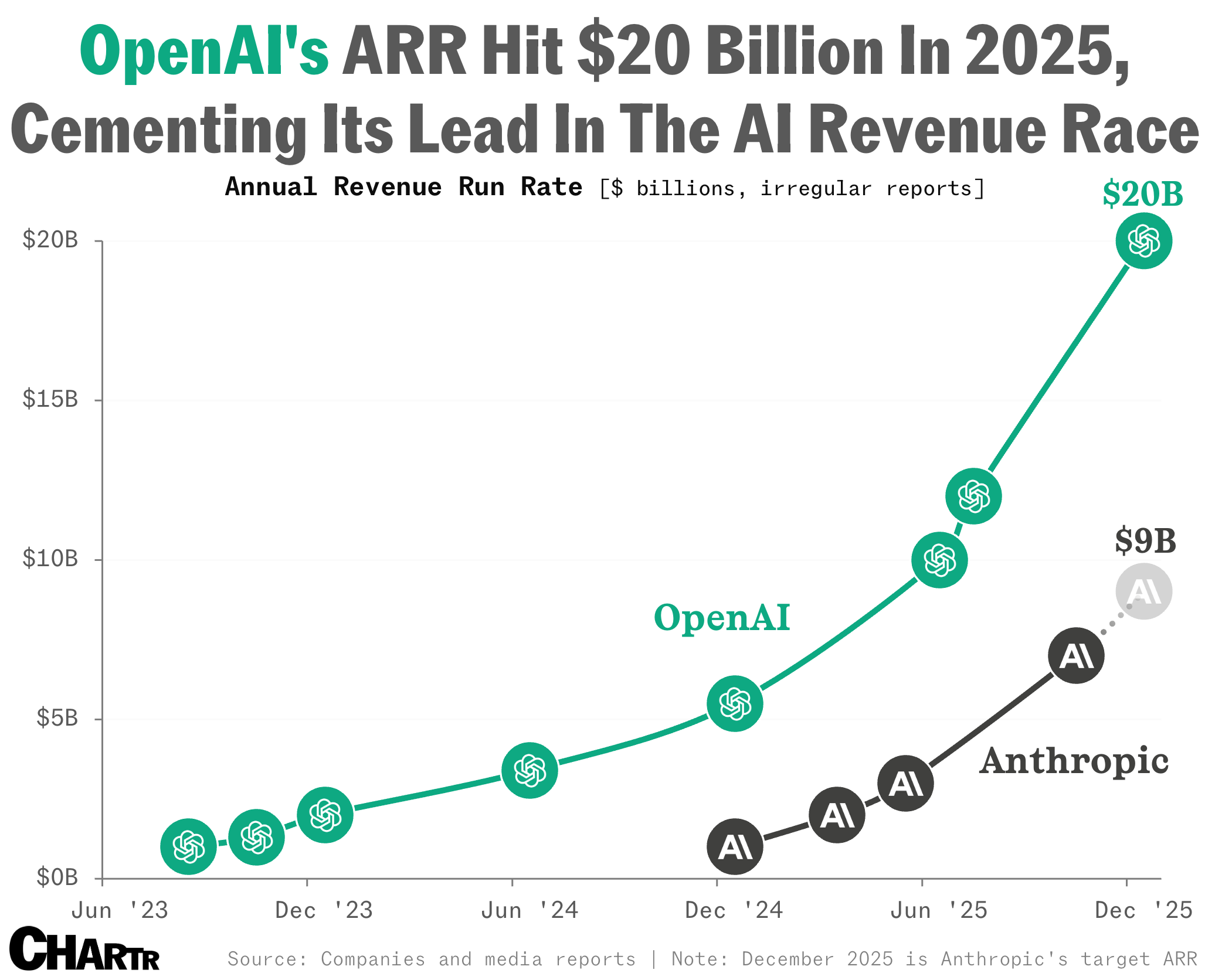
Sam Altman’s $500 billion artificial intelligence behemoth hit a major financial milestone last year, according to a new blog post over the weekend from OpenAI CFO Sarah Friar, as the company confirmed it had hit a more than $20 billion annual revenue run rate at the end of 2025.

Elsewhere in the blog post, Friar spent time addressing the company’s shifting goals, referencing plans to “close the distance between where intelligence is advancing and how individuals, companies, and countries actually adopt and use it.” As has become customary in the AI company press release genre, the CFO was also keen to tout the unending growth of the business, writing:

  • Both our Weekly Active User (WAU) and Daily Active User (DAU) figures continue to produce all-time highs. This growth is driven by a flywheel across compute, frontier research, products, and monetization.

  • Compute grew 3X year over year or 9.5X from 2023 to 2025: 0.2 GW in 2023, 0.6 GW in 2024, and ~1.9 GW in 2025.

And, perhaps most importantly for current backers and those keeping an eye on the private company before its rumored mega IPO:

  • Revenue followed the same curve growing 3X year over year, or 10X from 2023 to 2025: $2B ARR in 2023, $6B in 2024, and $20B+ in 2025. This is never-before-seen growth at such scale.

That latest figure has certainly set tongues in the tech world wagging, just as the company announced it would begin rolling out ads to free and ChatGPT Go users. It also puts the chatbot giant a fair way ahead of competitors like Anthropic, the company behind Claude.

OpenAI Anthropic ARR race
Sherwood News

Elsewhere in the blog post, Friar spent time addressing the company’s shifting goals, referencing plans to “close the distance between where intelligence is advancing and how individuals, companies, and countries actually adopt and use it.” As has become customary in the AI company press release genre, the CFO was also keen to tout the unending growth of the business, writing:

  • Both our Weekly Active User (WAU) and Daily Active User (DAU) figures continue to produce all-time highs. This growth is driven by a flywheel across compute, frontier research, products, and monetization.

  • Compute grew 3X year over year or 9.5X from 2023 to 2025: 0.2 GW in 2023, 0.6 GW in 2024, and ~1.9 GW in 2025.

And, perhaps most importantly for current backers and those keeping an eye on the private company before its rumored mega IPO:

  • Revenue followed the same curve growing 3X year over year, or 10X from 2023 to 2025: $2B ARR in 2023, $6B in 2024, and $20B+ in 2025. This is never-before-seen growth at such scale.

That latest figure has certainly set tongues in the tech world wagging, just as the company announced it would begin rolling out ads to free and ChatGPT Go users. It also puts the chatbot giant a fair way ahead of competitors like Anthropic, the company behind Claude.

OpenAI Anthropic ARR race
Sherwood News
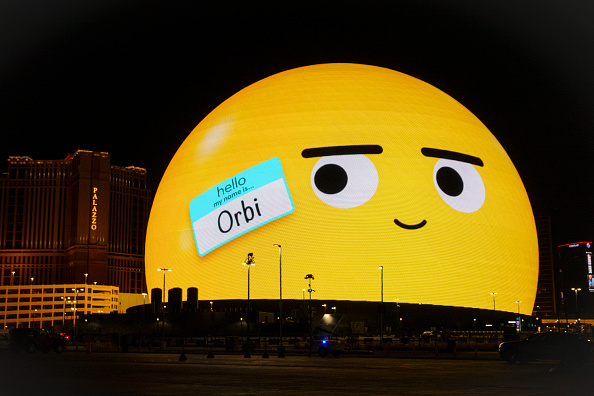
The Sphere In Las Vegas

Washington, DC, looks set to get America’s second Sphere

Revenue for the Las Vegas version of the big orb has soared, but the Sphere is still a money pit.

business

Ford reportedly in talks to buy hybrid vehicle batteries from Chinese auto giant BYD

Detroit’s Ford and China’s BYD are said to be in ongoing talks to partner on an agreement that would see Ford buy hybrid vehicle batteries from BYD, according to reporting from The Wall Street Journal.

The report comes just days after President Trump toured a Ford factory in Michigan and implied openness to Chinese automakers coming to the US.

“If they want to come in and build a plant... that’s great, I love that,” Trump said on January 13. “Let China come in, let Japan come in.”

Last week, China’s Geely Automobile Holdings said it expects to make an announcement about expanding into the US within the next three years. Chinese carmakers currently face huge tariffs and software restrictions, effectively barring their vehicles from the US.

Ford has doubled down on hybrid vehicles amid high EV costs and the end of federal EV tax credits. The automaker is currently building a battery plant in Michigan where it plans to use tech from Chinese battery maker CATL.

“If they want to come in and build a plant... that’s great, I love that,” Trump said on January 13. “Let China come in, let Japan come in.”

Last week, China’s Geely Automobile Holdings said it expects to make an announcement about expanding into the US within the next three years. Chinese carmakers currently face huge tariffs and software restrictions, effectively barring their vehicles from the US.

Ford has doubled down on hybrid vehicles amid high EV costs and the end of federal EV tax credits. The automaker is currently building a battery plant in Michigan where it plans to use tech from Chinese battery maker CATL.

Still life of Ozempic and Wegovy with weight scale.

Lawsuit alleges Lilly, Novo locked up telehealth to kill compounded GLP-1s

Novo Nordisk CEO Mike Doustdar estimated that around 1.5 million US patients are using compounded versions of the company’s drugs.

Latest Stories

Sherwood Media, LLC produces fresh and unique perspectives on topical financial news and is a fully owned subsidiary of Robinhood Markets, Inc., and any views expressed here do not necessarily reflect the views of any other Robinhood affiliate, including Robinhood Markets, Inc., Robinhood Financial LLC, Robinhood Securities, LLC, Robinhood Crypto, LLC, or Robinhood Money, LLC.