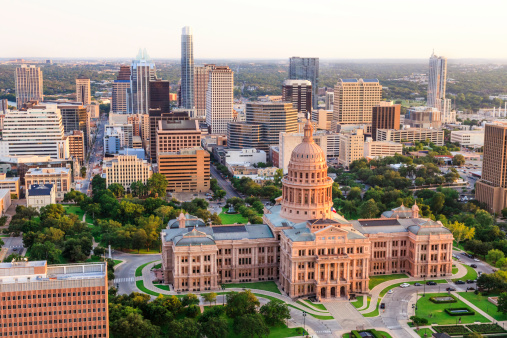
Austin was supposed to be America's next big tech hub. Here's how it all went wrong.
Austin has lost its hot growth streak as the market cools.
In October 2021, Elon Musk made headlines when he announced that he would be moving Tesla’s headquarters to Austin, Texas, following similar moves from tech giants Hewlett Packard Enterprise and Oracle the year before. These company relocations were part of a broader demographic shift: Austin was the fastest-growing metro area with at least a million people in 2021, with 107,000 people moving from California to Texas that year alone.
But three years later, the momentum is fizzling. Last year Austin lost its 12-year streak as the fastest-growing large metro area in the US, and Texas’ capital currently has the third-largest office-vacancy rate among major US metro areas, behind Dallas and Houston.
In April, Oracle chairman Larry Ellison said the software giant would be moving its world headquarters to Nashville, Tennessee, in a blow to Austin; and that same day, Tesla announced it was eliminating 2,688 jobs in Austin as part of a restructuring. In the venture-capital world, startup accelerator Techstars announced in December it was closing its Austin operations too. Meanwhile, Bloomberg noted the number of companies relocating their headquarters or major operations to Austin kept declining, from 64 in 2022 to 37 in 2023, to just 11 so far in 2024.
What went wrong in Austin?
For starters, the pandemic proved to be a big but short-lived tailwind for Austin’s growth.
America is a coastal country with four cities: New York and DC for finance and politics, and San Francisco and LA for tech and media. Every large financial firm in the world has its headquarters or a major office in New York. Meantime, the venture-capital industry in San Francisco dwarfs the rest of the country, with Bay Area startups raising $170 billion between 2019 and 2021 (compared to $11.8 billion in Austin).
Residents of San Francisco and Manhattan pay a premium for access to social and professional opportunities these cities offer. When companies around the country told their employees to work from home indefinitely, in 2020, and restaurants and bars enforced social-distancing policies, those opportunities disappeared, and paying coastal-city rent to answer Zoom calls from your apartment didn’t make sense. Why not move somewhere cheaper?
Austin became one of the more popular destinations.
It was cheaper and warmer than the coastal cities, dozens of companies were establishing larger offices there, and pandemic restrictions were more lax. Most important, you could keep your salary while cutting your living expenses in half. The appeal of Austin was obvious, and you would've been crazy not to take advantage of the geographic arbitrage.
However, that arbitrage didn't last long. While New York's and San Francisco’s populations fell by 2.5% and 3.7% from 2020 to 2023, Austin’s population grew by 7.5%, and the influx of new residents pressured the housing market.
As thousands of people moved to the city, housing prices jumped more than 60% from 2020 to spring 2022, despite per-capita income increasing by just 23% in that same time. By 2022, Austin was no longer the bargain it used to be, and, according to Redfin, more homebuyers are now looking to leave Austin than move in, for the first time on record.
Beyond home prices, Austin's infrastructure has struggled to keep up with its population growth. In February 2021, a winter storm caused Austin's worst energy infrastructure failure in history, with millions of people across Texas losing power, causing hundreds of deaths, and last summer, Austin almost had power blackouts during a series of brutal heat waves.
While many workers moved to Austin to work remotely during the pandemic, the city failed to establish a critical mass of talent large enough disrupt one of the larger coastal cities, and its lack of accessibility (Austin's primary airport is only the 27th-largest hub in the country) proved to be an issue as companies called their employees back to the office and Zoom calls were replaced by in-person meetings.
Austin’s pandemic growth ultimately played a large role in its undoing, as soaring real-estate prices forced many out of the market, and unlike coastal cities, the Texas capital had neither the jobs nor the weather to persuade them to pay up and stay.