

Business
The entrance of Allbirds seen from Hayes St. in San Francisco, Calif.
The entrance of Allbirds seen from Hayes Street in San Francisco (Liz Hafalia/Getty Images)

Allbirds, the once buzzy multibillion-dollar sneaker startup, is selling up for $39 million

That’s less than 1% of its peak market cap about four years ago.

Patagonia fleeces. Kombucha on tap. The act of corporate disruption. Some things, no matter where in the wild you encounter them, just scream: “Silicon Valley.”

And for a few short years, no product evoked the Bay Area quite like the sustainable wool sneaker brand Allbirds, eventually catching up to break another part of California entirely, with every other celebrity — from brand investor Leonardo DiCaprio to pop sensation Camila Cabello — slipping on the comfortable, bland-by-design footwear to stroll around their section of the Golden State.

However, since the heady days when ringing endorsements echoed out of San Francisco and LA, Allbirds has seen its popularity plummet, and the brand announced yesterday that it would sell its IP and certain assets and liabilities to American Exchange Group for just $39 million.

For context, as TechCrunch observed, the company raised almost 10x that amount when it went public at a more than $4 billion valuation just over four years ago.

Allbirds market cap chart
Sherwood News

Despite its New Zealand origin story stretching back as far back as 2007, Allbirds only debuted its first shoe, the “Wool Runner,” in 2016. The sneaker would go on to win praise as being “the world’s most comfortable shoe,” sell a staggering 1 million pairs in just two years, and help the startup tread its way toward a blockbuster IPO in November 2021. Though Allbirds has delayed its Q4 report on the American Exchange announcement, it posted sales just shy of $33 million in the third quarter of 2025 — almost half of the $63 million they brought in for the same period in 2021.

Died in the wool

While it’s sometimes difficult to find a reason for a fashion brand’s demise beyond the overarching fact of the industry’s fickle nature, the company’s wayward attempts to diversify into technical running shoes and other workout gear; its inherent reliance on customers’ environmental concerns being enough to drive them from bigger, better-established competitors; and the move away from its direct-to-consumer roots into the harsher world of brick and mortar (the company closed all but two of its physical stores just last month) have all weighed on the stock and its sneakers.

More Business

See all Business
business

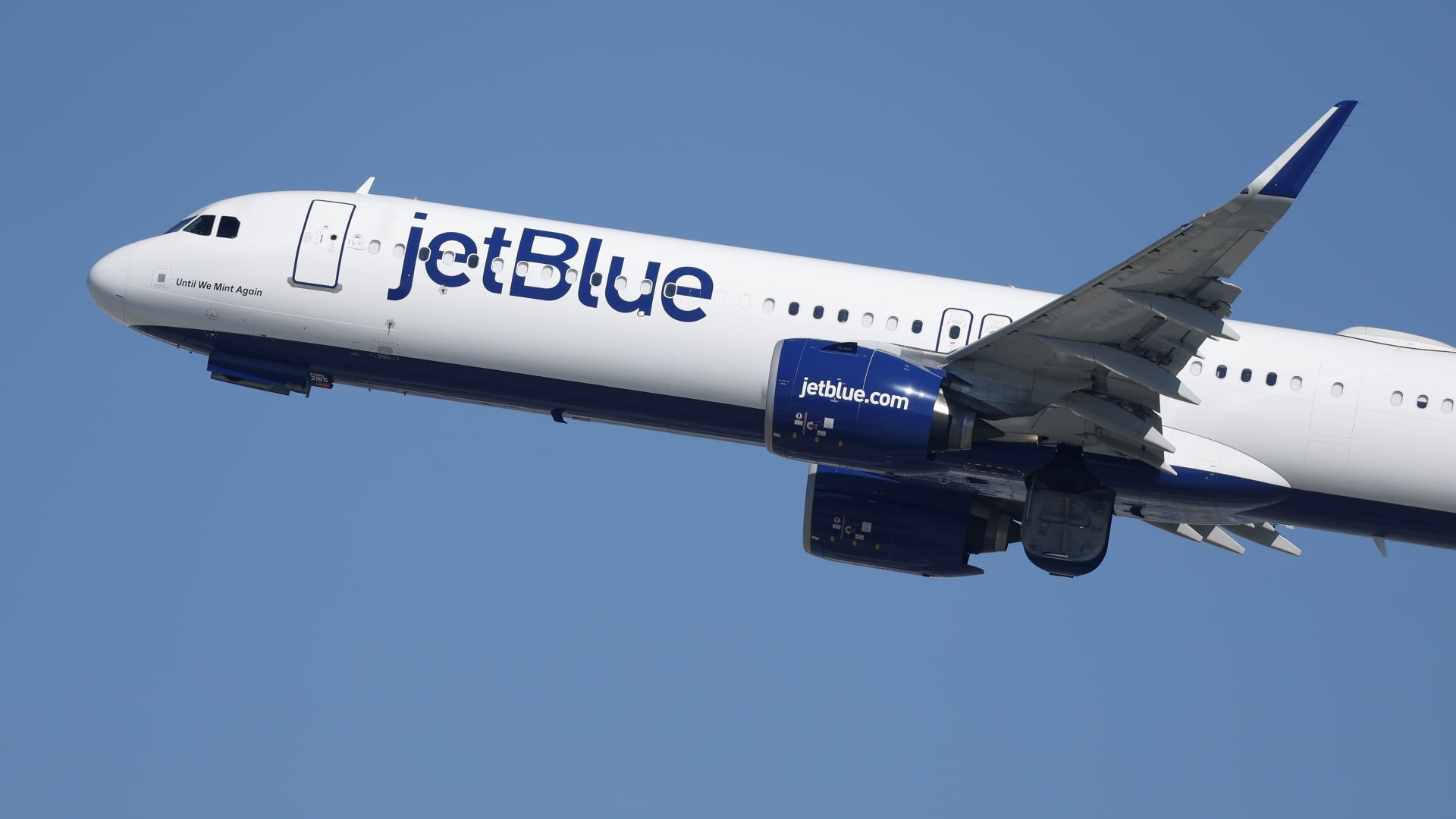
JetBlue is raising its bag fees as fuel costs squeeze airlines

JetBlue will reportedly hike its bag fees, as the cost of jet fuel continues to climb amid the war in Iran. It’s the latest example of carriers finding ways to push rising costs onto travelers.

Last week, United Airlines CEO Scott Kirby said that if fuel prices remain elevated, fares would need to rise another 20% for his airline to break even this year.

As CNBC reported, when one airline raises fees, others tend to follow.

Earlier this month, JetBlue hiked its first-quarter outlook for operating revenue per seat mile to between 5% and 7%, saying that strong Q1 demand helped “partially offset additional expenses realized from operational disruptions and rising fuel costs.” Now, the carrier appears to be making moves to further boost revenue to offset those costs.

Earlier on Monday, JetBlue rival Alaska Air lowered its Q1 profit forecast. The refining margins for the carrier’s cheapest fuel option — sourced from Singapore and representing about 20% of Alaska’s overall supply — have spiked 400% since February.

JetBlue did not immediately respond to a request for comment.

As CNBC reported, when one airline raises fees, others tend to follow.

Earlier this month, JetBlue hiked its first-quarter outlook for operating revenue per seat mile to between 5% and 7%, saying that strong Q1 demand helped “partially offset additional expenses realized from operational disruptions and rising fuel costs.” Now, the carrier appears to be making moves to further boost revenue to offset those costs.

Earlier on Monday, JetBlue rival Alaska Air lowered its Q1 profit forecast. The refining margins for the carrier’s cheapest fuel option — sourced from Singapore and representing about 20% of Alaska’s overall supply — have spiked 400% since February.

JetBlue did not immediately respond to a request for comment.

business

Netflix is hiking its prices again

Netflix is raising its subscription prices for the fourth time in four years, a move first spotted by Android Authority.

Per Netflix’s US pricing page, the cost of an ad-supported plan is climbing $1 to $8.99 per month, while the cost of a standard ad-free plan is going up $2 to $19.99 per month. The premium tier has also risen $2 to $26.99 per month.

The streamer last raised its subscription costs more than a year ago in January 2025. It also hiked prices in 2023, 2022, 2020, and 2019. Netflix shares climbed about 2% on the news.

“Our approach remains the same: we continue offering a range of prices and plans to meet a variety of needs, and as we deliver more value to our members we are updating our prices to enable us to reinvest in quality entertainment and improve their experience by updating our prices,” said a Netflix spokesperson, in a statement to Sherwood News.

The streamer last raised its subscription costs more than a year ago in January 2025. It also hiked prices in 2023, 2022, 2020, and 2019. Netflix shares climbed about 2% on the news.

“Our approach remains the same: we continue offering a range of prices and plans to meet a variety of needs, and as we deliver more value to our members we are updating our prices to enable us to reinvest in quality entertainment and improve their experience by updating our prices,” said a Netflix spokesperson, in a statement to Sherwood News.

Latest Stories

Sherwood Media, LLC produces fresh and unique perspectives on topical financial news and is a fully owned subsidiary of Robinhood Markets, Inc., and any views expressed here do not necessarily reflect the views of any other Robinhood affiliate, including Robinhood Markets, Inc., Robinhood Financial LLC, Robinhood Securities, LLC, Robinhood Crypto, LLC, Robinhood Derivatives, LLC, or Robinhood Money, LLC. Futures and event contracts are offered through Robinhood Derivatives, LLC.