AI models are crying out for new video footage and GoPro has thousands of hours’ worth — can it save the company?
So far, no. The action camera company reported another slump in revenue, to $652 million.
GoPro is dying. The once iconic company — which provided a way for everyday heroes to film their backflips, waterslides, and sky dives — has seen its share price somersault to a near 99% decline from its 2014 peak.
But could AI turn its fortunes around? The company hopes it might, with executives sharing yesterday that GoPro subscribers had contributed more than 500,000 hours of video content to its AI training program since a test launch in July. That’s an attempt to make a business from selling its users’ personal videos to data-hungry AI hyperscalers, desperate to get their hands on any and all unique datasets, with video emerging as one of the most sought-after formats.
On the earnings call yesterday, the company’s CEO shared that GoPro would begin to recognize revenue — which will be split 50-50 with contributing users — from the project in Q1 of this year. A few months ago, one user on Reddit indicated that GoPro would pay up to “$10 per video hour for sharing your cloud footage.”
POV: Your revenues are tanking
For the company itself, any boost to the top line can’t come soon enough, as the dying action camera brand reported just $652 million in revenue in its latest fiscal year, down another 19% year over year.
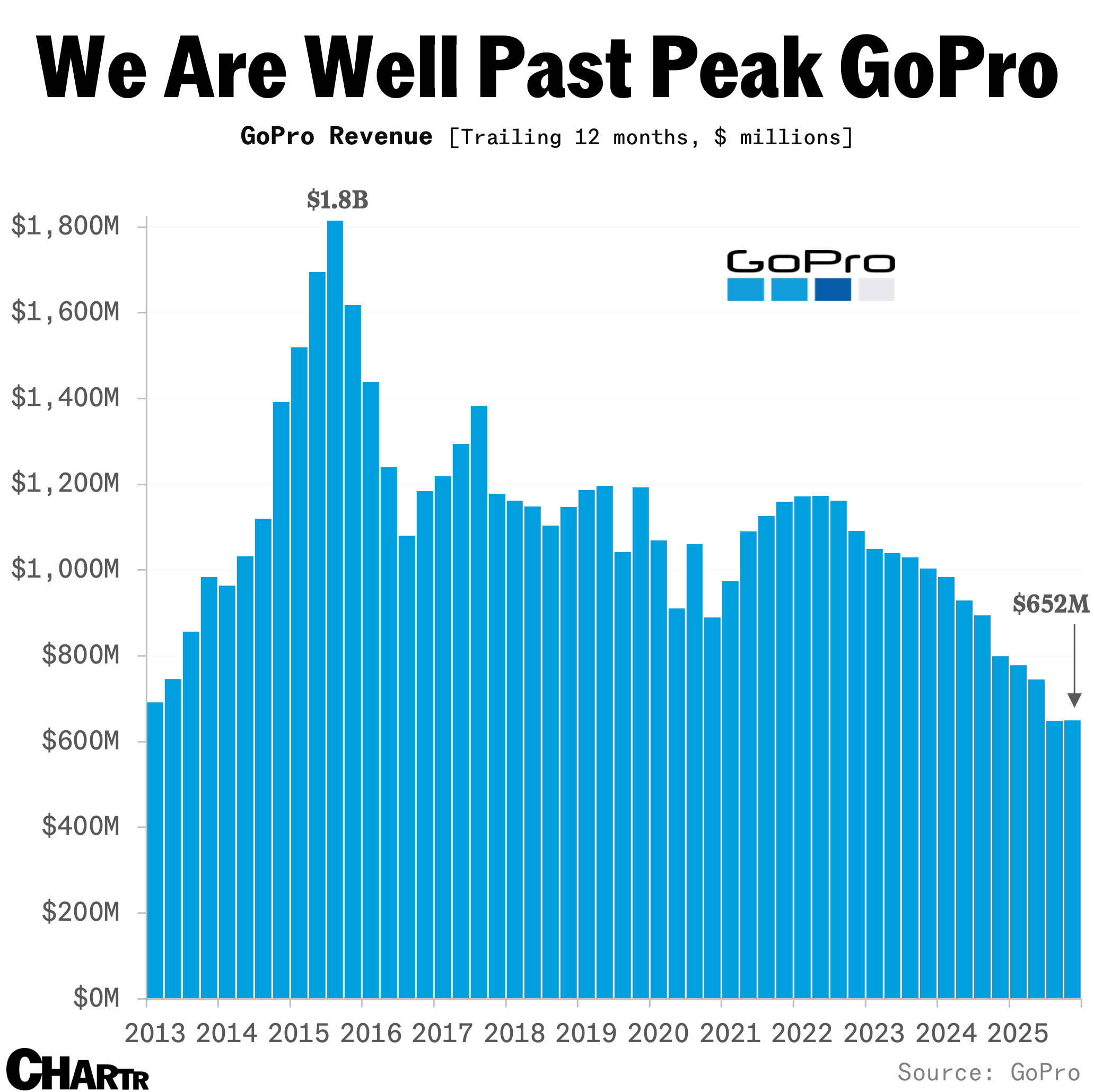
In a classic business tragedy where first-mover advantage was wiped out out by fast followers, GoPro lost its grip in the action camera market once cheaper Chinese alternatives from DJI and Insta360 landed, offering eye-grabbing features that were developed with a rich cash pile from their drone businesses. Waterproof, resilient smartphones didn’t help, and GoPro’s already shaky lead finally toppled after its pricy experiment to expand into drones in 2016 — a market that’s been dominated by DJI — ended up getting killed in less than two years due to “margin challenges.”
Maybe user videos of ski trips, mountain biking, and family gatherings might just be enough to spring the camera business back into action.