Tech
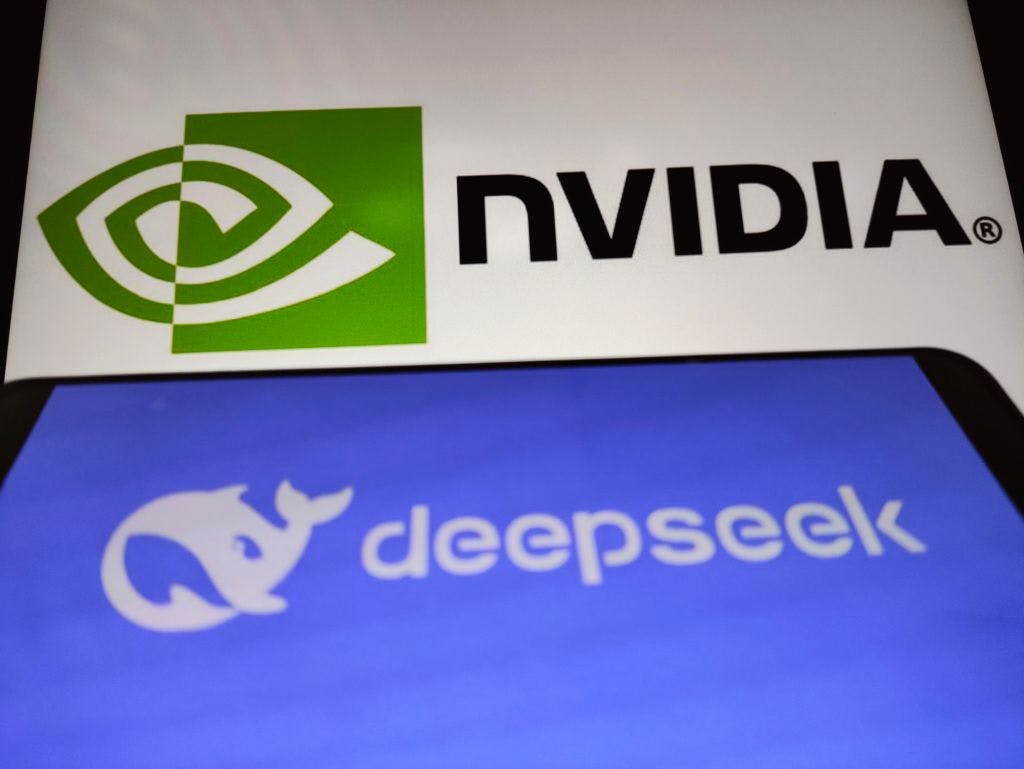
DeepSeek And Nvidia Logos
(VCG/Getty Images)

The trillion-dollar mystery surrounding DeepSeek’s Nvidia GPUs

There’s a cloud of suspicion hanging over the type and number of Nvidia GPUs DeepSeek used to train its R1 models.

At the center of the story of DeepSeek’s breakthrough achievement with its R1 models lies the Nvidia hardware that powered the servers that trained those models.

In December 2024, DeepSeek researchers released a paper that outlined the development and capabilities of the new DeepSeek-V3 large language model. In the paper, the researchers said they were able to train their powerful, efficient model over 2.78 million GPU hours of computing time on a cluster of only 2,048 Nvidia H800 GPUs. That is a very small number of GPUs for a model that matched or beat OpenAI’s state-of-the-art o1 model in some benchmarks.

For comparison, Meta trained its Llama 3.1 models on two clusters, using a total of 39.3 million GPU hours with 49,152 Nvidia H100 GPUs. Last week, Mark Zuckerberg said that Meta is planning on ending 2025 with over 1.3 million GPUs.

Released in 2023, the H800 is a GPU thats similar to the H100 but is tailored for the Chinese market to comply with US export controls concerning national security parameters that the Biden administration rolled out in 2022. Reuters reported that the main thing Nvidia changed in the H800 was that it “reduced the chip-to-chip data transfer rate to about half the rate.”

But The Wall Street Journal reports that government officials found the H800 exploited technical loopholes that met the strict requirements of the ban, but still gave Chinese buyers very powerful AI chips. To close the loophole, in October 2023, the US government banned the export of H800s as well.

It appears that DeepSeek was able to acquire its H800s during that short window of availability.

DeepSeek’s claims are drawing suspicion from some observers in the AI industry, but most appear to be just speculation. Scale AI CEO Alexandr Wang told CNBC that he suspected DeepSeek has “about 50,000 H100s, which they can’t talk about obviously because it is against the export controls that the United States has put in place,” and in a tweet, Elon Musk replied, “Obviously.” Musk, meanwhile, has bragged about xAI’s “Colossus supercluster,” which is powered by 100,000 H100 GPUs, and that he plans to scale up to 1 million of the expensive Nvidia chips.

There have been reports of H100s being smuggled into China through a series of intermediaries on the black market, but no evidence that DeepSeek did so.

Adding to the confusion, DeepSeek cofounder Liang Wenfeng said that the company does own a cluster of 10,000 Nvidia A100 GPUs, a cheaper and less powerful AI chip.

The H100 has earned a status of being one of the most coveted pieces of computer hardware in the AI age. Even when other chips are used, the power is sometimes expressed as a number of “H100-equivalent” GPUs.

Nvidia is in the process of rolling out its next-gen H200 Blackwell GPUs, and last year CEO Jensen Huang hand-delivered the first DGX H200 server to OpenAI headquarters.


More Tech

See all Tech
tech
Tom Jones

Prediction markets have, predictably, been given a boost by the summer of sports

Major platforms like Kalshi and Polymarket have seen huge upticks in users of late, thanks in no small part to what’s felt like a recent sporting smorgasbord, with major competitions across hockey, basketball, and soccer soaking up fans’ time (and spending, clearly) at the outset of summer.

While gaming industry groups may not like it, there’s been a huge change in the methods people are using to put money on the big games, with everyone from fortunate NYC bar owners, to a far less fortunate Spanish supporter, turning to prediction markets to try and turn their sports know-how into cold, hard cash.

According to a new report from Adam Blacker for apptopia, that shift might have been even more seismic than imagined in the wake of the NBA and NHL finals and around the 2026 World Cup kicking off.

While gaming industry groups may not like it, there’s been a huge change in the methods people are using to put money on the big games, with everyone from fortunate NYC bar owners, to a far less fortunate Spanish supporter, turning to prediction markets to try and turn their sports know-how into cold, hard cash.

According to a new report from Adam Blacker for apptopia, that shift might have been even more seismic than imagined in the wake of the NBA and NHL finals and around the 2026 World Cup kicking off.

South by Southwest Conference and Festivals

Gold Tesla Cybercabs are piling up, but they’re not picking up passengers yet

Low-volume production started in April. Now people are noticing them more and more in the wild.

Rani Molla6/15/26
tech
Jon Keegan

Anthropic pulls Fable and Mythos access worldwide after Trump administration bars their use by foreign nationals

Only days after releasing two versions of its next-gen AI model, Anthropic has disabled them for users worldwide.

Anthropic says it received a Friday night order from the Trump administration to suspend access to the models for any foreign national (anywhere in the world) — a group that included some Anthropic employees. In response, the company turned off access to everyone.

Last week, the company released to the public its much-anticipated Claude Fable 5 model (and its restricted version Claude Mythos 5, which is still being tested with trusted partners). Anthropic said in a blog post announcing the action that officials cited national security concerns with the new models, while offering few specific details.

The post said that the government gave the company “verbal evidence of a potential narrow, non-universal jailbreak” of the public Fable 5 model. A jailbreak is a means by which users can evade restrictions built into the code to unlock prohibited functionality. Anthropic downplayed the significance of the attack, and said other major models, such as OpenAI’s GPT-5.5, could also be affected by the technique described.

Fears of these first Mythos-class models being misused are running high, after Anthropic warned the cybersecurity world in May that the advanced cyber capabilities of Mythos have rapidly discovered thousands of vulnerabilities in ubiquitous software, leading to the decision to restrict the full version of the model to a close group of trusted partners for testing.

This morning, Axios reported that Anthropic technical staff have flown to Washington to meet with White House officials to resolve the issue.

The Wall Street Journal is reporting that the Trump administration’s decision to take action against Anthropic was prompted by discussions that Amazon CEO Andy Jassy had with officials, including Treasury Secretary Scott Bessent. According to the report, Amazon researchers said they had been able to evade some of Fable 5’s security restrictions using specific prompts. Amazon is a major investor in Anthropic.

Anthropic is currently suing the US government to fight the Pentagon’s blacklisting of the company on national security grounds.

Last week, the company released to the public its much-anticipated Claude Fable 5 model (and its restricted version Claude Mythos 5, which is still being tested with trusted partners). Anthropic said in a blog post announcing the action that officials cited national security concerns with the new models, while offering few specific details.

The post said that the government gave the company “verbal evidence of a potential narrow, non-universal jailbreak” of the public Fable 5 model. A jailbreak is a means by which users can evade restrictions built into the code to unlock prohibited functionality. Anthropic downplayed the significance of the attack, and said other major models, such as OpenAI’s GPT-5.5, could also be affected by the technique described.

Fears of these first Mythos-class models being misused are running high, after Anthropic warned the cybersecurity world in May that the advanced cyber capabilities of Mythos have rapidly discovered thousands of vulnerabilities in ubiquitous software, leading to the decision to restrict the full version of the model to a close group of trusted partners for testing.

This morning, Axios reported that Anthropic technical staff have flown to Washington to meet with White House officials to resolve the issue.

The Wall Street Journal is reporting that the Trump administration’s decision to take action against Anthropic was prompted by discussions that Amazon CEO Andy Jassy had with officials, including Treasury Secretary Scott Bessent. According to the report, Amazon researchers said they had been able to evade some of Fable 5’s security restrictions using specific prompts. Amazon is a major investor in Anthropic.

Anthropic is currently suing the US government to fight the Pentagon’s blacklisting of the company on national security grounds.

Latest Stories

Sherwood Media, LLC and Chartr Limited produce fresh and unique perspectives on topical financial news and are fully owned subsidiaries of Robinhood Markets, Inc., and any views expressed here do not necessarily reflect the views of any other Robinhood affiliate, including Robinhood Markets, Inc., Robinhood Financial LLC, Robinhood Securities, LLC, Robinhood Crypto, LLC, Robinhood Money, LLC, Robinhood U.K. Ltd, Robinhood Derivatives, LLC, Robinhood Gold, LLC, Robinhood Asset Management, LLC, Robinhood Credit, Inc., Robinhood Ventures DE, LLC and, where applicable, its managed investment vehicles.