


Tesla has a robotaxi (kind of) but offers no real details (again)
Shares plunged after Tesla’s “We, Robot” event, which also debuted a robovan and featured a team of humanoid robots walking around.
A driverless car without a steering wheel or a pedal. A train-like van without visible tires. A robot called Optimus that dances to Haddaway’s “What Is Love.”
That was all present at Tesla’s long-awaited “We, Robot” robotaxi event, which was initially supposed to happen in August but was pushed back until Thursday night. The event did finally happen, though it began almost an hour late (Elon Musk tweeted that a person in the crowd had a medical emergency) and lasted for under 20 minutes. Just enough time for Musk to show the prototypes of his three new products.
To be fair, the level of production was impressive for a demo. The vehicles made no significant mistakes, and they blended well with the futuristic Hollywood venue.
But there were very few concrete details about when and how the vehicles would be delivered, which is top of mind for investors. During the event, there were 20 Cybercabs — Tesla’s version of a robotaxi — and 30 driverless Tesla Model Ys. Musk said that there would be “fully autonomous” Model 3s and Model Ys on the streets of Texas and California “next year,” while the Cybercab wouldn’t start production until “2026, before 2027.”
The robotaxi hype was a main driver for Tesla’s stock comeback this year, but the lack of detail at the event disappointed investors: shares of Tesla fell more than 10% a few minutes after the market opened on Friday.
On the other hand, Uber stock was up more than 8% on Friday morning, and Lyft up more than 9%. In a note, Bank of America analysts said that ride-hailing companies like Uber and Lyft are beneficiaries of autonomous vehicles, especially given that Uber has announced multiple partnerships with AV makers, including Waymo, Cruise, and Wayve, over the past year.
Musk gave no specific business model for using the Cybercabs as a ride-sharing fleet or a timeline of deployment, analysts added.
The Cybercab is a milestone for Tesla, but it’s not quite a robotaxi.
Tesla’s answer to Musk’s robotaxi promise — it’s been at least eight years since Musk first mentioned such a technology in 2016 — was a purposefully built autonomous vehicle called the Cybercab. From the outside, the vehicle was painted a silvery champagne color, featuring a bright LED-strip headlight, similar to Tesla’s Cybertrucks (which reportedly were in abundance in the event’s parking lot). It’s a two-seat, two-door vehicle, with no apparent rear window. The doors open outward like butterfly wings and it doesn’t have a steering wheel or a pedal.
In a significant shift, Musk also said the vehicle wouldn’t have a plug for charging and instead would use a technology called inductive charging, in which the car drives over a pad and is wirelessly charged from below. Musk said, “It’s really high time we did this.”
During the demo, Musk rode alone in a Cybercab on the passenger side. It took a roundabout within the event venue and stopped for signs, cyclists, and red lights along the way.
As Musk spoke, a promotional video showed scenes of adults working and sleeping in the Cybercab as it drove, as well as the car driving unaccompanied children. In one scene, a dog was the sole passenger and was reunited with its owner at a store.
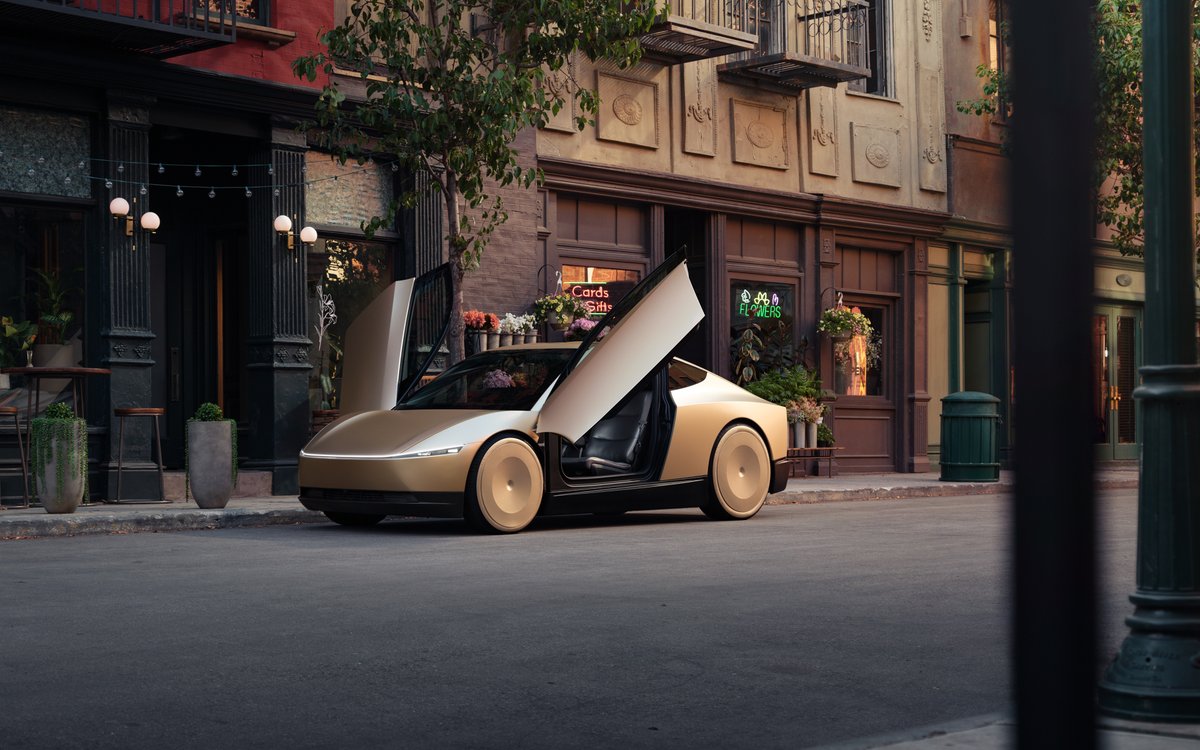
Multiple experts told me before the event that if Musk had a robotaxi driving during the demo, it would drive a predefined, mapped, closed road instead of a public road. From the livestream, that seemed to be the approach adopted by both the Cybercab and the Robovan that appeared later.
This begs the question that, for years, the autonomous-vehicle industry has not answered: what are we talking about when we talk about self-driving?
By far, the most widely adopted definition is the Society of Automotive Engineers’ six levels of driving automation, from Level 0 (no automation: the vehicle is manually controlled) to Level 5 (fully automated: the vehicle can drive everywhere by itself in all conditions).
Most vehicles on the street today are L0. Some modern models feature L1 automation, which includes driver-assistance systems like adaptive cruise control and lane-keeping assistance.
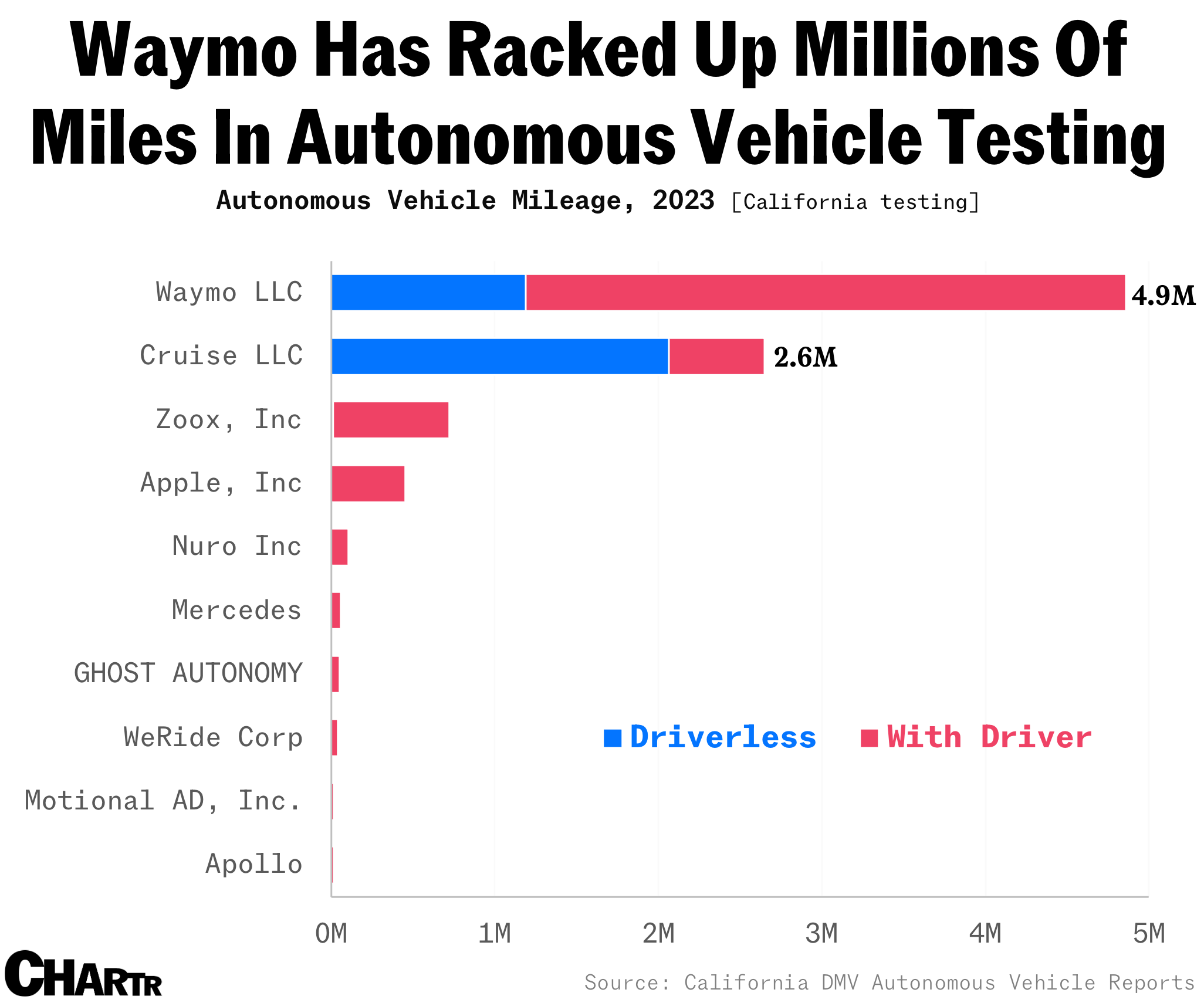
Pure L5 vehicles don’t exist yet. Companies like Google’s Waymo, General Motors’ Cruise, Amazon’s Zoox, and Baidu’s Apollo Go are developing L4 vehicles — more commonly referred to as robotaxis — for designated cities. These cars don’t have drivers, but they need to drive in a geofenced area where all the different road types and driving conditions are mapped. That’s why Waymo is only operating commercially in San Francisco, Phoenix, Los Angeles, and Austin and expanding into one city at a time. It’s cumbersome and expensive to move from one city to another.
Tesla has never had anything close to L4. Its existing driver-assistance systems — first autopilot, then full self-driving — are both L2 automation, despite Musk saying his technology is close to L5 at an event in 2020. L2 means that while the vehicle might be able to support the driver with both steering and braking/acceleration, the driver still needs to drive the car.
The terms “autopilot” and “full self-driving” imply more than what the vehicles can actually do. In fact, the misleading names of the technologies often make the human driver falsely assume they don’t have to pay attention to the road, resulting in fatalities.
“Elon Musk is most responsible for bending and commanding the language of the sector to the benefit of Tesla. No other companies have made any efforts to do better,” said Alex Roy, a longtime AV exec and the general partner of New Industry VC, which invests in deep-tech hardware startups.
As for Cybercabs, experts were skeptical that Tesla’s current approach to self-driving could lead to true robotaxis that take passengers from one point to another. Tesla is known for using cameras to detect objects rather than lidar sensors, which Musk called “expensive, ugly, and unnecessary.” He’s also declared that he will solely use AI to make driving decisions instead of asking a fleet of test drivers to map the city streets.
“Tesla has this problem that they are gathering big data — they are getting huge amounts of data from their cars,” said Philip Koopman, an associate professor of electrical and computer engineering at Carnegie Mellon University. “So they chose a path of not putting in lidars because it costs too much to put a lidar in every car that you can’t charge your driver for.”
“Does more data outweigh not having lidar?” he asked. “The answer is, Waymo is operating robotaxis and they are not, so I’m guessing lidar was the better bet.”
Musk said the Cybercab will be available to customers for $30,000 and over the long term, the operating cost could be $0.20 per mile (compared to $1 per mile for city buses). For comparison, each of Waymo’s Jaguar vehicles — which still have steering wheels and pedals but are used as robotaxis — are worth as much as $200,000.
The Robovan came as a surprise.
Everyone is reinventing buses these days.
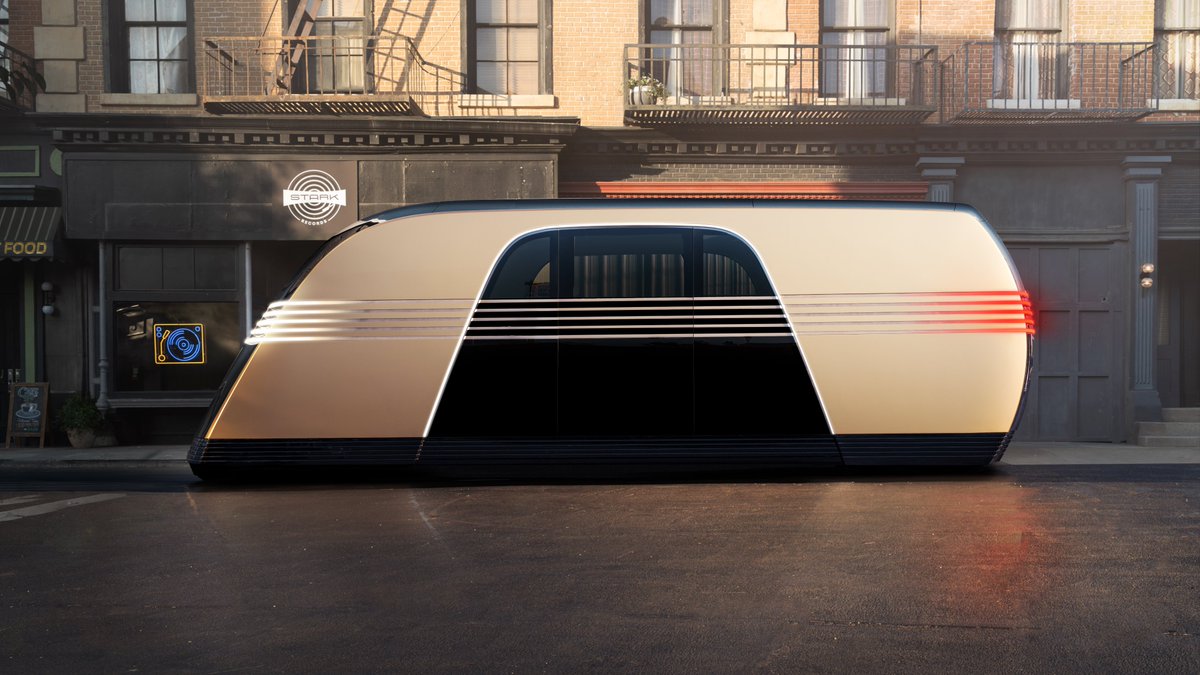
Besides robotaxis, Tesla on Thursday night also unveiled a sleek passenger vehicle called the Robovan (emphasis on the “bo”). During the demo, people trickled out of the van one by one — Musk said that the van could fit as many as 20 people or it could be used to transport goods. It does not have a steering wheel or driver’s seat.
The electric-van space is getting crowded, though. Several major automakers have recently announced new electric-van models, including Renault Master E-Tech, Mercedes-Benz eSprinter, and Ford E-Transit. Even for driverless shuttles, Tesla wasn’t the first to announce such a product. French company Navya launched an autonomous shuttle that can fit 15 passengers in 2020. Companies like Ohmio, Beep, and May Mobility are running or testing shuttles in the US. China’s WeRide unveiled a L4 cargo van in May — also called a robovan.
The Optimus personal robots are agile, scary, and likely can’t serve drinks.
The creepiest moment of the night came when a team of humanoid robots walked onto the stage while human staff members watched on the side. Meet the Optimus personal robots.
“The Optimus will walk amongst you,” Musk said. “You’ll be able to walk right up to them, and they will serve drinks.”
These robots will cost between $20,000 and $30,000 when they go on sale, although Musk did not offer a time frame. In a demo video, the Optimus is shown picking up packages, watering plants, and babysitting.
During the event livestream, they weren’t doing anything like that; mostly, they just danced and waved. But in one case, an Optimus played Rock, Paper, Scissors with a guest. Another passed along a bag, and one poured a drink from a tap and handed it to a guest. It was not clear if the robots were remotely operated or if they were truly autonomous. Musk cautioned the crowd, “Please be nice to the Optimus robots.”
— Elon Musk (@elonmusk) October 11, 2024




