

Keepontruckin’

PlusAI CEO David Liu, on the precipice of going public, talks autonomous trucking
With his company set to hit the public markets in February, Liu envisions a future where most vehicles, commercial or not, are driving themselves.
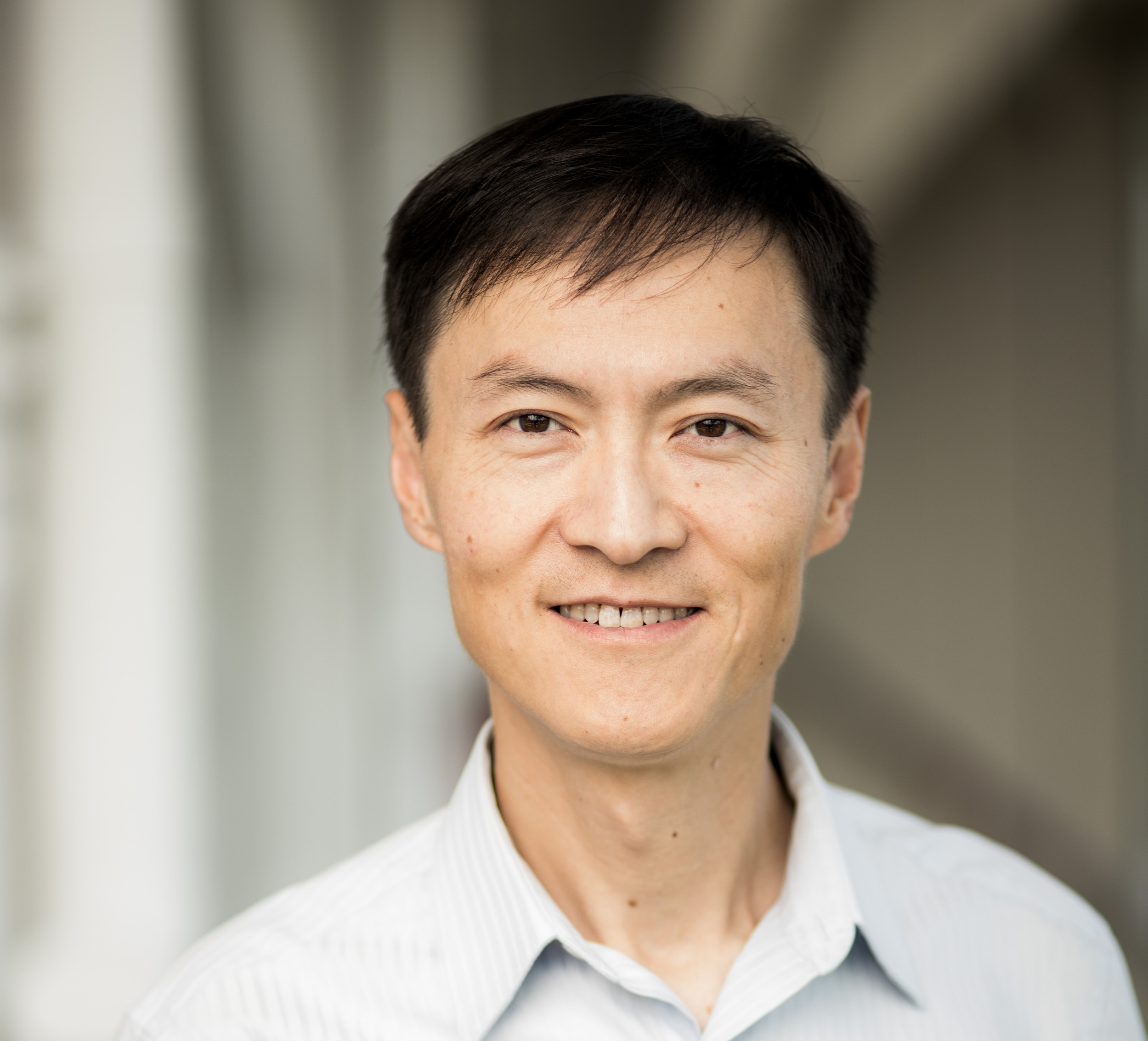
PlusAI CEO David Liu sees the trucking industry getting taken over by automation similar to how factories have over the past century. And he sees it saving companies big money.
“Think of modern-day factories,” he told me in an interview. “You don’t have many assembly-line workers versus a hundred years ago.” Using autonomous systems can save a company about 10% of its cost per mile, he said — removing a driver from the cab saves 40%, but the cost of the AI adds back some of that savings.
PlusAI is a 10-year-old company that’s building software to enable freight trucks to drive themselves. The company, which is slated to go public via a SPAC early next month, supplies its AI-powered autonomous driving system, SuperDrive, to vehicle manufacturers Hyundai, Traton, and Iveco. Those manufacturers, in turn, sell and lease autonomous trucks to fleet operators. PlusAI’s competitors include Aurora, which went public via a SPAC merger in 2021, and Torc Robotics, an independent subsidiary of Daimler Truck that also develops autonomous truck technology.
PlusAI currently has a commercial trial with safety drivers in the cabin underway in Texas and pilot programs in Sweden and Germany, with another recently announced in Spain. It plans to begin volume production sometime next year, when the pre-revenue company expects to start getting paid per mile driven — much like truck drivers are today.
We spoke with Liu about the autonomous trucking present and future. This interview has been edited for brevity and clarity.
Sherwood News: As we speak, are there autonomous trucks driving around somewhere?
David Liu: The US is actually leading the world in this regard. People have been doing commercial pilots in the last year or so, similar to us. We started the commercial trial last year [with a monitor in the cabin], as did Aurora. Everyone’s looking at starting driverless trucking toward the end of this year and then volume production going into next year.
Sherwood: What are some of the complexities you’ve run into during these tests?
Liu: The driving part of it has been worked out for a long time. The model that we help address is from a customer warehouse: load a container to the truck, then drive from the warehouse onto the highway, down the highway, and get off the highway and into the destination warehouse. That part has been well tested.
Now, it’s: how do we integrate this driving with the operation within the warehouse? How do you schedule these containers, integrate this with customers’ existing logistic network. How do you track it? Where do you store these tractors without the trailer? If there’s road construction or a road closure, how do we reroute that? So a lot of these are very simple human decisions — if you have a driver in there.
Those are the things that only through real operations, real-world driving, that you will be able to detect and figure out a way to address them.
Sherwood: When you start production next year, what’s that going to look like number-wise?
Liu: We’re going to ramp up gradually.
The illustrative schedule of L4 autonomous trucks operating on roads across the United States and Europe reflect an adoption curve of less than 100 in 2027, up to 25,000 in 2031, and more than 130,000 in 2035.
The market size for trucking is about $1 trillion in the US. PlusAI will get a portion of the revenue that autonomous trucks generate, charged on a per-mile basis. We expect that our revenue will be about $40,000 per truck, so with 25,000 trucks, that would be $1 billion in revenue on an annual basis.
Sherwood: From the perspective of the fleets that will buy these trucks, what’s the relative cost versus a traditional truck with a human driver?
Liu: The baseline savings for fleets will be about 10% to start. Over time, autonomous trucking is expected to deliver more diverse cost reductions as technology matures and autonomy becomes more pervasive.
Today, with a driver with a manually driven truck, it costs about $2.25 for every mile of transport. With autonomous PlusAI-enabled trucks, the fleets no longer need to pay drivers.
Sherwood: What percentage of the $2.25 per mile goes to a human driver?
Liu: 40%.
Sherwood: How will you know when you can take the safety driver out?
Liu: There are a couple of performance metrics we watch. We have a one called SCR, a “Safety Case Readiness” metric. It measures how many scenarios or safety cases we cover with our product. When that metric gets to 100%, we can take the driver out of the cabin.
It improved from 75% to 90% over the last 12 months.
Another metric we look at is what we call RAFT, “Remote Assistant Free Trip.” If there’s a road closure and the truck needs to call a remote center director to make a decision, that’s considered a remote-assisted trip. We want to get the RAFT percentage to be up above 90%, so 90% of the time you’re not needing to call someone in when those things happen. The current RAFT is 79.0%.
Sherwood: The trucks you’re working on now are diesel. Where do they get fuel?
Liu: Near and at the warehouse. So filling up the gas, all those kinds of things are still human-run.
Sherwood: Any plans to work with electric trucks?
Liu: We are drivetrain agnostic. We can enable electric trucks just as well. But the majority of the trucks on the road today are diesel trucks.
Sherwood: Where do you see the industry in 10 years?
Liu: Our goal has been the same starting since day 1. We just utilize the AI technology to transform, to fundamentally automate the logistics industry. We envision a world where the entire transport infrastructure is automated.
Think of modern-day factories. You don’t have many assembly-line workers versus a hundred years ago. In a number of years, perhaps decades, most of the vehicles on the roads are going to be driven autonomously.
Sherwood: Do you mean just commercial vehicles or consumer, too?
Liu: I think in general. That world is coming to us slowly but eventually.
Sherwood: And where’s PlusAI’s place in that?
Liu: The four major heavy truck manufacturers are Traton, Daimler, Volvo, and PACCAR. We think that industry architecture will remain the same, so we think the best way to distribute our virtual driver and to enable the industry is through these OEMs [original equipment manufacturers], helping them produce autonomous trucks rather than manually driven trucks.
That’s how we get our technology into society.
Sherwood: Over the course of your business’s 10 years working on autonomy, has your viewpoint changed at all?
Liu: I think over the last five years, our conviction that this will happen has strengthened. Five years ago there were a lot of doubts, especially coming from the consumer, when this would really happen. I think over the last year with the deployment of robotaxis, people generally believe that the future is now. That’s a dramatic mindset shift.
Sherwood: So your headquarters are in Silicon Valley, at one of the epicenters where driverless taxis are rolling out. Do you take Waymos or Tesla’s Robotaxis? How do you get around?
Liu: I take Waymo. I used to take Uber. Now I prefer Waymo. I have to take Uber right now a lot of times because I go to airport quite a bit, and Waymo doesn’t cover the airport yet.




