

Tech
tech

New study finds AI doesn’t reduce work — it intensifies it

The rapid adoption of AI by businesses was fueled by the promise of huge productivity boosts that could supercharge workers. A new study has found that while it did indeed boost workers’ productivity, the use of generative AI at work also made work more intense and creep into workers’ downtime.

Researchers Aruna Ranganathan and Xingqi Maggie Ye followed about 200 workers at a US tech company for eight months. They found that AI did speed up work, allowing employees to take on more responsibilities. But after the novelty of their newfound superpowers wore off, workers reported “cognitive fatigue, burnout, and weakened decision-making.”

The researchers noted that to avoid AI-inspired burnout and turnover, organizations should adopt an “AI practice,” spelling out how the technology is expected to be used and what kinds of limits are in place.

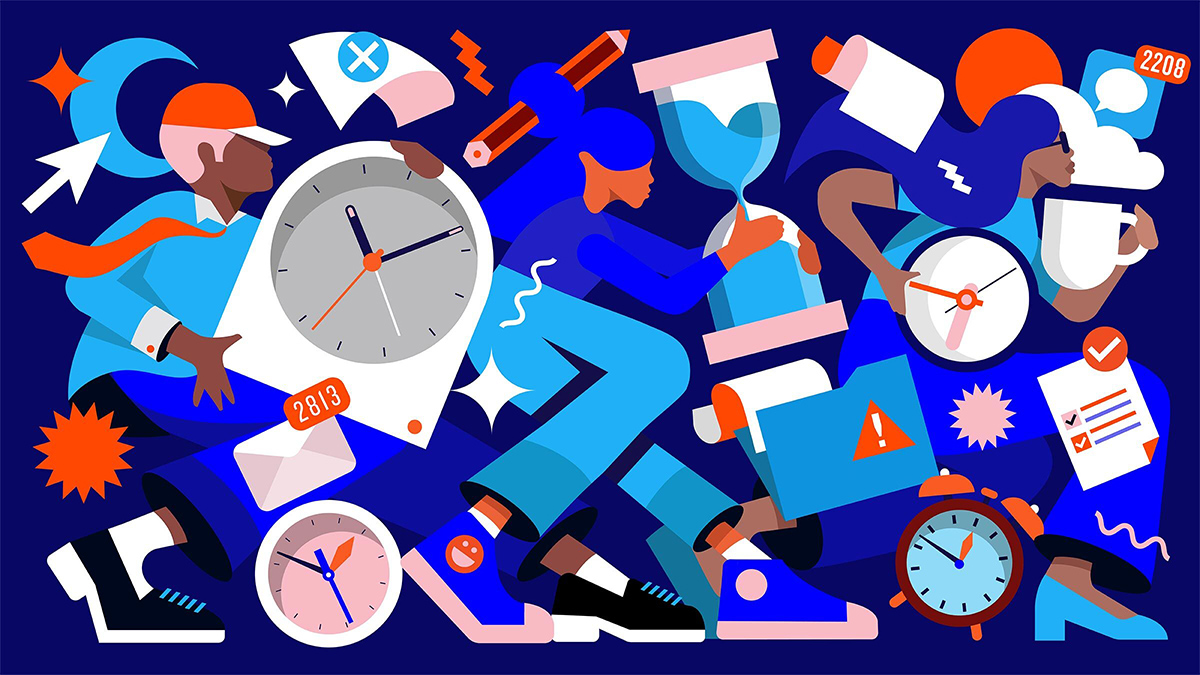
Researchers Aruna Ranganathan and Xingqi Maggie Ye followed about 200 workers at a US tech company for eight months. They found that AI did speed up work, allowing employees to take on more responsibilities. But after the novelty of their newfound superpowers wore off, workers reported “cognitive fatigue, burnout, and weakened decision-making.”

The researchers noted that to avoid AI-inspired burnout and turnover, organizations should adopt an “AI practice,” spelling out how the technology is expected to be used and what kinds of limits are in place.

More Tech

See all Tech
tech

Google will supply AI models to Pentagon in classified deal, per The Information

Google has become the latest tech company to ink an agreement to supply the Department of Defense (War) with AI, having reportedly closed a classified deal that allows the Pentagon to use its AI for “any lawful government purpose,” according to The Information.

The Information initially reported talks between the Alphabet-owned company and the US government around two weeks ago, following the messy breakdown of the relationship between Anthropic and the Trump administration — and the rushed OpenAI deal that took its place.

The move has reportedly sparked opposition among Google employees, with The Washington Post reporting that over 600 workers signed a letter to CEO Sundar Pichai to ask him to bar the Defense Department from using the company’s AI models for any classified work.

The Information initially reported talks between the Alphabet-owned company and the US government around two weeks ago, following the messy breakdown of the relationship between Anthropic and the Trump administration — and the rushed OpenAI deal that took its place.

The move has reportedly sparked opposition among Google employees, with The Washington Post reporting that over 600 workers signed a letter to CEO Sundar Pichai to ask him to bar the Defense Department from using the company’s AI models for any classified work.

tech
Jon Keegan

Microsoft loses exclusive access to OpenAI’s models and tools while ending revenue-sharing deal with ChatGPT maker

Microsoft shares dropped as it announced a revised agreement with OpenAI.

The amended agreement ends revenue-sharing payments from Microsoft to OpenAI, and also ends Microsoft’s exclusive access to OpenAI’s intellectual property (i.e. models and products).

OpenAI’s revenue sharing with Microsoft will end in 2030, is subject to a total cap, and is no longer dependent on its achieving artificial general intelligence.

Amazon, a likely beneficiary of this lack of exclusivity, initially popped on the news but erased those gains.

This is a developing story.

tech
Rani Molla

China just blew up one of Meta’s key AI bets

China has ordered Meta to unwind its $2 billion acquisition of Manus, a Chinese startup (since relocated to Singapore) that makes AI agents and was central to Meta’s push to turn its massive AI investments into a real business. The move is part of the Chinese government’s effort to stop US firms from gaining access to Chinese talent and intellectual property, as Washington continues to restrict sales of advanced AI chips to Chinese companies.

Unlike its tech peers, which can sell AI through cloud services, Meta mainly uses AI to improve its existing ad business rather than as a stand-alone revenue driver. The decision strips away one of Meta’s clearest paths to monetizing AI — leaving it spending like a hyperscaler, without a hyperscaler business model.

Unlike its tech peers, which can sell AI through cloud services, Meta mainly uses AI to improve its existing ad business rather than as a stand-alone revenue driver. The decision strips away one of Meta’s clearest paths to monetizing AI — leaving it spending like a hyperscaler, without a hyperscaler business model.

Latest Stories

Sherwood Media, LLC produces fresh and unique perspectives on topical financial news and is a fully owned subsidiary of Robinhood Markets, Inc., and any views expressed here do not necessarily reflect the views of any other Robinhood affiliate, including Robinhood Markets, Inc., Robinhood Financial LLC, Robinhood Securities, LLC, Robinhood Crypto, LLC, Robinhood Derivatives, LLC, or Robinhood Money, LLC. Futures and event contracts are offered through Robinhood Derivatives, LLC.
