LinkedIn is a weird, workaholic wasteland — and a total gold mine for Microsoft
The home of humble bragging is bagging billions for Microsoft and driving leads for smaller business owners.
LinkedIn may not be the first platform you think of when you think about our modern obsession with social media. But the site’s strange mix of job postings, constant spam, professional advice you didn’t ask for, humble and not-so-humble bragging, as well as the occasional actually useful bit of professional connection or networking has quietly turned itself into a gold mine for its owner, Microsoft.
Though spending too long on the site might have you reaching to submit a contribution to “r/LinkedInLunatics” — a Reddit forum where people post the most insane things they see on the platform — the truth of the matter is that more professionals are engaging on LinkedIn.
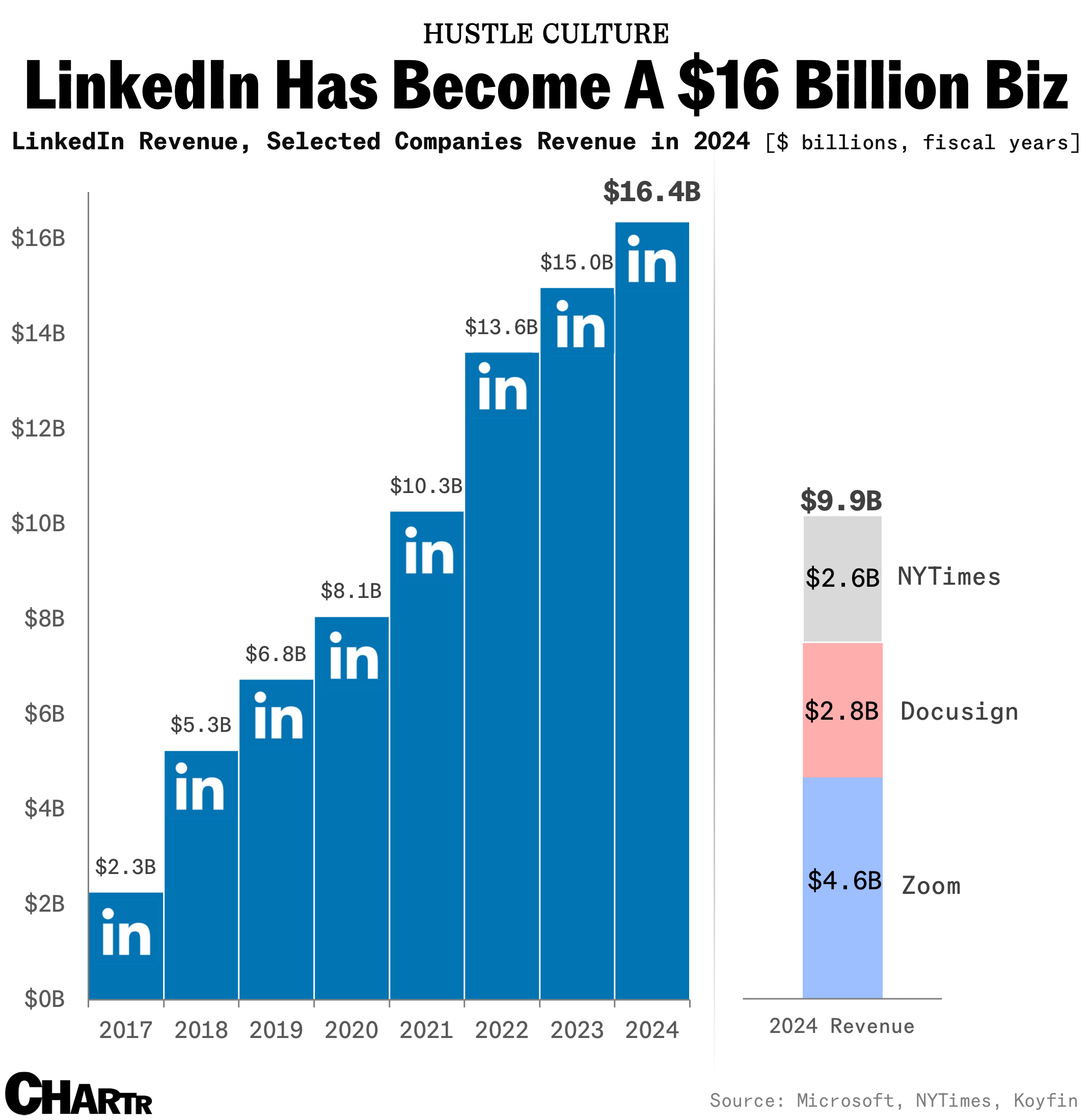
Last week, Microsoft revealed that the site is seeing record engagement, with comments on the platform up 37% year over year. Moreover, millions of people have now signed up for LinkedIn Premium; the company revealed that it’s earned more than $2 billion in revenue from its AI-laden premium service in the last 12 months. Indeed, LinkedIn more broadly contributes healthily to Microsoft’s bottom line — the division delivered $16 billion in revenue in 2024, more than The New York Times, Zoom, and Docusign put together.
LockedIn
The Microsoft-owned company has been adding a plethora of AI features aimed mainly at job seekers to its paid tier since 2023. Those include autogenerated messages and AI-powered judgments about where an applicant would be a good fit for a job posting. And the latest numbers suggest that the AI features are helping LinkedIn convince its more than 1 billion users to get their credit cards out, as the number of premium subscribers has grown around 50% in the last two years.
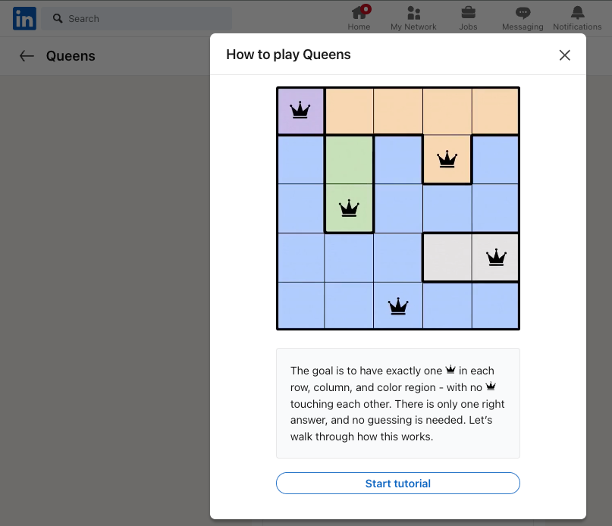
The platform has even tried to get in on the gaming boom, taking a leaf out of The New York Times’ playbook, launching four separate games last year. That fits with LinkedIn’s strategy of being all things to all people, which, somehow, seems to be working — even with the younger demographic.
#OpenToWork
Younger generations tend to reflexively reject spending time on the same online social media platforms as their parents (here’s looking at you, Facebook). But, unfortunately for the youth, you do tend to turn into your parents as you age, and LinkedIn is no exception. As Gen Z has entered the workforce, they seem to have no problem with the site, with the number of American Gen Z users on LinkedIn estimated to have risen 14% in 2024, per Insider Intelligence. But those younger users post on the site in a very different way.
Once upon a time, personal or honest takes were regarded as awkward and professionally desperate on LinkedIn. But being a so-called “thinkfluencer” in 2025 is increasingly a strategic way to boost your “personal brand” (should you desire to have such a thing). After a number of conversations with small business owners over the last few months, the reality is that posting every single day on LinkedIn, even if it feels uncomfortable at times, is a bona fide way of bringing in leads.
From CEOs crying about laying off employees to former colleagues reflecting on what a proposal taught them about B2B sales, a collection of the site’s worst, cringiest posts are well documented on Instagram and X (Twitter) pages. But those cringe-inducing moments haven’t put off top-level company executives from companies like Blackstone, Ralph Lauren, and Spotify talking about their businesses on the platform, with a 23% increase in LinkedIn posts by CEOs in September 2024 since the start of the year, many of whom are joining to create a narrative about the company in a relatable manner beyond the boring numbers.
And LinkedIn is going all in to cater to a generation that came of age posting about their lives everywhere: the job-hunting site has added tools like vertical video early last year, which soon became the fastest-growing content type on the site, with video uploads jumping 36% year over year.
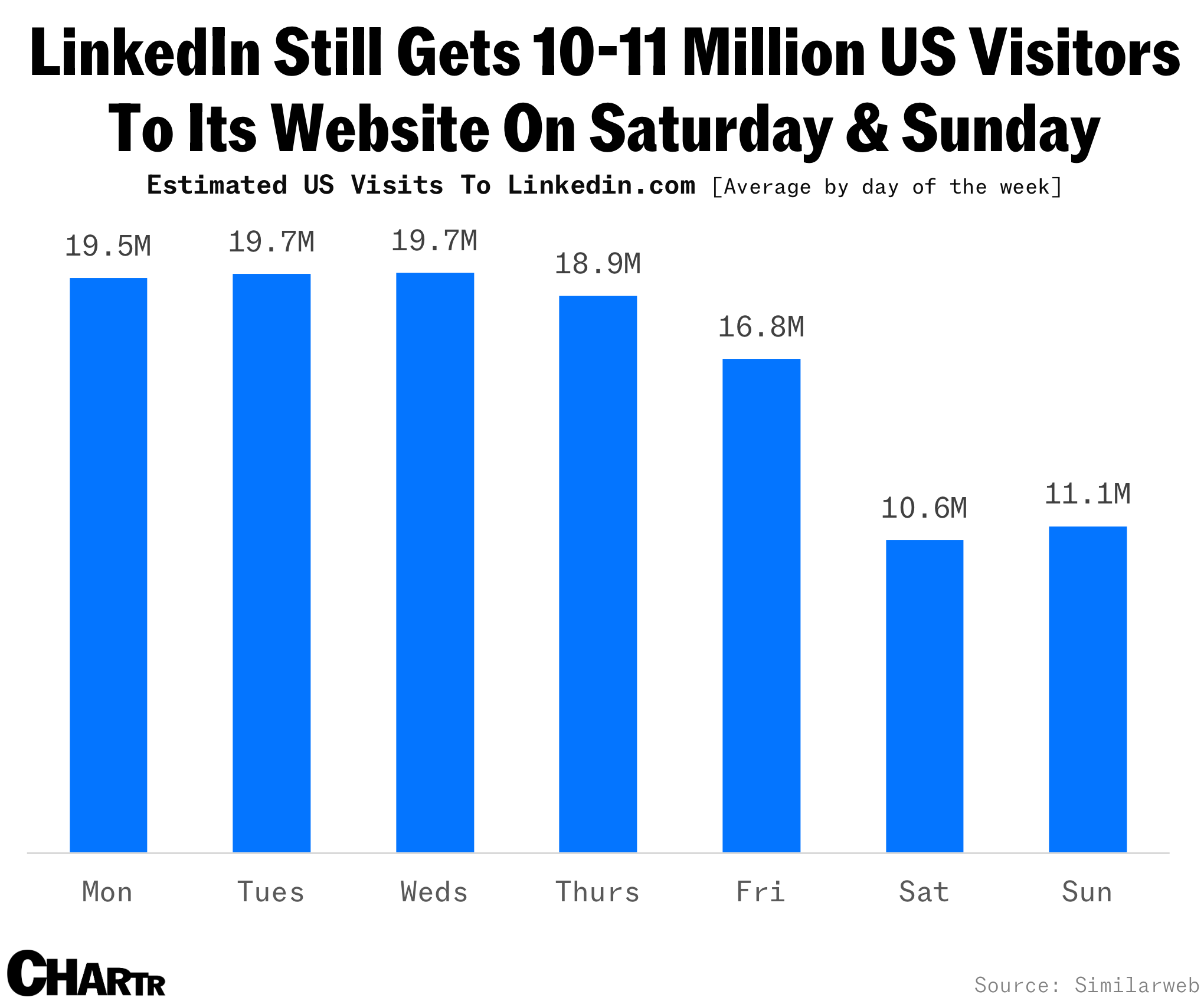
Just how strong of a grip does the app have on the professional networking scene? Traffic data from Similarweb lends some insight. As you might expect, traffic drops off on the weekends — but perhaps not as much as you might expect.
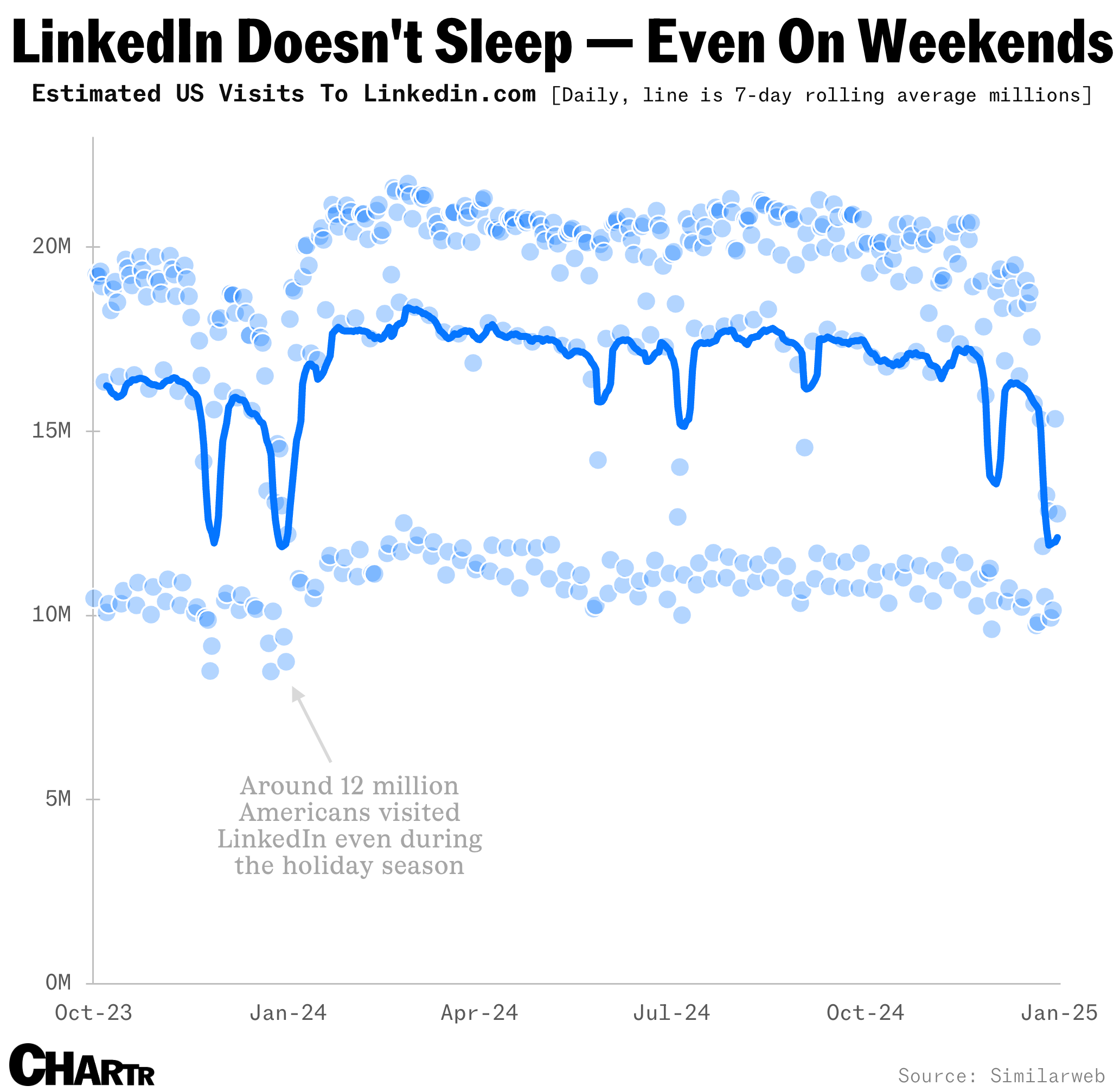
Now, if we slice that same data by day of the week, we can see more clearly that LinkedIn’s main website is still getting 10 million to 11 million hits per day on Saturday and Sunday.
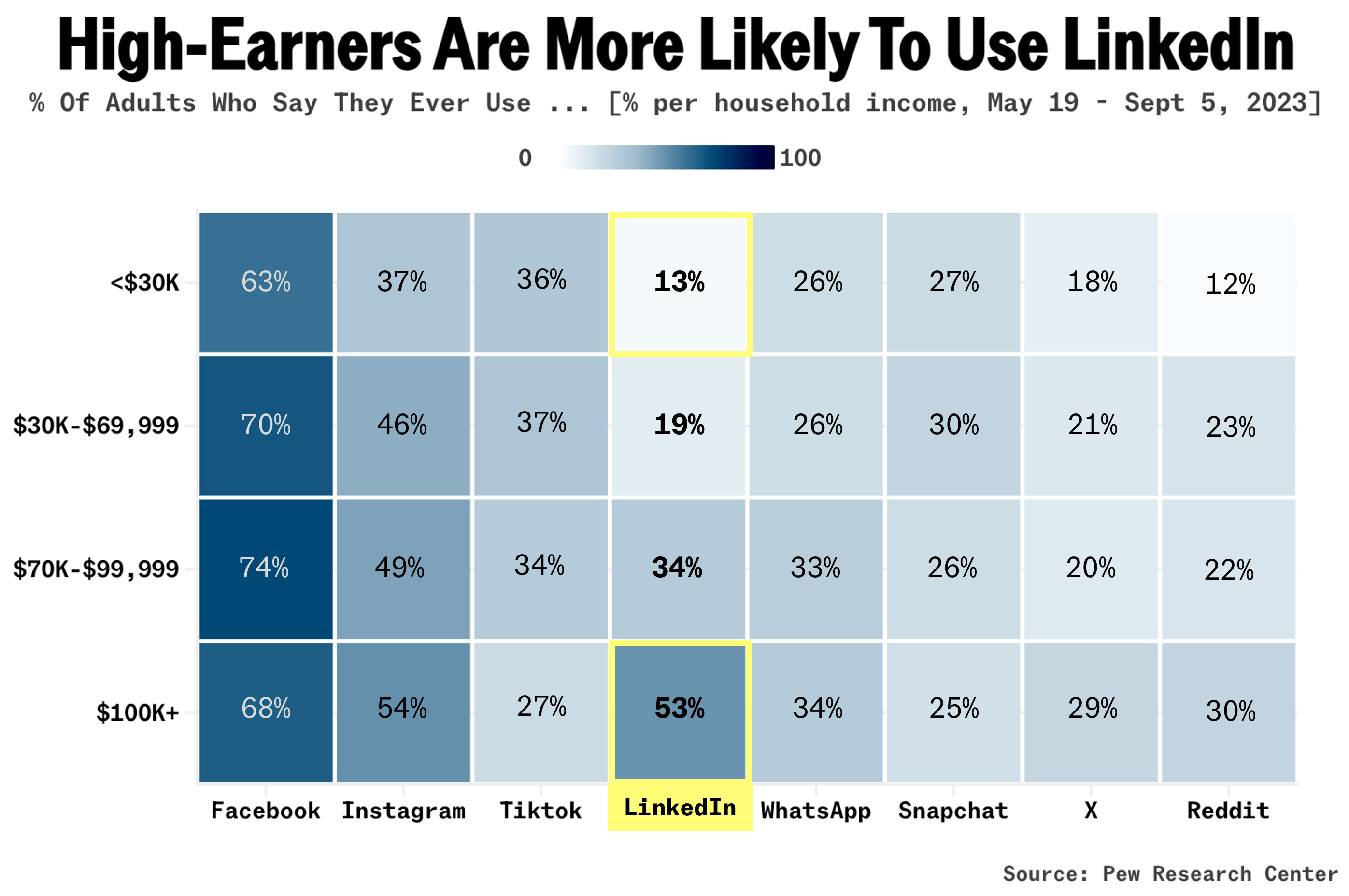
If nothing else, that data is further proof of the app’s grip on the professional networking scene, with a user base that skews more educated and wealthier than almost any other major social networking site, per data from Pew Research Center. Of course, the wealthier the user base, the more valuable it is to advertisers, which still make up the majority of LinkedIn’s revenue. Indeed, LinkedIn scraped almost half ($7 billion) of its total revenue by selling services, promotions, and software to corporate recruiters as of 2023.
LinkedUp
With more and more people dipping their toes into remote working, definitions of what’s socially acceptable to share at work are also changing. It’s this interplay between generations and workforces (work-from-home vs. work-from-office), and the fact that some make serious money from the platform, that makes LinkedIn — for lack of a better word — weird.
Some people want to log on to find a job. Some want to find new clients. Some want to hire someone. Some want to sarcastically comment on a coworker’s promotion. Some want to snoop on their colleagues. Some just want to play “Queens” for 10 minutes on their lunch break. I have even been asked by friends to look people up on the platform before they go on a date, to see what their potential Romeo or Juliet does for a living.
But if weird is the first accusation that springs to mind for a social platform, Microsoft execs probably won’t mind too much as they count the $16 billion a year in revenue that the platform brings in.