Jevons Paradox is the latest jargon you need to know to signal you’re smart on AI
A paradox named after an English economist born in 1835 blew up this week.
The world of technology moves fast. For commentators and analysts who want to signal they know what’s going on, that means adapting just as quickly.
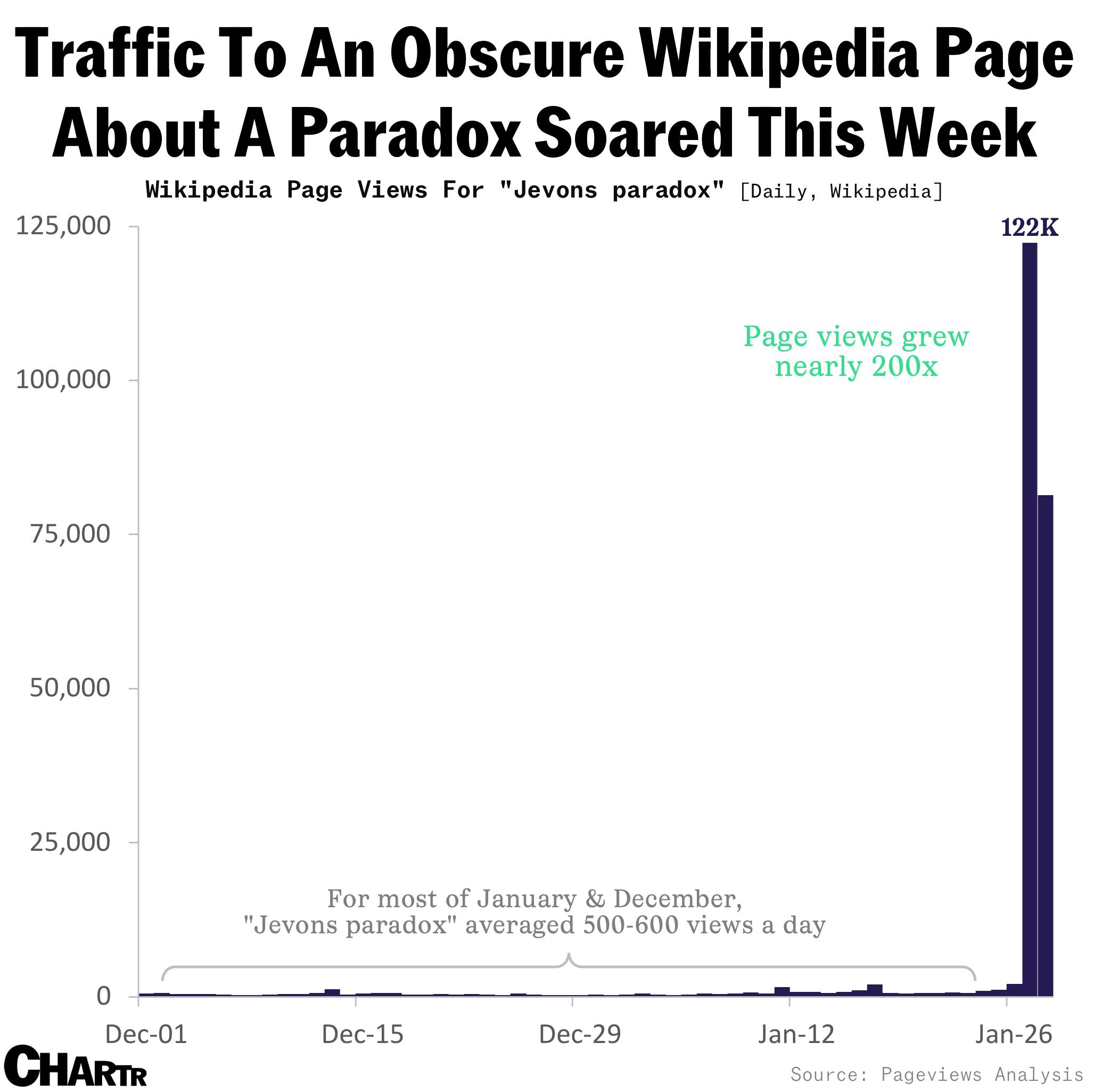
After mastering epidemiology and evangelizing for crypto during the pandemic, many Twitter (now X) “experts” turned their hand to military strategy and geopolitics in the wake of Russia’s invasion of Ukraine. But for the last 18 months, AI has been the topic du jour. In the wake of DeepSeek turning the entire industry on its head — and wiping nearly $600 billion off of the market cap of Nvidia in a single day — one new phrase has become table stakes for anyone wading into the DeepSeek discourse: Jevons Paradox, with traffic to its associated Wikipedia page soaring this week.
Per that very Wikipedia page:
“...the Jevons paradox occurs when technological advancements make a resource more efficient to use (thereby reducing the amount needed for a single application), however, as the cost of using the resource drops, overall demand increases causing total resource consumption to rise.”
The original example posited by Mr. William Stanley Jevons, summarized nicely by Axios, was coal. Progress in steam engines, which enabled them to use less coal, didn’t lead to a drop in coal demand — it led to a huge rise.
Though a bit of an oversimplification, that is essentially the crux of the current debate in AI: DeepSeek reportedly achieved something for a lot less money and resources than US competitors like OpenAI and Meta used. That could be interpreted in two ways:
We will therefore need fewer high-tech chips like the ones Nvidia makes, and fewer energy plants to power them (which is why power and data center stocks got hammered this week);
Or, and this is where the Jevons Paradox comes in, we will want even more.
The market seemed to follow the first school of thought on Monday, but came around to the second by Tuesday, with chip analysts and tech heavyweights, most notably Microsoft’s CEO Satya Nadella, citing the paradox as proof that AI use will “skyrocket.”