
Tech
TAIWAN-TECH-BUSINESS-AI-COMPUTEX
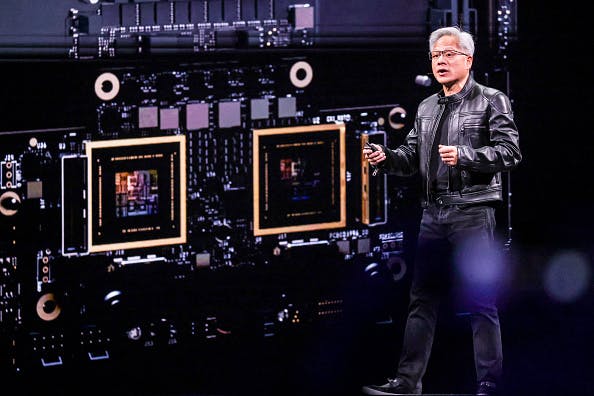
(I-Hwa Cheng/Getty Images)
top of the flops

Hoppers, Blackwells, and Rubins: A field guide to the complicated world of Nvidia’s AI hardware

It’s common knowledge that Nvidia is at the core of the AI boom, but understanding what makes a “superchip” or why a NVL72 rack costs millions takes a bit of work.

Jon Keegan

No company has played a more central role to the current AI boom than Nvidia. It designed the chips, networking gear, and software that helped train today’s large language models and scale generative-AI products like ChatGPT to billions of users.

Understanding Nvidia’s AI hardware offerings, even for the tech savvy, can be challenging. While many of the biggest tech companies are hard at work building their own custom silicon to give them an edge in the ultracompetitive AI market, you will find Nvidia’s AI hardware powering pretty much every big AI data center out there today.

Some estimates have Nvidia owning as much as 98% of the data center GPU market. This has fueled the company’s meteoric rise to become one of the world’s largest companies. 

A chip by any other name...

To start understanding the landscape of Nvidia’s chips, it’s helpful to understand what each generation is called and which semis came out in that time. Going all the way back to 1999, Nvidia has named its various chip architectures after famous figures from science and mathematics. 

Earlier generations of Nvidia’s chip architecture powered the rise of advanced video graphics cards (in case you didn’t know, GPU stands for graphics processing unit) that helped propel the video game industry to new heights, but GPUs’ ability to run massively parallel vector math turned out to make them perfectly suited for AI.

The hot H100

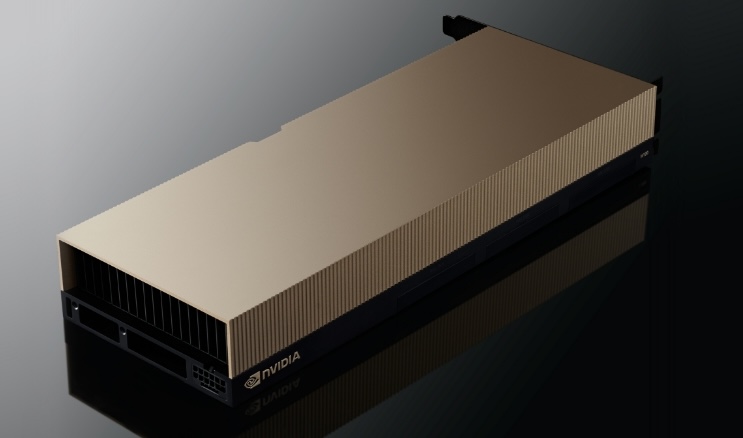
The breakout star of Nvidia’s hardware offerings was undoubtedly the most powerful Hopper series chip, the H100 Tensor Core GPU. Announced in April 2022, this GPU was a breakthrough that featured the new “Transformer Engine,” a dedicated accelerator for the kinds of processing that large language models relied on for both training and “inference” (running a model) — which saw a 30x improvement from the previous generation’s fastest chip, the A100.

After OpenAI’s ChatGPT exploded onto the scene, demand for the H100 led tech companies to stockpile hoards of hundreds of thousands of the GPUs to help build bigger and faster large language models.

The H100s are estimated to cost between $20,000 and $40,000 each.
Nvidia H100
A Nvidia H100 GPU (Nvidia)

Blackwell “superchip”

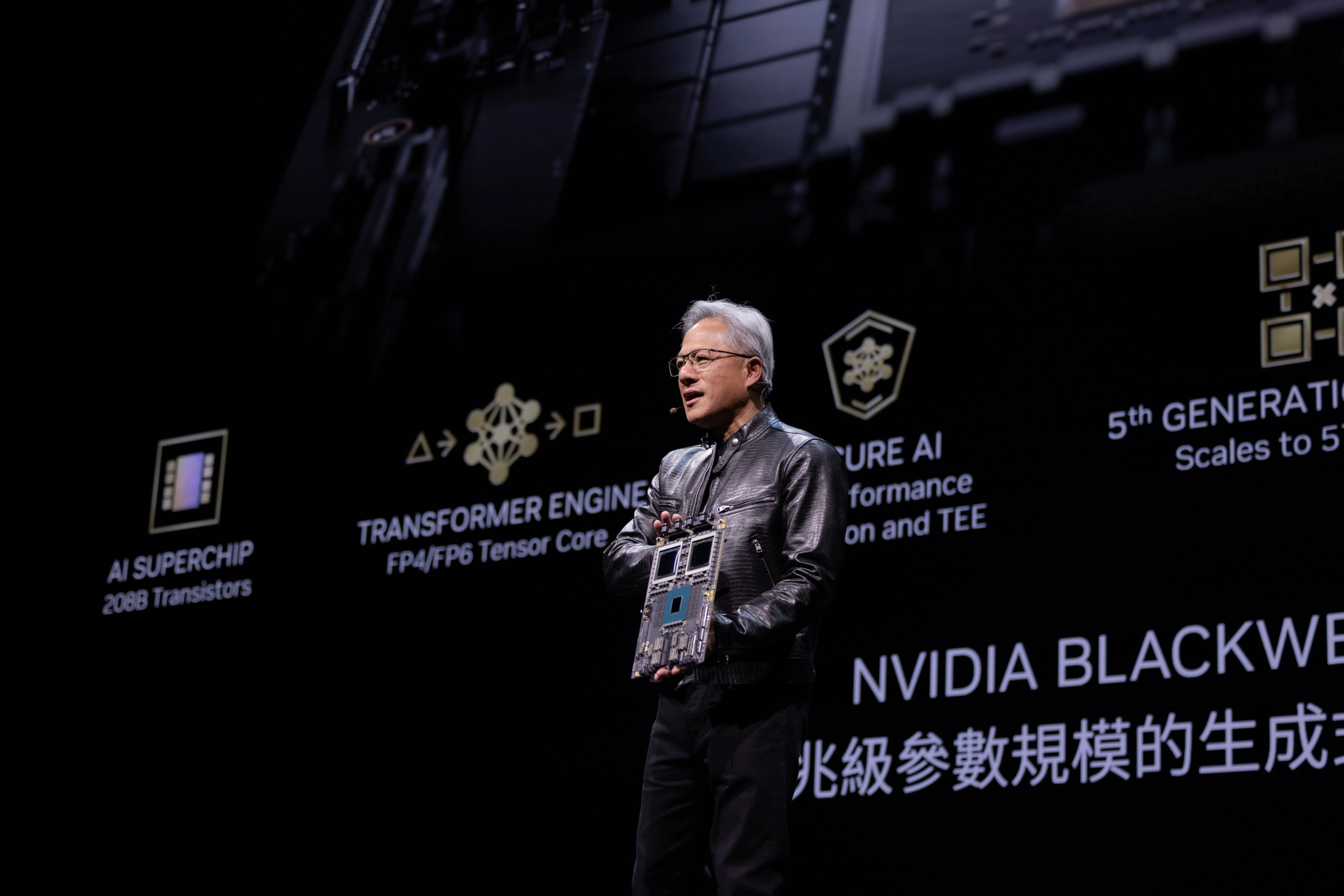
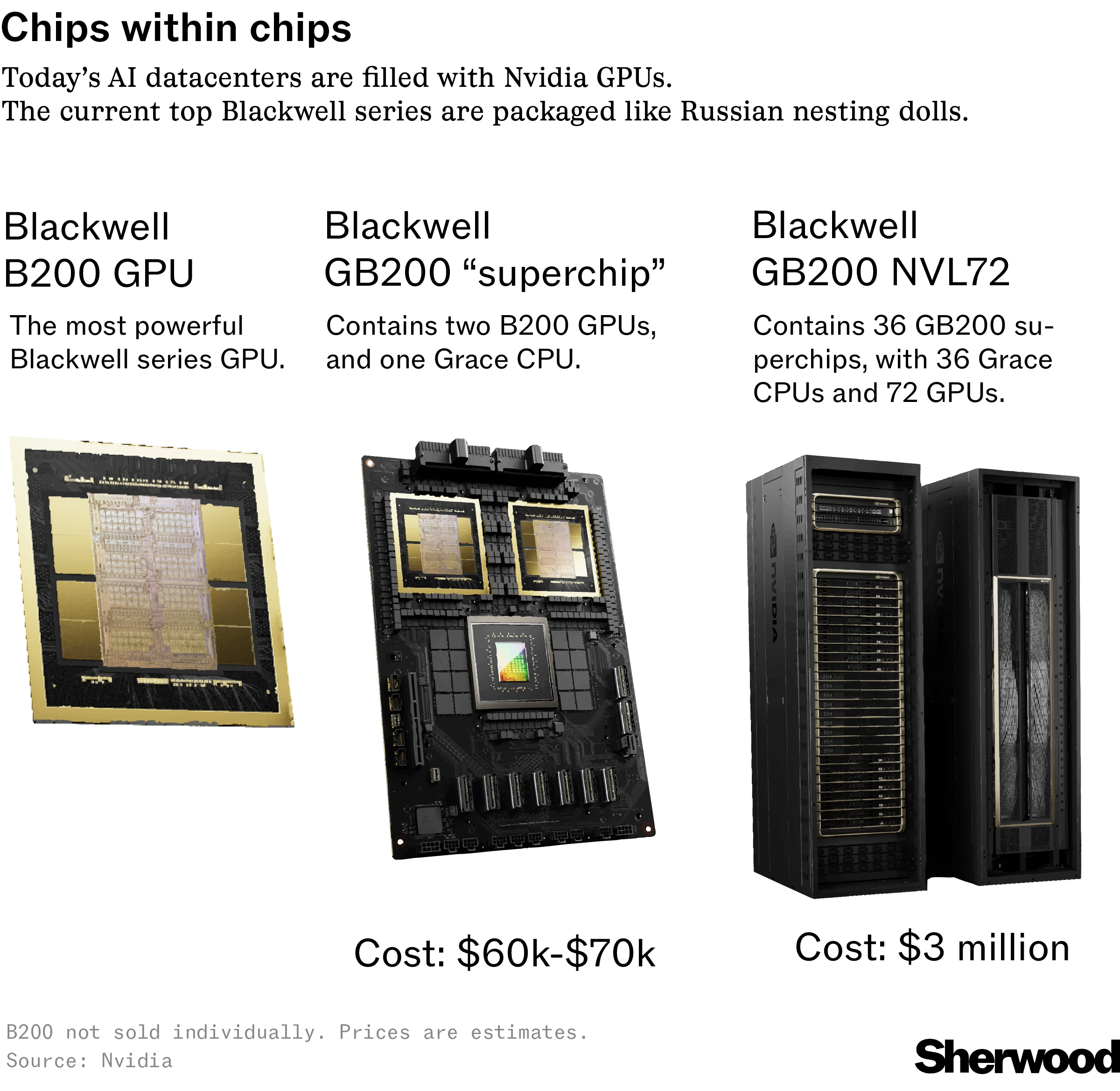
In the fast-moving AI industry, while the H100 is still a hot item, the latest chip everyone is turning to is the GB200 — what Nvidia calls the “Grace Blackwell superchip.” This chip combines two Blackwell series B200 GPUs and a “Grace” CPU in one package.
Nvidia GB200 superchip
Nvidia CEO Jensen Huang holding a GB200 superchip at the Computex expo (Nvidia)

But if youre in the market for such powerful AI hardware, it’s likely you want dozens, hundreds, or even thousands of these chips wired up with the fastest interconnections you can get. That’s where the “GB200 NVL72” comes in. The NVL72 comes packed with 36 of the GB200 superchips — so 36 Grace CPUs and 72 of the B200 GPUs. Confused yet?

And if youre going on a GPU shopping spree, you better have lined up some VCs with deep pockets. Each GB200 superchip is estimated to cost between $60,000 and $70,000, while a fully equipped NVL72 rack is estimated to cost roughly $3 million, as it requires not only the pricey superchips but also expensive networking and liquid cooling.

If that’s too rich for you, you can always turn to AI investor darling CoreWeave, which advertises access to its batch of GB200 NVL72s starting at $42 per hour. CoreWeave says it has over 250,000 Nvidia GPUs in its data centers.
Chips within chips

According to Bloomberg, the “Stargate” mega data center project backed by OpenAI, SoftBank, and Oracle is planning on installing 400,000 of the GB200 superchips.

And Meta CEO Mark Zuckerberg has stated that he expects the company to have over 1.3 million GPUs by the end of 2025.

Leaps in performance

When youre talking about leaps forward in AI, its important to remember than rather than slow incremental bumps, each generation of chips is making exponential gains in a metric known as FLOPS, which measures performance.

Rubin matters

All this Nvidia jargon aside, there’s one model name you should pay attention to: Rubin, which will be the next leap forward in compute power.

Next year we’ll see the first of the Rubin architecture chips, the “Vera Rubin” superchip named after the American astronomer known for discovering dark matter.

Following the Vera Rubin chip release will be the Vera Rubin NVL144 (144 GPUs) and then Vera Rubin Ultra NVL576 (576 GPUs) in the second half of 2027.

Phew. Got all that?

More Tech

See all Tech
South by Southwest Conference and Festivals

Gold Tesla Cybercabs are piling up, but they’re not picking up passengers yet

Low-volume production started in April. Now people are noticing them more and more in the wild.

Rani Molla6/15/26
tech
Jon Keegan

Anthropic pulls Fable and Mythos access worldwide after Trump administration bars their use by foreign nationals

Only days after releasing two versions of its next-gen AI model, Anthropic has disabled them for users worldwide.

Anthropic says it received a Friday night order from the Trump administration to suspend access to the models for any foreign national (anywhere in the world) — a group that included some Anthropic employees. In response, the company turned off access to everyone.

Last week, the company released to the public its much-anticipated Claude Fable 5 model (and its restricted version Claude Mythos 5, which is still being tested with trusted partners). Anthropic said in a blog post announcing the action that officials cited national security concerns with the new models, while offering few specific details.

The post said that the government gave the company “verbal evidence of a potential narrow, non-universal jailbreak” of the public Fable 5 model. A jailbreak is a means by which users can evade restrictions built into the code to unlock prohibited functionality. Anthropic downplayed the significance of the attack, and said other major models, such as OpenAI’s GPT-5.5, could also be affected by the technique described.

Fears of these first Mythos-class models being misused are running high, after Anthropic warned the cybersecurity world in May that the advanced cyber capabilities of Mythos have rapidly discovered thousands of vulnerabilities in ubiquitous software, leading to the decision to restrict the full version of the model to a close group of trusted partners for testing.

This morning, Axios reported that Anthropic technical staff have flown to Washington to meet with White House officials to resolve the issue.

The Wall Street Journal is reporting that the Trump administration’s decision to take action against Anthropic was prompted by discussions that Amazon CEO Andy Jassy had with officials, including Treasury Secretary Scott Bessent. According to the report, Amazon researchers said they had been able to evade some of Fable 5’s security restrictions using specific prompts. Amazon is a major investor in Anthropic.

Anthropic is currently suing the US government to fight the Pentagon’s blacklisting of the company on national security grounds.

Last week, the company released to the public its much-anticipated Claude Fable 5 model (and its restricted version Claude Mythos 5, which is still being tested with trusted partners). Anthropic said in a blog post announcing the action that officials cited national security concerns with the new models, while offering few specific details.

The post said that the government gave the company “verbal evidence of a potential narrow, non-universal jailbreak” of the public Fable 5 model. A jailbreak is a means by which users can evade restrictions built into the code to unlock prohibited functionality. Anthropic downplayed the significance of the attack, and said other major models, such as OpenAI’s GPT-5.5, could also be affected by the technique described.

Fears of these first Mythos-class models being misused are running high, after Anthropic warned the cybersecurity world in May that the advanced cyber capabilities of Mythos have rapidly discovered thousands of vulnerabilities in ubiquitous software, leading to the decision to restrict the full version of the model to a close group of trusted partners for testing.

This morning, Axios reported that Anthropic technical staff have flown to Washington to meet with White House officials to resolve the issue.

The Wall Street Journal is reporting that the Trump administration’s decision to take action against Anthropic was prompted by discussions that Amazon CEO Andy Jassy had with officials, including Treasury Secretary Scott Bessent. According to the report, Amazon researchers said they had been able to evade some of Fable 5’s security restrictions using specific prompts. Amazon is a major investor in Anthropic.

Anthropic is currently suing the US government to fight the Pentagon’s blacklisting of the company on national security grounds.

tech
Rani Molla

Tesla used skewed data in push for European FSD approval, Reuters finds

Tesla has used highly questionable safety stats in an effort to win over European regulators and rekindle sales in the region, according to a Reuters investigation.

Tesla reportedly pitched regulators in Sweden and the Netherlands with claims that its Full Self-Driving (FSD) tech is over 7x safer than human drivers. However, independent researchers told Reuters that the stats are misleading because Tesla compares airbag-deployment crashes involving FSD-equipped vehicles with much broader US crash statistics, while also benchmarking newer Teslas against the entire US vehicle fleet, which is significantly older on average.

Despite the flawed metrics, the Dutch regulator approved FSD in April, saying its decision was based on its own “tests, analyses and verifications,” and Tesla is now pushing for EU-wide clearance. A version of FSD is currently available in five European markets.

Despite the flawed metrics, the Dutch regulator approved FSD in April, saying its decision was based on its own “tests, analyses and verifications,” and Tesla is now pushing for EU-wide clearance. A version of FSD is currently available in five European markets.

tech
Rani Molla

Report: Microsoft weighs Xbox spin-off amid major overhaul

Microsoft is reportedly considering spinning out or restructuring its struggling Xbox unit, per The Information. While new Xbox CEO Asha Sharma, who took over in February, is preparing for layoffs, shes simultaneously planning to boost investment in its biggest franchises like “Halo,” “Fallout,” and “Minecraft.”

The latest potential shake-up comes as the gaming division battles major headwinds, following a massive 33% plunge in Q3 console sales and a recent move to slash Game Pass prices while removing new Call of Duty titles.

The latest potential shake-up comes as the gaming division battles major headwinds, following a massive 33% plunge in Q3 console sales and a recent move to slash Game Pass prices while removing new Call of Duty titles.

Latest Stories

Sherwood Media, LLC and Chartr Limited produce fresh and unique perspectives on topical financial news and are fully owned subsidiaries of Robinhood Markets, Inc., and any views expressed here do not necessarily reflect the views of any other Robinhood affiliate, including Robinhood Markets, Inc., Robinhood Financial LLC, Robinhood Securities, LLC, Robinhood Crypto, LLC, Robinhood Money, LLC, Robinhood U.K. Ltd, Robinhood Derivatives, LLC, Robinhood Gold, LLC, Robinhood Asset Management, LLC, Robinhood Credit, Inc., Robinhood Ventures DE, LLC and, where applicable, its managed investment vehicles.

