
Tech
Mark Zuckerberg at Meta Connect 2025
(Meta)

Are Ray-Ban Meta glasses really a hit?

We checked how it stacks up to iconic gadgets, and the results are mixed.

At this week’s Meta Connect conference, CEO Mark Zuckerberg introduced new Ray-Ban Meta Display glasses with the “Meta Neural Band” (that you wear on your wrist), wraparound Oakley Meta Vanguard glasses, and the second iteration of Ray-Ban Meta glasses.

During a glitch-filled keynote presentation, Zuckerberg gave an update on the Ray-Ban Meta glasses, which the company does not disclose sales figures for:

“This is now our third year shipping AI glasses with our great partner, EssilorLuxottica. And the sales trajectory that we’ve seen is similar to some of the most popular consumer electronics of all time.”

This got us wondering about how the sales for Meta’s chunky-framed face computers stack up to “some of the most popular consumer electronics of all time.”

As we noted, Meta hasn’t released hard numbers for the Ray-Ban Meta glasses, but in January The Verge reported that Zuckerberg told Meta employees that over 1 million Ray-Ban Meta glasses were sold in 2024. Assuming that sales pace was the same when Meta started selling the glasses a few months earlier in October 2023, it took the company roughly a year to sell 1 million glasses.

For comparison, we picked a few of the bestselling consumer electronics of all time that also helped define a new category of leisure or entertainment gadget. Yes, Apple is in here a lot, but the company has defined a bunch of new categories over the years.
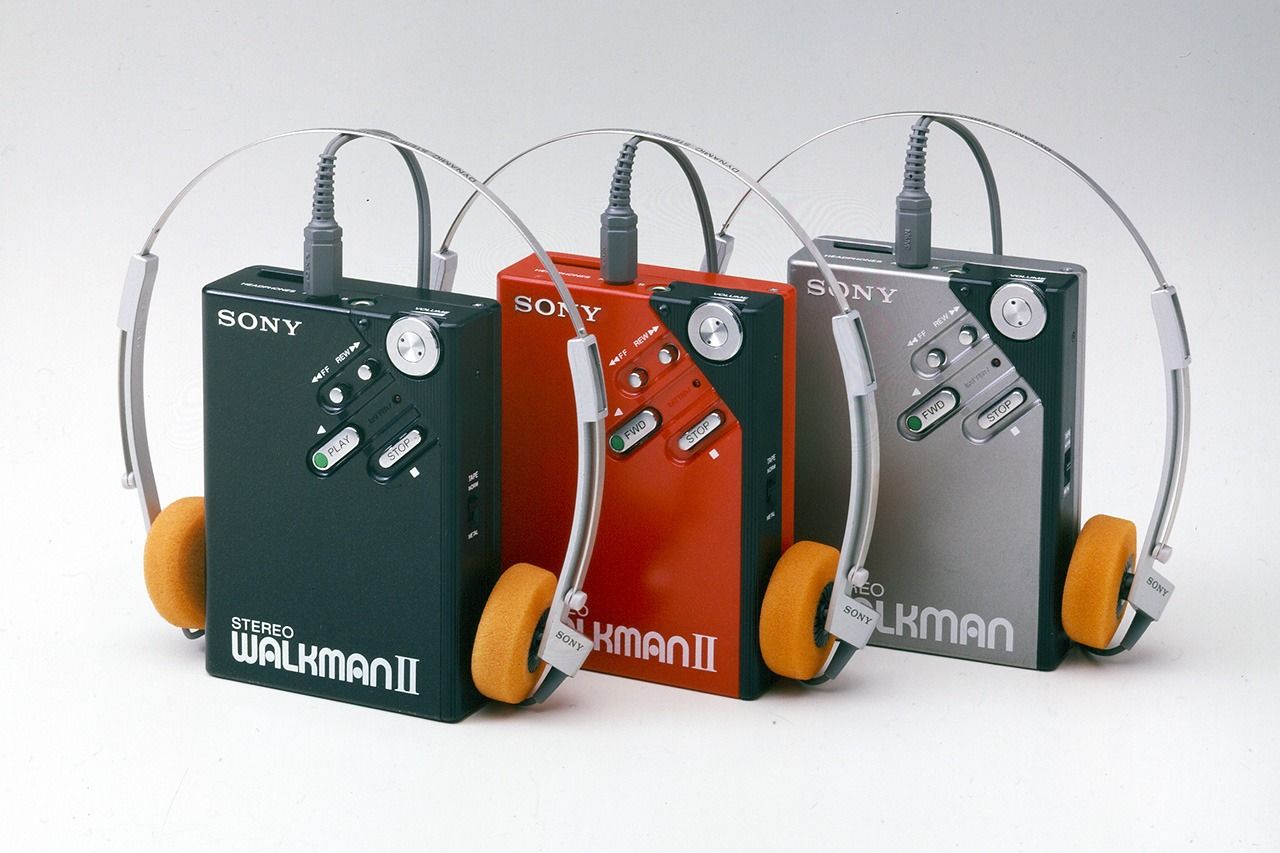
The Sony WM-2 Walkman
The Sony WM-2 Walkman, launched in 1981 (Sony)

Looking back at iconic gadgets like Sony’s Walkman portable cassette player, the sales trajectories of hit products is not always steady. Released in 1979, the first generation of the Walkman (which sold for about $120 in 1979 dollars) was a hit in Japan, and the company could not produce enough to keep up with demand.

It took two years for the first-gen Walkman to reach 1.5 million in sales. Its follow-up, 1981’s Walkman WM-2, became an international hit, selling 1 million units in nine months. In the first decade of their existence, Sony sold 50 million Walkmans.

Apple’s iPod dominated consumer electronics for a decade, heralding the transition to digital music. The company sold an estimated 450 million of the devices during its more than 20-year lifespan, but the first soap-bar-sized iteration took more than a year and a half to move a million units.
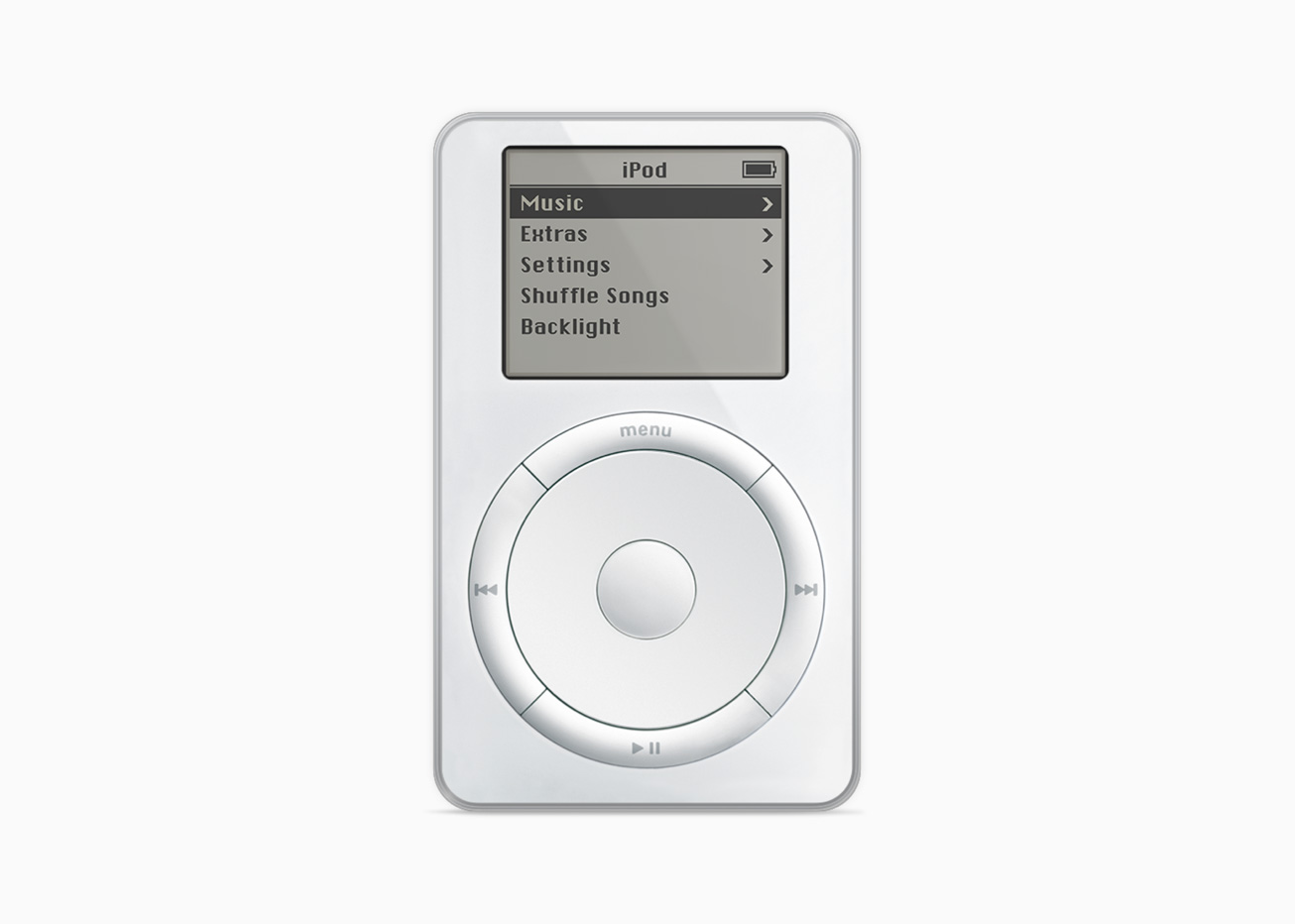
Apple’s first-generation iPod, released in 2001.
Apple’s first-generation iPod, released in 2001 (Apple)

While Meta definitely beat out the original iPod to 1 million units, it isn’t even close to Apple’s other category-defining gadgets’ time to get to 1 million sold.

“Billions of AI glasses” and billions in losses

By all accounts, Zuckerberg seems extremely dedicated to the success of Reality Labs’ virtual/augmented/mixed reality glasses and headsets. After all, he did rename the company in an audacious bet that its future would be defined by the “metaverse” (but now is also all in on “superintelligence.”)

“This will be a defining year that determines if we’re on a path toward many hundreds of millions, and eventually billions, of AI glasses, and glasses being the next computing platform, like we’ve been talking about for some time — or if this is just going to be a longer grind,” the Meta CEO said during his company’s earnings call earlier this year.

Indeed, the company has been grinding away for more than four years on the metaverse, despite a lack of consumer interest and users who don’t come back. The early cartoonish graphics and weird legless avatars of “Horizon Worlds” may be a thing of the past, but six years after its introduction, Zuckerberg is still showing off a vision of people hanging out with their friends in their virtual bachelor pads. At this week’s event, after showing off new metaverse products for creators like Meta Horizon Studio and Meta Horizon Engine, Zuckerberg said:

“I am really excited about what these new technologies are going to unlock for artists and entertainment. I think that the shift toward more immersive storytelling and 3D storytelling, it’s going to be one of the more exciting developments in the coming years, and I think that it’s going to drive a new wave of adoption of virtual reality and glasses.”

The losses that Reality Labs has posted are staggering. Since Q4 2020, when the company first disclosed such numbers, the R&D-heavy division has racked up nearly $70 billion in losses. At the same time, revenue has been largely flat. But with $47 billion in revenue last quarter, the company is able to sustain half a decade’s worth of losses, though it is also spending huge sums on AI infrastructure and talent.

Early reviews of Meta’s new Ray-Ban Meta Display glasses were largely positive, despite the awkward launch event. It remains to be seen whether Reality Labs products like Ray-Ban Meta glasses are on a slow burn to success like Apple’s iPod, but until millions more consumers start putting Meta’s products on their faces, the losses will keep piling up.

Meta didn’t respond to a request for comment.

More Tech

See all Tech
tech

Anthropic pulls Fable and Mythos access worldwide after Trump administration bars their use by foreign nationals

Only days after releasing two versions of its next-gen AI model, Anthropic has disabled them for users worldwide.

Anthropic says it received a Friday night order from the Trump administration to suspend access to the models for any foreign national (anywhere in the world) — a group that included some Anthropic employees. In response, the company turned off access to everyone.

Last week, the company released to the public its much-anticipated Claude Fable 5 model (and its restricted version Claude Mythos 5, which is still being tested with trusted partners). Anthropic said in a blog post announcing the action that officials cited national security concerns with the new models, while offering few specific details.

The post said that the government gave the company “verbal evidence of a potential narrow, non-universal jailbreak” of the public Fable 5 model. A jailbreak is a means by which users can evade restrictions built into the code to unlock prohibited functionality. Anthropic downplayed the significance of the attack, and said other major models, such as OpenAI’s GPT-5.5, could also be affected by the technique described.

Fears of these first Mythos-class models being misused are running high, after Anthropic warned the cybersecurity world in May that the advanced cyber capabilities of Mythos have rapidly discovered thousands of vulnerabilities in ubiquitous software, leading to the decision to restrict the full version of the model to a close group of trusted partners for testing.

This morning, Axios reported that Anthropic technical staff have flown to Washington to meet with White House officials to resolve the issue.

The Wall Street Journal is reporting that the Trump administration’s decision to take action against Anthropic was prompted by discussions that Amazon CEO Andy Jassy had with officials, including Treasury Secretary Scott Bessent. According to the report, Amazon researchers said they had been able to evade some of Fable 5’s security restrictions using specific prompts. Amazon is a major investor in Anthropic.

Anthropic is currently suing the US government to fight the Pentagon’s blacklisting of the company on national security grounds.

Last week, the company released to the public its much-anticipated Claude Fable 5 model (and its restricted version Claude Mythos 5, which is still being tested with trusted partners). Anthropic said in a blog post announcing the action that officials cited national security concerns with the new models, while offering few specific details.

The post said that the government gave the company “verbal evidence of a potential narrow, non-universal jailbreak” of the public Fable 5 model. A jailbreak is a means by which users can evade restrictions built into the code to unlock prohibited functionality. Anthropic downplayed the significance of the attack, and said other major models, such as OpenAI’s GPT-5.5, could also be affected by the technique described.

Fears of these first Mythos-class models being misused are running high, after Anthropic warned the cybersecurity world in May that the advanced cyber capabilities of Mythos have rapidly discovered thousands of vulnerabilities in ubiquitous software, leading to the decision to restrict the full version of the model to a close group of trusted partners for testing.

This morning, Axios reported that Anthropic technical staff have flown to Washington to meet with White House officials to resolve the issue.

The Wall Street Journal is reporting that the Trump administration’s decision to take action against Anthropic was prompted by discussions that Amazon CEO Andy Jassy had with officials, including Treasury Secretary Scott Bessent. According to the report, Amazon researchers said they had been able to evade some of Fable 5’s security restrictions using specific prompts. Amazon is a major investor in Anthropic.

Anthropic is currently suing the US government to fight the Pentagon’s blacklisting of the company on national security grounds.

tech

Tesla used skewed data in push for European FSD approval, Reuters finds

Tesla has used highly questionable safety stats in an effort to win over European regulators and rekindle sales in the region, according to a Reuters investigation.

Tesla reportedly pitched regulators in Sweden and the Netherlands with claims that its Full Self-Driving (FSD) tech is over 7x safer than human drivers. However, independent researchers told Reuters that the stats are misleading because Tesla compares airbag-deployment crashes involving FSD-equipped vehicles with much broader US crash statistics, while also benchmarking newer Teslas against the entire US vehicle fleet, which is significantly older on average.

Despite the flawed metrics, the Dutch regulator approved FSD in April, saying its decision was based on its own “tests, analyses and verifications,” and Tesla is now pushing for EU-wide clearance. A version of FSD is currently available in five European markets.

Despite the flawed metrics, the Dutch regulator approved FSD in April, saying its decision was based on its own “tests, analyses and verifications,” and Tesla is now pushing for EU-wide clearance. A version of FSD is currently available in five European markets.

tech
Rani Molla

Report: Microsoft weighs Xbox spin-off amid major overhaul

Microsoft is reportedly considering spinning out or restructuring its struggling Xbox unit, per The Information. While new Xbox CEO Asha Sharma, who took over in February, is preparing for layoffs, shes simultaneously planning to boost investment in its biggest franchises like “Halo,” “Fallout,” and “Minecraft.”

The latest potential shake-up comes as the gaming division battles major headwinds, following a massive 33% plunge in Q3 console sales and a recent move to slash Game Pass prices while removing new Call of Duty titles.

The latest potential shake-up comes as the gaming division battles major headwinds, following a massive 33% plunge in Q3 console sales and a recent move to slash Game Pass prices while removing new Call of Duty titles.

Latest Stories

Sherwood Media, LLC and Chartr Limited produce fresh and unique perspectives on topical financial news and are fully owned subsidiaries of Robinhood Markets, Inc., and any views expressed here do not necessarily reflect the views of any other Robinhood affiliate, including Robinhood Markets, Inc., Robinhood Financial LLC, Robinhood Securities, LLC, Robinhood Crypto, LLC, Robinhood Money, LLC, Robinhood U.K. Ltd, Robinhood Derivatives, LLC, Robinhood Gold, LLC, Robinhood Asset Management, LLC, Robinhood Credit, Inc., Robinhood Ventures DE, LLC and, where applicable, its managed investment vehicles.

