
Tech
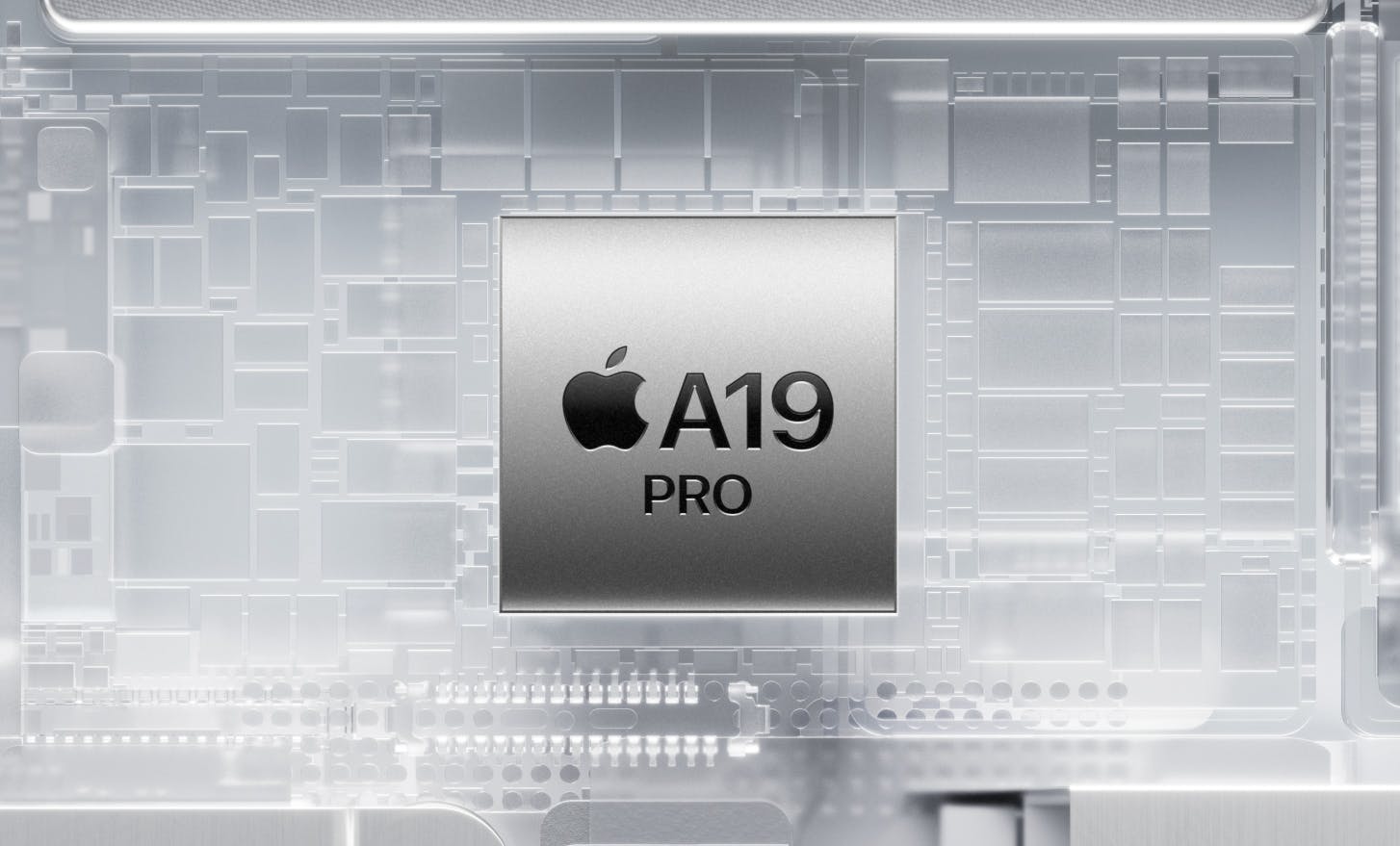
Apple A19 Pro chip
(Apple)

Apple is packing a growing number of self-built custom chips into its gadgets

Fifteen years ago, Apple started on a journey to build its own custom chips. Today, more and more core functions are running on Apple silicon.

The sleek industrial design of Apple’s iPhones and watches was the obvious the star of last week’s product release event. But beneath the ceramic shields, proprietary alloys, and aluminum unibodies, you’ll find more and more chips that are custom designed by Apple.

For 15 years, the company has been steadily moving away from third-party chips in favor of designing its own. Apple has repeatedly shown the advantages of owning the entire “tech stack” — when you build the software and the hardware, you can optimize power consumption and enable custom features that your competitors can’t.

Apple designs its own chips, but most of them have been manufactured by TSMC in a close partnership that has made Apple one of the chip giant’s largest customers.

During last week’s Apple event — which introduced the new iPhone Air, iPhone 17 lineup, and refreshed Apple Watches — the company spotlighted two new custom Apple silicon chips. It showed off the N1, “a new Apple-designed wireless networking chip that enables Wi-Fi 7, Bluetooth 6, and Thread,” and the C1X, a second-generation cellular modem chip, which both debut in the new ultrathin iPhone Air.

A 15-year journey

After some collaborations with Samsung for its early iPhone chips, Apple’s A4 chip was the first one that the company touted as an Apple custom chip, which Steve Jobs debuted when he introduced the original iPad in 2010. 

A decade later, in 2020, Apple moved away from Intel processors for its Mac computers. The M1 processor was a system on a chip (SoC), which packed a CPU, GPU, security, and I/O control all onto one chip. Designing a custom chip for the Mac allowed Apple to boost power and efficiency, as it controlled both the software and hardware. Apple said that the M1 resulted in twice the performance of an Intel-powered PC for one-quarter of the power.

The company has also pushed into cellular connectivity. While the iPhone 16 still used a cellular modem from Qualcomm, it introduced the first Apple-designed C1 cellular modem chip in the low-cost iPhone 16e. 

Over the years, Apple has expanded its custom silicon to support more and more of the functions of its products.

Developing its own C series cellular modem chip was a major achievement, as it sits at heart of the iPhone’s core purpose: connecting to cellular networks for voice and data. On its first-quarter 2025 earnings call, when asked about the first-generation C1 chip, Apple CEO Tim Cook framed the effort as the beginning of a long-term strategy: 

“We’re super excited to ship the first one and get it out there, and it’s gone well. We love that we can produce better products from a point of view of really focusing on battery life and other things that customers want, and so we have started on a journey, is the way I would put it.”

The next frontier

With so many of the existing features already switched over to Apple silicon, the company is now looking toward an area where it badly needs to catch up: AI.

The Wall Street Journal reported last year that Apple has been collaborating with TSMC on making its own AI chips for its data centers that will power features for Apple services, a move out of step with the rest of the industry, which has favored GPUs made by Nvidia.

Apple’s years of experience building custom chips gives it an edge over other tech companies like OpenAI, Amazon, and Google, which have recently started doing the same.


More Tech

See all Tech
South by Southwest Conference and Festivals

Gold Tesla Cybercabs are piling up, but they’re not picking up passengers yet

Low-volume production started in April. Now people are noticing them more and more in the wild.

tech

Anthropic pulls Fable and Mythos access worldwide after Trump administration bars their use by foreign nationals

Only days after releasing two versions of its next-gen AI model, Anthropic has disabled them for users worldwide.

Anthropic says it received a Friday night order from the Trump administration to suspend access to the models for any foreign national (anywhere in the world) — a group that included some Anthropic employees. In response, the company turned off access to everyone.

Last week, the company released to the public its much-anticipated Claude Fable 5 model (and its restricted version Claude Mythos 5, which is still being tested with trusted partners). Anthropic said in a blog post announcing the action that officials cited national security concerns with the new models, while offering few specific details.

The post said that the government gave the company “verbal evidence of a potential narrow, non-universal jailbreak” of the public Fable 5 model. A jailbreak is a means by which users can evade restrictions built into the code to unlock prohibited functionality. Anthropic downplayed the significance of the attack, and said other major models, such as OpenAI’s GPT-5.5, could also be affected by the technique described.

Fears of these first Mythos-class models being misused are running high, after Anthropic warned the cybersecurity world in May that the advanced cyber capabilities of Mythos have rapidly discovered thousands of vulnerabilities in ubiquitous software, leading to the decision to restrict the full version of the model to a close group of trusted partners for testing.

This morning, Axios reported that Anthropic technical staff have flown to Washington to meet with White House officials to resolve the issue.

The Wall Street Journal is reporting that the Trump administration’s decision to take action against Anthropic was prompted by discussions that Amazon CEO Andy Jassy had with officials, including Treasury Secretary Scott Bessent. According to the report, Amazon researchers said they had been able to evade some of Fable 5’s security restrictions using specific prompts. Amazon is a major investor in Anthropic.

Anthropic is currently suing the US government to fight the Pentagon’s blacklisting of the company on national security grounds.

Last week, the company released to the public its much-anticipated Claude Fable 5 model (and its restricted version Claude Mythos 5, which is still being tested with trusted partners). Anthropic said in a blog post announcing the action that officials cited national security concerns with the new models, while offering few specific details.

The post said that the government gave the company “verbal evidence of a potential narrow, non-universal jailbreak” of the public Fable 5 model. A jailbreak is a means by which users can evade restrictions built into the code to unlock prohibited functionality. Anthropic downplayed the significance of the attack, and said other major models, such as OpenAI’s GPT-5.5, could also be affected by the technique described.

Fears of these first Mythos-class models being misused are running high, after Anthropic warned the cybersecurity world in May that the advanced cyber capabilities of Mythos have rapidly discovered thousands of vulnerabilities in ubiquitous software, leading to the decision to restrict the full version of the model to a close group of trusted partners for testing.

This morning, Axios reported that Anthropic technical staff have flown to Washington to meet with White House officials to resolve the issue.

The Wall Street Journal is reporting that the Trump administration’s decision to take action against Anthropic was prompted by discussions that Amazon CEO Andy Jassy had with officials, including Treasury Secretary Scott Bessent. According to the report, Amazon researchers said they had been able to evade some of Fable 5’s security restrictions using specific prompts. Amazon is a major investor in Anthropic.

Anthropic is currently suing the US government to fight the Pentagon’s blacklisting of the company on national security grounds.

tech

Tesla used skewed data in push for European FSD approval, Reuters finds

Tesla has used highly questionable safety stats in an effort to win over European regulators and rekindle sales in the region, according to a Reuters investigation.

Tesla reportedly pitched regulators in Sweden and the Netherlands with claims that its Full Self-Driving (FSD) tech is over 7x safer than human drivers. However, independent researchers told Reuters that the stats are misleading because Tesla compares airbag-deployment crashes involving FSD-equipped vehicles with much broader US crash statistics, while also benchmarking newer Teslas against the entire US vehicle fleet, which is significantly older on average.

Despite the flawed metrics, the Dutch regulator approved FSD in April, saying its decision was based on its own “tests, analyses and verifications,” and Tesla is now pushing for EU-wide clearance. A version of FSD is currently available in five European markets.

Despite the flawed metrics, the Dutch regulator approved FSD in April, saying its decision was based on its own “tests, analyses and verifications,” and Tesla is now pushing for EU-wide clearance. A version of FSD is currently available in five European markets.

tech
Rani Molla

Report: Microsoft weighs Xbox spin-off amid major overhaul

Microsoft is reportedly considering spinning out or restructuring its struggling Xbox unit, per The Information. While new Xbox CEO Asha Sharma, who took over in February, is preparing for layoffs, shes simultaneously planning to boost investment in its biggest franchises like “Halo,” “Fallout,” and “Minecraft.”

The latest potential shake-up comes as the gaming division battles major headwinds, following a massive 33% plunge in Q3 console sales and a recent move to slash Game Pass prices while removing new Call of Duty titles.

The latest potential shake-up comes as the gaming division battles major headwinds, following a massive 33% plunge in Q3 console sales and a recent move to slash Game Pass prices while removing new Call of Duty titles.

Latest Stories

Sherwood Media, LLC and Chartr Limited produce fresh and unique perspectives on topical financial news and are fully owned subsidiaries of Robinhood Markets, Inc., and any views expressed here do not necessarily reflect the views of any other Robinhood affiliate, including Robinhood Markets, Inc., Robinhood Financial LLC, Robinhood Securities, LLC, Robinhood Crypto, LLC, Robinhood Money, LLC, Robinhood U.K. Ltd, Robinhood Derivatives, LLC, Robinhood Gold, LLC, Robinhood Asset Management, LLC, Robinhood Credit, Inc., Robinhood Ventures DE, LLC and, where applicable, its managed investment vehicles.
