
Power
(Official White House Photo by Molly Riley)
(The White House/Molly Riley)

Here’s what Musk stands to lose from the US government

Tesla, SpaceX, and xAI all could face serious trouble if Trump turns the government on Musk.

Elon Musk’s messy public breakup with President Trump appears to be causing damage to both men’s fortunes, but Musk has more to lose thanks to his companies’ many entanglements with the US government.

Trump has shown that he’s willing to turn the mighty power of the US government against his enemies to settle personal beefs, including law firms, individual cybersecurity experts, and the paper straw industry. Let’s take a look at what Musk and his businesses face to lose if the rift worsens.

SpaceX

SpaceX receives a huge amount of money from the US government. In February, Reuters reported that SpaceX CEO Gwynne Shotwell said the company has about $22 billion in government contracts. Sherwood News’ reporting found that between contracts for launching military satellites for the Department of Defense and ferrying astronauts and supplies to the International Space Station for NASA, the US government had paid SpaceX over $18.5 billion through September 2024.

The government is also a big customer for SpaceX’s Starlink satellite service. The Department of Defense signed a contract for Starlink terminals, which it supplied to Ukrainian forces to defend itself from the Russian troops.

Musk’s long-term goal is to get humans to Mars to make humans an multi-planetary species. SpaceX’s Starship is essential to making that sci-fi dream come true (if they can keep the gleaming rockets from exploding). Musk’s plans involve increasing the frequency of Starship flights from the newly minted town of Starbase, Texas.

The spectacular failures of the rockets have affected US commercial airspace, and the Federal Aviation Administration has the authority to approve or cancel these launches.
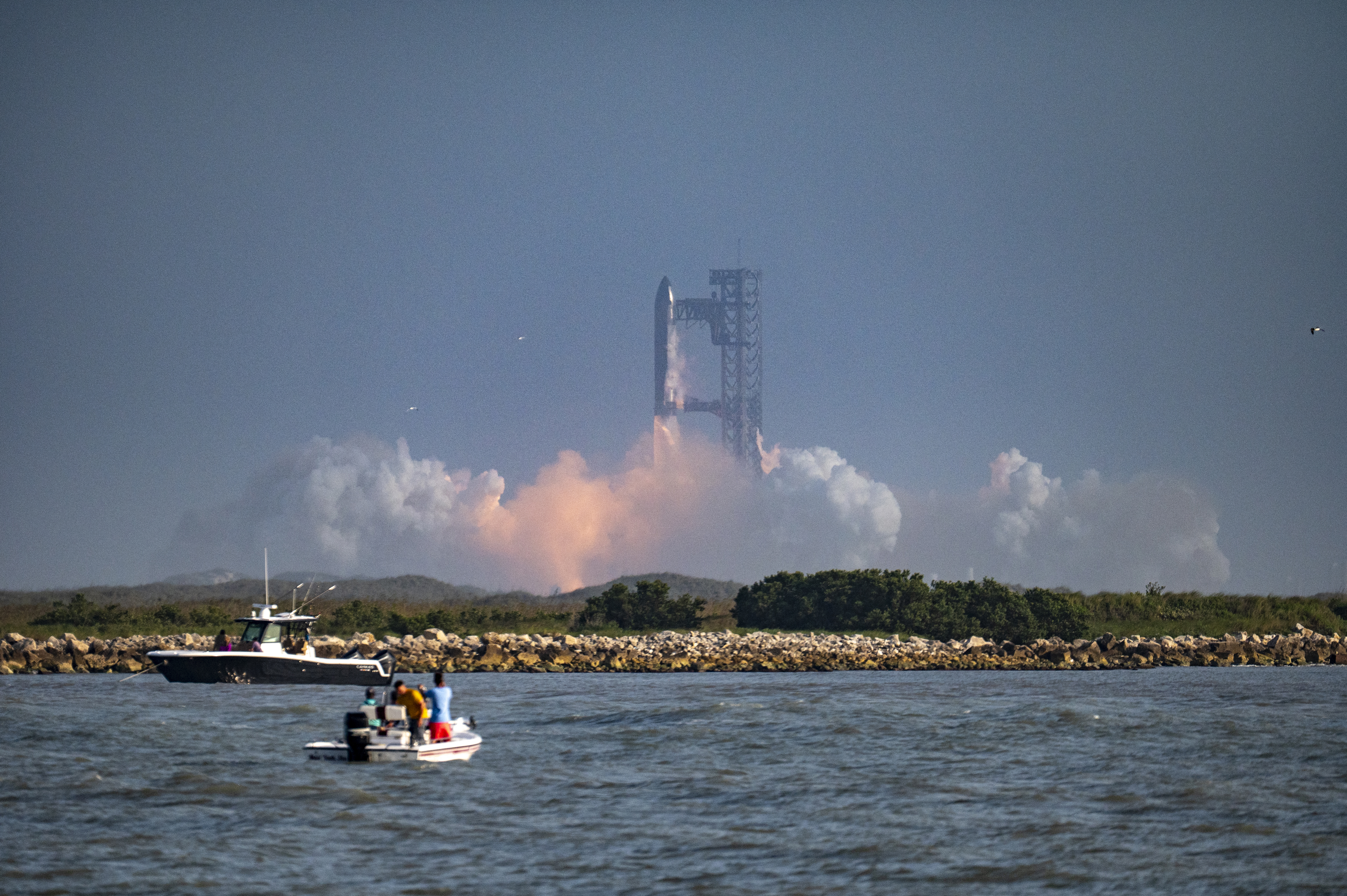
A SpaceX Starship rocket launches from Starbase, Texas on May 27, 2025. (Sergio Flores/AFP via Getty Images)
A SpaceX Starship rocket launches from Starbase, Texas, on May 27, 2025 (Sergio Flores/Getty Images)

Tesla

One of Tesla’s key risks stems from the crucial role that federal regulation plays in the company’s immediate plans: self-driving cars. Musk is betting the business on the yet to be released Cybercab, which could be derailed if the National Highway Traffic Safety Administration decides to take action following alarming videos of fatal crashes using Tesla’s long-promised “full self-driving mode.”

101st Brussels Motor Show 2025
Cybercab (Sjoerd van der Wal/Getty Images)

One of the biggest consumer incentives driving EV sales is the $7,500 rebate available for new EV vehicles. (It’s up to $4,000 for used EVs.) If the Trump administration succeeds in killing these Biden incentives in their “big, beautiful bill,” that would amount to a significant price hike for Teslas at a time when its US sales are down 5%, while EV sales overall are up 17%.

That legislation, which is currently being negotiated in Congress, also includes a provision that charges EV drivers an annual $250 fee for contributions to the Highway Trust Fund, which gas-powered car drivers pay into via gas taxes (though gas car drivers pay far less than that annually).

Tesla’s business is also propped up by regulatory tax credits, which accounted for $595 million last quarter. The credits are sold to automakers that aren’t meeting emissions regulations. If you take away those credits sales, Tesla’s last quarterly profit would have turned into a loss.

While not directly under Trump’s control, state governments also have a lot of say over the tax breaks that Musk’s businesses get, like the $1.3 billion worth of incentives that Nevada offered Tesla for its Nevada Gigafactory.

Investors seem to realize what Tesla could lose as a result of this beef, evidenced by yesterday’s historic drop in Tesla’s stock, wiping out $152 billion in a matter of hours.

xAI and X

There are a lot of X’s flying around here. xAI is Musk’s AI business that created the Grok LLM forged in the heart of the Colossus supercluster’s 100,000 Nvidia GPUs.
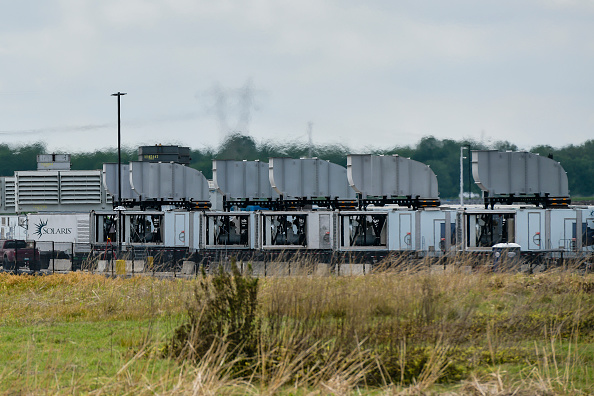
colossus xAI data center
Gas turbines are visible at an xAI data center on Riverport Road in Memphis, Tennessee, on April 25, 2025 (Brandon Dill/Getty Images)

A few months ago, xAI bought X, the social media network formerly known as Twitter. That massive data center near South Memphis, Tennessee, has been spewing methane emissions into the air via unlicensed gas turbines needed to boost the power for the data center, watchdog reports have found.

Federal agencies could give Musk some headaches here, if they suddenly decided clean air was a priority.

Neuralink

When your business is installing hardware in people’s brains, government regulation could make or break you. One call to the Food and Drug Administration and Trump could kill human trials for Neuralink implants currently underway, which are regulated by the agency.

Tariffs touch everything

From the microprocessors in Tesla’s cars to the steel shell of the Starship, all of Musk’s businesses are affected by tariffs on imported materials. The whipsaw back-and-forth on tariffs could continue to cause problems for Musk’s companies. If Trump were to reach for one of his favorite tools to cause pain for Musk, he could target crucial components that Tesla, SpaceX, or xAI needs to grow.

More Power

See all Power
power

WSJ: DOJ approved the Paramount-Warner Bros. deal even as investigators were leaning toward suing to stop it

The Justice Department’s approval of Paramount’s $111 billion acquisition of rival Warner Bros. Discovery Friday came as a surprise to the agency’s antitrust investigators, according to Wall Street Journal reporting.

Per the WSJ, a team of lawyers who’d scrutinized the merger were leaning toward recommending a lawsuit to block the deal, but hadn’t gotten to make their final recommendation, before they were told that it had been approved on Friday.

Antitrust investigators typically make a final recommendation to the agency in the review process — and that recommendation is often followed by the agency — but that step was reportedly skipped in this instance. Last month, Semafor reported that senior DOJ antitrust officials appeared likely to approve the Paramount-WBD combo.

The deal could still face antitrust challenges from a collection of states led by California, and EU regulators.

Per the WSJ, a team of lawyers who’d scrutinized the merger were leaning toward recommending a lawsuit to block the deal, but hadn’t gotten to make their final recommendation, before they were told that it had been approved on Friday.

Antitrust investigators typically make a final recommendation to the agency in the review process — and that recommendation is often followed by the agency — but that step was reportedly skipped in this instance. Last month, Semafor reported that senior DOJ antitrust officials appeared likely to approve the Paramount-WBD combo.

The deal could still face antitrust challenges from a collection of states led by California, and EU regulators.

power
Jake Lahut

Strait of Hormuz is closed to all oil tankers and commercial ships, Iran military says

In retaliation to US strikes, the Islamic Republic of Iran announced that the Strait of Hormuz is fully closed as of early Thursday morning in Tehran. The attacks from the US were separate from a series of retaliatory drone and missile launches overnight Tuesday into Wednesday.

President Donald Trump told Fox News in a phone interview on Wednesday night that “the bombing will stop soon,” but if Iran doesn’t sign the agreement put forward by special envoys Steve Witkoff and Jared Kushner, “we’ll bomb the shit out of them tomorrow night.”

When asked whether the ceasefire still stands, Trump described it as “the most violated ceasefire in the history of the world,” per Fox News.

According to Al Jazeerah, Iran’s Mehr news agency reported that Iran’s joint military command specified that any oil tankers or other commercial vessels will be attacked if they attempt to cross the strait.

This is the second day in a row hostilities have resumed to a level not seen since the early April ceasefire was announced.

US CENTCOM announced the series of strikes beginning at 5:15 p.m. ET on Wednesday, which Secretary of Defense Pete Hegseth previewed in on-camera remarks, promising to “strike ’em hard tonight” before later saying he would not broadcast whether the military would take any action.

Shortly after the announcement on the closure of the Strait of Hormuz to all commercial vessel traffic, Iranian state media reported that two ships attempting to cross were attacked.

This story is developing.

President Donald Trump told Fox News in a phone interview on Wednesday night that “the bombing will stop soon,” but if Iran doesn’t sign the agreement put forward by special envoys Steve Witkoff and Jared Kushner, “we’ll bomb the shit out of them tomorrow night.”

When asked whether the ceasefire still stands, Trump described it as “the most violated ceasefire in the history of the world,” per Fox News.

According to Al Jazeerah, Iran’s Mehr news agency reported that Iran’s joint military command specified that any oil tankers or other commercial vessels will be attacked if they attempt to cross the strait.

This is the second day in a row hostilities have resumed to a level not seen since the early April ceasefire was announced.

US CENTCOM announced the series of strikes beginning at 5:15 p.m. ET on Wednesday, which Secretary of Defense Pete Hegseth previewed in on-camera remarks, promising to “strike ’em hard tonight” before later saying he would not broadcast whether the military would take any action.

Shortly after the announcement on the closure of the Strait of Hormuz to all commercial vessel traffic, Iranian state media reported that two ships attempting to cross were attacked.

This story is developing.

power
Jake Lahut

United States and Iran trade retaliatory strikes, escalating war and rattling ceasefire

The war in Iran is heating back up. Overnight, both sides have been trading hostilities in a series of retaliations to other retaliations.

It marks the most robust escalation in combat since the April 8 ceasefire announcement.

Oil prices were little changed, with Brent crude futures down 0.48% as of 5:30 a.m. ET. At the same time, S&P 500 futures were down nearly 0.7% and the tech-heavy Nasdaq Composite had slipped 1.18%, as the escalations compounded a broader AI sell-off.

Travel stocks, like United Airlines and Royal Caribbean, which got a boost on Tuesday as oil prices fell, lost some of those gains in premarket trading. Meanwhile, oil giants such as Chevron and Exxon ticked higher and chipmakers such as Arm Holdings and Micron continued to slip.

The escalation ladder began ratcheting back up when Iran shot down an American helicopter with a drone while it was patrolling the Strait of Hormuz, a US official told NBC News. US forces then conducted strikes in Iran’s Qeshm Island, Sirik, Jask, and Bandar Abbas, according to Al Jazeera. In response, Iran attacked a US fleet in Bahrain, Al Jazeera also reported.

“The Iranians are trying to make clear that any attack on them would be responded to, regardless of the size and the scope,” Trita Parsi of the Quincy Institute for Responsible Statecraft in the US told Al Jazeera. “Now, of course, whether they are seeking to escalate the situation or de-escalate remains to be seen, and it will be very much measured by how they calibrated their response by attacking these US bases.”

The scope of the strikes and counterstrikes broadened out as of early Wednesday morning in Iran. Kuwait activated its air defense systems to intercept strikes, its army announced.

Mohamed Vall, a reporter for Al Jazeera reporting from inside Iran, described “a lot of activity in terms of air defence by the Iranians, and they talked about the downing of a helicopter, an American MQ-9 [drone] over Bushehr. So that gives you an idea about the scope of these attacks and counterattacks, or these retaliations across the Strait of Hormuz and the Gulf region tonight.”

Iran’s IRGC also reported targeting a hangar for American F-35 jets in Jordan, Al Jazeera reported.

Oil prices were little changed, with Brent crude futures down 0.48% as of 5:30 a.m. ET. At the same time, S&P 500 futures were down nearly 0.7% and the tech-heavy Nasdaq Composite had slipped 1.18%, as the escalations compounded a broader AI sell-off.

Travel stocks, like United Airlines and Royal Caribbean, which got a boost on Tuesday as oil prices fell, lost some of those gains in premarket trading. Meanwhile, oil giants such as Chevron and Exxon ticked higher and chipmakers such as Arm Holdings and Micron continued to slip.

The escalation ladder began ratcheting back up when Iran shot down an American helicopter with a drone while it was patrolling the Strait of Hormuz, a US official told NBC News. US forces then conducted strikes in Iran’s Qeshm Island, Sirik, Jask, and Bandar Abbas, according to Al Jazeera. In response, Iran attacked a US fleet in Bahrain, Al Jazeera also reported.

“The Iranians are trying to make clear that any attack on them would be responded to, regardless of the size and the scope,” Trita Parsi of the Quincy Institute for Responsible Statecraft in the US told Al Jazeera. “Now, of course, whether they are seeking to escalate the situation or de-escalate remains to be seen, and it will be very much measured by how they calibrated their response by attacking these US bases.”

The scope of the strikes and counterstrikes broadened out as of early Wednesday morning in Iran. Kuwait activated its air defense systems to intercept strikes, its army announced.

Mohamed Vall, a reporter for Al Jazeera reporting from inside Iran, described “a lot of activity in terms of air defence by the Iranians, and they talked about the downing of a helicopter, an American MQ-9 [drone] over Bushehr. So that gives you an idea about the scope of these attacks and counterattacks, or these retaliations across the Strait of Hormuz and the Gulf region tonight.”

Iran’s IRGC also reported targeting a hangar for American F-35 jets in Jordan, Al Jazeera reported.

power

New York legislature passes 1-year data center moratorium

The New York state legislature has passed a one-year ban on large data centers in the state.

The bill now heads to Gov. Kathy Hochul’s desk, where it faces an uncertain fate. If Hochul signs the bill, it would become the first such statewide ban to succeed in becoming law.

That’s far from certain, as Hochul has opposed state-level legislation over data centers. In May, Hochul said, “This is a local decision for municipalities, its land use, which is the purview of local governments. It’s not a statewide approach necessarily, but its something Im looking at intensely.”

In April, Maine Gov. Janet Mills vetoed a similar statewide moratorium on data centers.

Opposition to data centers is growing rapidly across the US. A federal data center moratorium bill was introduced in March, and at least 14 states have proposed pauses on data center construction, according to the National Conference of State Legislatures.

That’s far from certain, as Hochul has opposed state-level legislation over data centers. In May, Hochul said, “This is a local decision for municipalities, its land use, which is the purview of local governments. It’s not a statewide approach necessarily, but its something Im looking at intensely.”

In April, Maine Gov. Janet Mills vetoed a similar statewide moratorium on data centers.

Opposition to data centers is growing rapidly across the US. A federal data center moratorium bill was introduced in March, and at least 14 states have proposed pauses on data center construction, according to the National Conference of State Legislatures.

EU Commission Vice-President Virkkunen and Commissioner Jorgensen hold press conference

EU proposes “tech sovereignty package” to bolster domestic AI and chip industries

Europe is hastening its breakup with US tech as the Trump administration’s grip on American tech companies tightens.

Latest Stories

Sherwood Media, LLC and Chartr Limited produce fresh and unique perspectives on topical financial news and are fully owned subsidiaries of Robinhood Markets, Inc., and any views expressed here do not necessarily reflect the views of any other Robinhood affiliate, including Robinhood Markets, Inc., Robinhood Financial LLC, Robinhood Securities, LLC, Robinhood Crypto, LLC, Robinhood Money, LLC, Robinhood U.K. Ltd, Robinhood Derivatives, LLC, Robinhood Gold, LLC, Robinhood Asset Management, LLC, Robinhood Credit, Inc., Robinhood Ventures DE, LLC and, where applicable, its managed investment vehicles.