


Intel tumbles after Trump demands an end to the CHIPS Act
Struggling US chip maker Intel suffered its third straight day of deep losses after President Trump seemed to call for an end to the Biden-era CHIPS Act in his address to Congress on Tuesday evening.
Intel was the biggest single recipient of the initial grants awarded under the CHIPS Act, at roughly $8 billion.
Trump has criticized the CHIPS Act, saying tariffs — and tariff exemptions to coax US investment — would have produced similar levels of investment in the US semiconductor sector, a theme he repeated during Tuesday’s address:
“Just yesterday, Taiwan Semiconductor, the biggest in the world, most powerful in the world, has a tremendous amount, 97% of the market, announced a $165 billion investment to build the most powerful chips on earth right here in the USA.
And we’re not giving them any money. Your CHIPS Act is a horrible, horrible thing. We give hundreds of billions of dollars, and it doesn`t mean a thing.
They take our money and they don’t spend it. All that meant to them — we’re giving them no money. All that was important to them was, they didn’t want to pay the tariffs. So they came and they’re building. And many other companies are coming. We don’t have to give them money. We just want to protect our businesses and our people.
And they will come because they won’t have to pay tariffs if they build in America. So it’s very amazing. You should get rid of the CHIP (sic) Act.
And whatever’s left over, Mr. Speaker, you should use it to reduce debt or any other reason you want to.”
Taiwan Semiconductor was previously awarded more than $6 billion in federal grants under the CHIPS Act, and committed to investing $65 billion in the US, including two Arizona plants, one of which entered production late last year. In an announcement earlier this week, Trump and TSMC said the chipmaker would pursue an additional $100 billion in investment over four years.

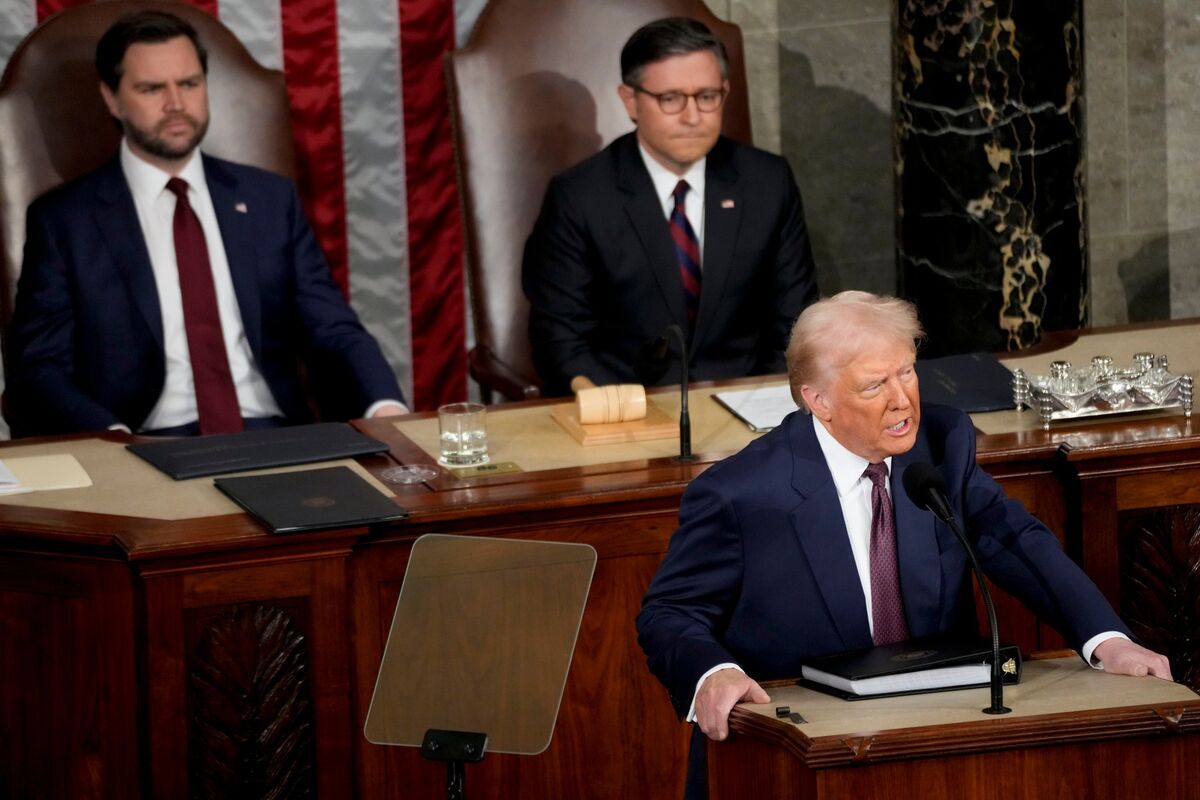
Trump has criticized the CHIPS Act, saying tariffs — and tariff exemptions to coax US investment — would have produced similar levels of investment in the US semiconductor sector, a theme he repeated during Tuesday’s address:
“Just yesterday, Taiwan Semiconductor, the biggest in the world, most powerful in the world, has a tremendous amount, 97% of the market, announced a $165 billion investment to build the most powerful chips on earth right here in the USA.
And we’re not giving them any money. Your CHIPS Act is a horrible, horrible thing. We give hundreds of billions of dollars, and it doesn`t mean a thing.
They take our money and they don’t spend it. All that meant to them — we’re giving them no money. All that was important to them was, they didn’t want to pay the tariffs. So they came and they’re building. And many other companies are coming. We don’t have to give them money. We just want to protect our businesses and our people.
And they will come because they won’t have to pay tariffs if they build in America. So it’s very amazing. You should get rid of the CHIP (sic) Act.
And whatever’s left over, Mr. Speaker, you should use it to reduce debt or any other reason you want to.”
Taiwan Semiconductor was previously awarded more than $6 billion in federal grants under the CHIPS Act, and committed to investing $65 billion in the US, including two Arizona plants, one of which entered production late last year. In an announcement earlier this week, Trump and TSMC said the chipmaker would pursue an additional $100 billion in investment over four years.



