
Markets
Fresh organic tomato closeup.
Getty Images
flashing red

Fresh tomato prices surged 40% in April as supply shocks mount

Tariffs on Mexican tomatoes, crop damage, and higher fuel costs helped push prices to their highest level in over four decades.

Hyunsoo Rim

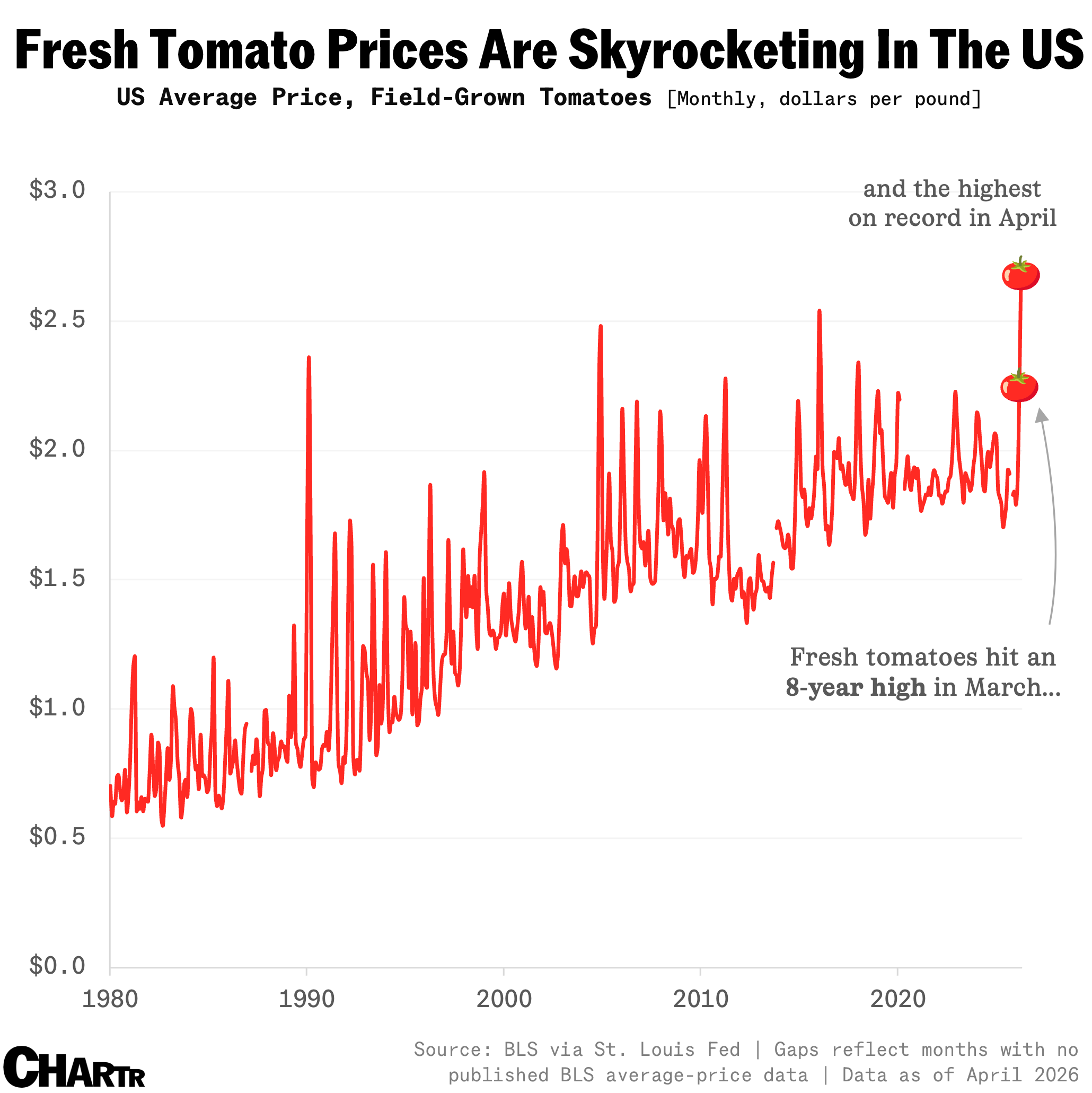
Gas might be the inflation supervillain getting all of the attention right now, but dont ignore the humble tomato. According to the latest CPI data, released Tuesday, fresh tomato prices surged nearly 40% year over year in April, contributing to a broader rise in fresh vegetable prices, which rose 11.5% from a year earlier.
Tomatoes
Sherwood News

Indeed, the average retail price of field-grown tomatoes climbed to $2.69 per pound in April, the highest in Bureau of Labor Statistics data going back to 1980, after prices had already reached an eight-year high in March.

The spike reflects a triple whammy of import pressure, domestic supply strain, and rising energy costs. With Mexico accounting for more than 90% of US fresh tomato imports, a 17% tariff imposed on Mexican tomatoes last year was already squeezing prices — before heavy rain and disease further hurt the country’s yields. At the same time, a rare freeze in Florida, the largest fresh tomato supplier in the US, devastated domestic crops, with state officials estimating 80% production losses.

Then came the Iran war-driven energy shock, as higher fuel costs made it more expensive to move perishable produce quickly from field to grocery shelf. 

One small relief, though, is that the rest of your BLT is holding up a little better: lettuce prices are at least cooling, up 7.9% year over year in April — still elevated, but easing from 13.8% in March. Bacon, meanwhile, remained relatively calm, rising just 0.7%.

More Markets

See all Markets
markets

SpaceX gets a wave of bullish ratings from Wall Street analysts

SpaceX received more than a dozen positive analyst calls on Tuesday — including from major Wall Street banks — as they initiate coverage on Elon Musk’s space and AI company.

SpaceX went public on June 12 at a $2.2 trillion valuation, the largest debut in history. While the company hasn’t yet posted a profit, it seems to have convinced Wall Street that it will get there and grow its valuation on the way.

Of the at least 17 analysts that gave a rating on Tuesday, all but one gave it a “buy” or “outperform” rating. MoffettNathanson was "neutral."

The ratings come as SpaceX joined the Nasdaq 100 index, a benchmark tech-heavy basket of companies that underpins millions of portfolios. The inclusion adds built-in demand for the stock from index funds and ETFs.

Still, SpaceX fell more than 5% on Tuesday amid a broader sell-off, and is currently effectively flat from its opening price of $150 a share.

markets

Nike sinks to lowest level since 2014 after warning of “challenged” sales environment in Q4 report

Did Nike do it?

Investors had a mixed reaction after the global sports apparel company reported its fourth quarter earnings on Tuesday after the bell. Shares initially rose 5% as Nike beat out Wall Street expectations amid a hefty tariff refund bonus. However, the stock then sank to its lowest level since August 2014 in postmarket trading.

Here are the Q4 numbers:

  • Revenue of $11.0 billion (estimate: $10.8 billion).

  • Adjusted earnings per share of $0.20 (estimate: $0.12).

Ahead of this report, Nike warned that results would be flattered by a one-time tariff refund (now estimated at roughly $0.52 per share for the bottom line). That gave the company an extra cushion in snapping its streak of seven quarters of year-over-year profit declines.

Over the past year, the company had been punished by tariffs on imported goods, stagnant consumer spending, and increasing competition from other footwear brands like New Balance, Adidas, and Hoka.

Outgoing CFO Matthew Friend deemed it an “increasingly challenging operating environment, where sell-through remains challenged.”

Latest Stories

Sherwood Media, LLC and Chartr Limited produce fresh and unique perspectives on topical financial news and are fully owned subsidiaries of Robinhood Markets, Inc., and any views expressed here do not necessarily reflect the views of any other Robinhood affiliate, including Robinhood Markets, Inc., Robinhood Financial LLC, Robinhood Securities, LLC, Robinhood Crypto, LLC, Robinhood Money, LLC, Robinhood U.K. Ltd, Robinhood Derivatives, LLC, Robinhood Gold, LLC, Robinhood Asset Management, LLC, Robinhood Credit, Inc., Robinhood Ventures DE, LLC and, where applicable, its managed investment vehicles.

