

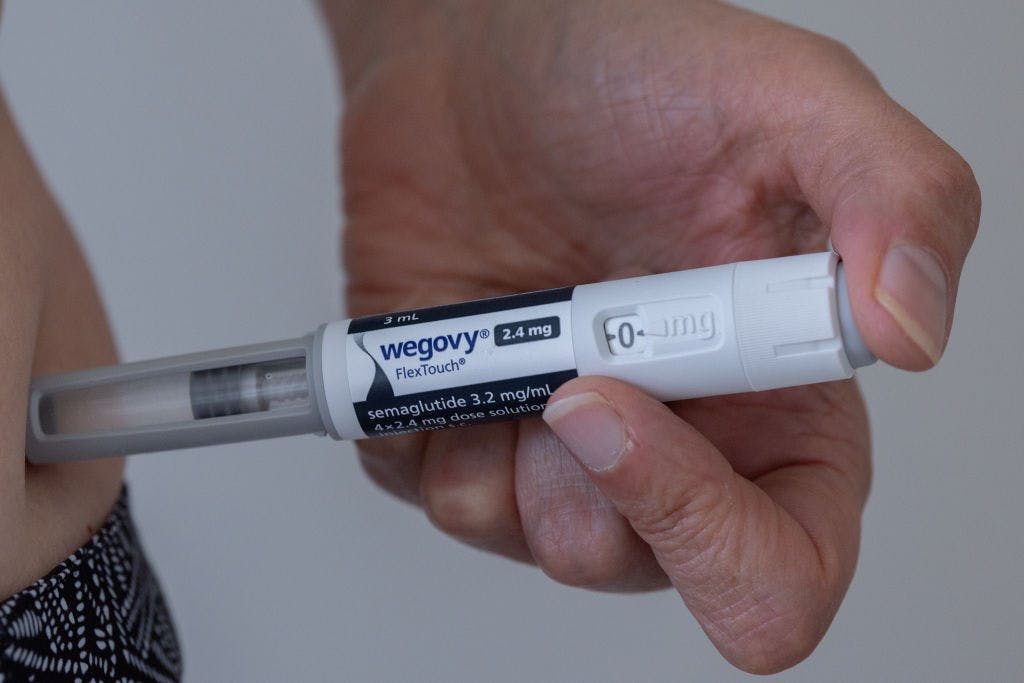
The obesity rate in the US fell in 2023 as GLP-1s go mainstream
Ozempic sales are booming, obesity rates are shrinking, and weight-loss drugs are more culturally relevant than ever.
Research published in the last week revealed that for the first time in more than a decade, obesity rates among US adults fell slightly last year, decreasing from 46% in 2022 to 45.6% in 2023. While we might need a few more years of data to conclusively tie these results to the rise of semaglutide drugs like Novo Nordisk’s Ozempic, it feels impossible to ignore the timing, with Novo’s sales booming in recent years and hitting a record ~$10 billion in its latest quarter.
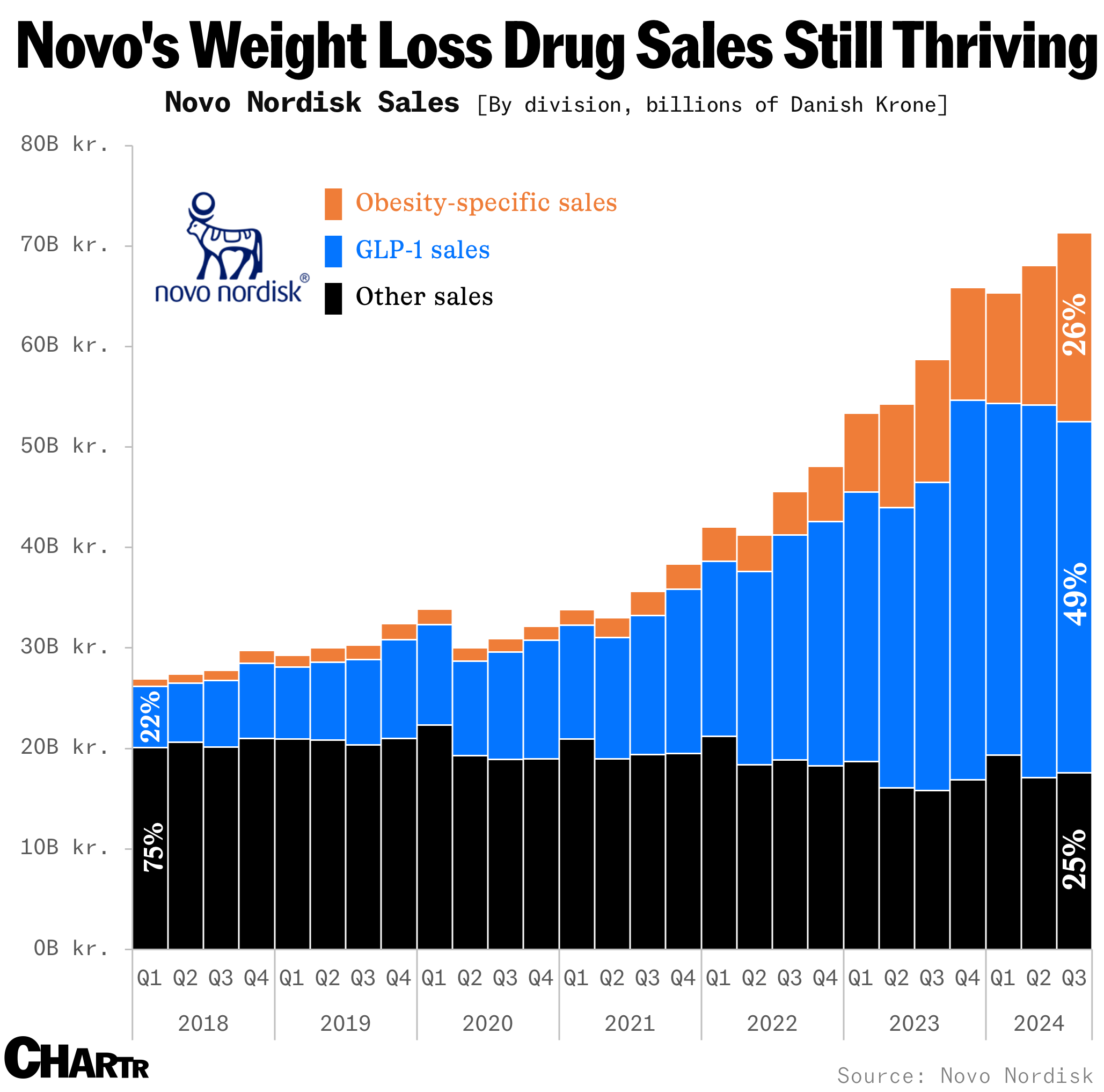
Sales of these GLP-1 treatments — drugs that mimic the effects of blood-sugar-regulating hormone GLP-1, a feature originally intended for diabetes care but which also happened to cause weight loss in test subjects — have increased by almost 6x since the start of 2018. To effectively market both of the major positive side effects of GLP-1 treatments, Novo Nordisk separated its semaglutide brands into Ozempic (for diabetes) and Wegovy (for weight loss). Sales of each have soared, helping the Danish company unseat luxury giant LVMH as Europe’s most valuable company.
Novo riche
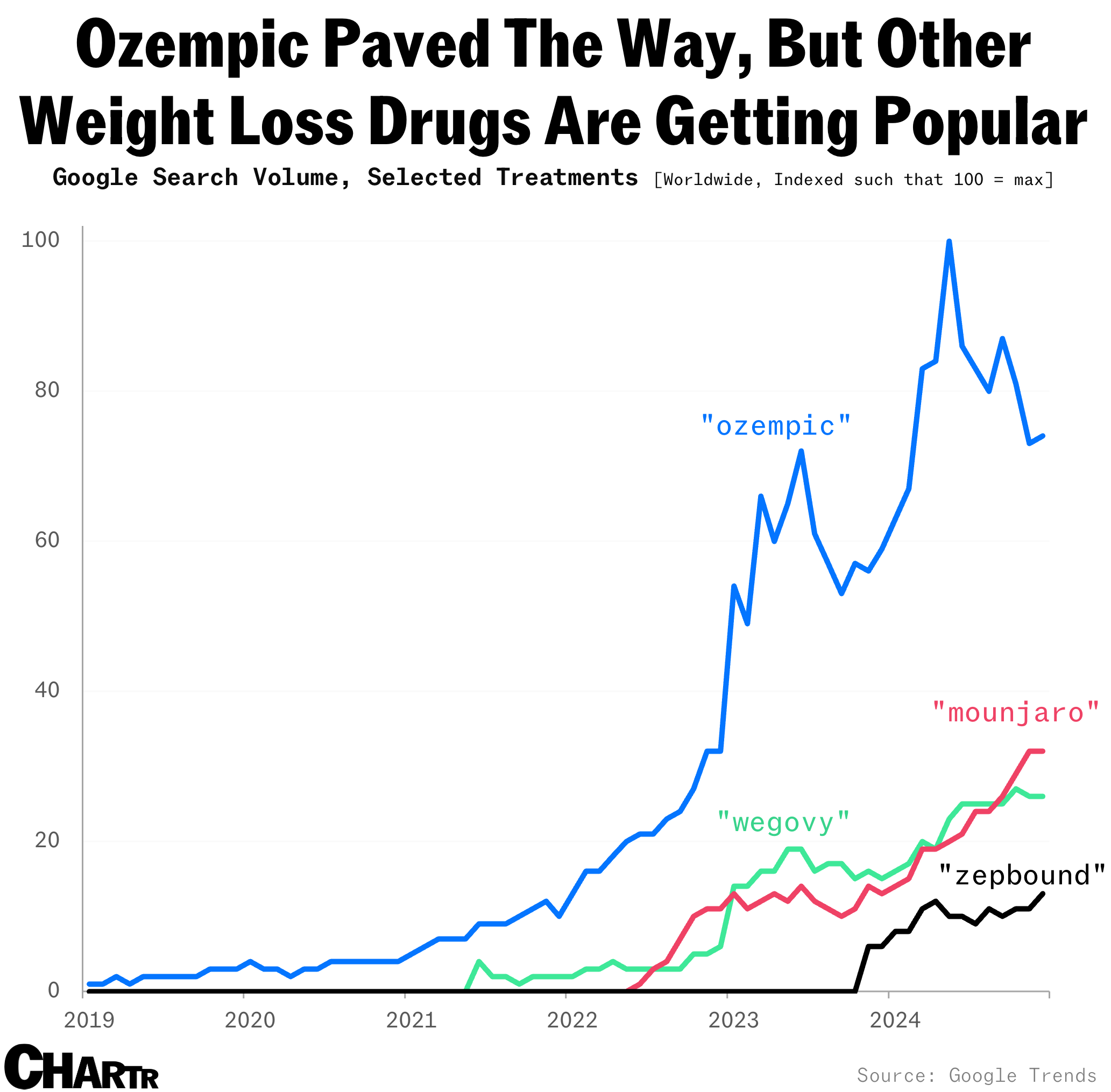
Of course, success breeds competition. While Novo Nordisk endures as the first and last word in weight-loss drugs, rival remedies like Eli Lilly’s tirzepatide-based Mounjaro and Zepbound have also seen soaring sales as other pharmaceutical giants like Viking Therapeutics race to produce their own alternative treatments.
As GLP-1s have gone mainstream, supply has been a critical constraint — an unwelcome trend for diabetes patients who need the drugs for their intended purpose, with telehealth companies receiving thousands of reports of shortages.
Indeed, Ozempic is now so widespread that it has its own place in popular culture, as GLP-1 treatments have become synonymous with an evolved iteration of a modern consumer’s desire for thinness. This year alone, weight-loss drugs featured heavily in satirical cartoons, Halloween costumes, and celebrity endorsements — not to mention countless tabloid dissections of “Ozempic face,” a term used to describe the look of those who’ve rapidly lost weight using the drug.
Oz, the Great and Powerful
For such a widely popular treatment that’s still so new, it follows that scientists everywhere are trying to grasp the effects that weight-loss drugs will have on users’ lives in years to come. One recent report linked Ozempic to sudden blindness while another suggested it might delay aging (see: The Substance), and weight-loss drugs have also received nods in the symptom categories of kidney disease (reduces!), cholesterol (reduces!), and, er, burps (increases, unfortunately).
Predicting when a world-changing discovery is going to be made is hard. Accurately predicting its impact is arguably even harder. The iPhone only launched in 2007, before which we barely used the word “app”; AI hype has hit fever pitch this year; and, though semaglutide products were first approved by the FDA in 2021 and some writers called last year “The Year of Ozempic,” knock-on effects of the weight-loss drug boom are still being felt moving into 2025.