
Culture
2017 Solar Eclipse
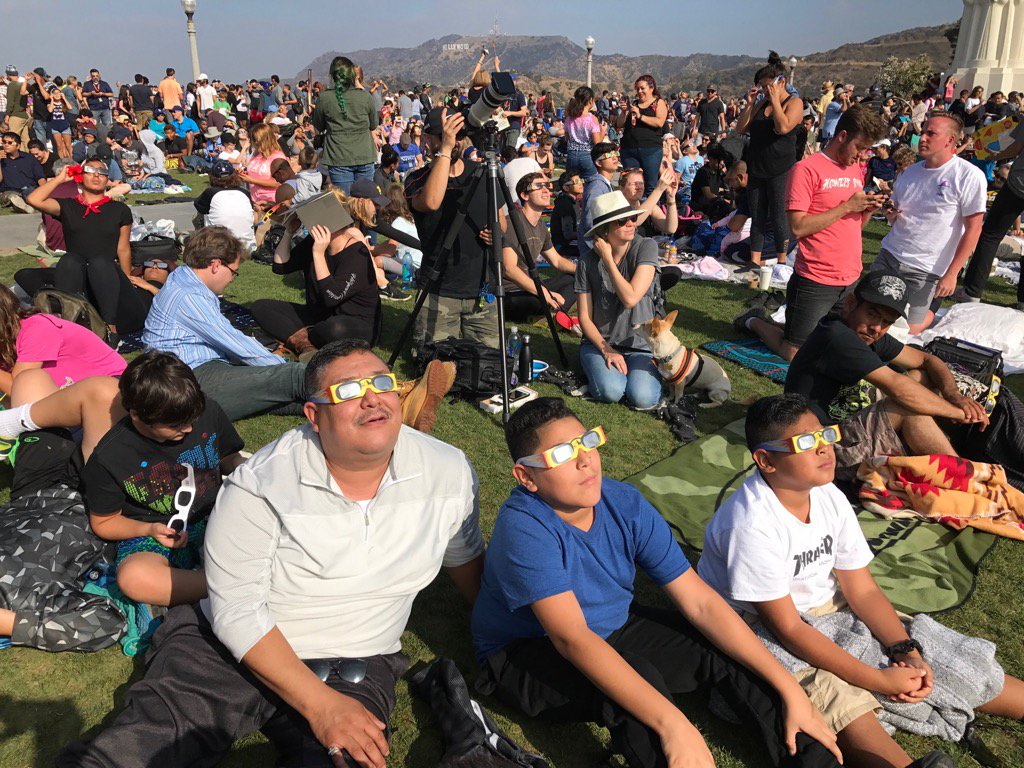
People watch the moon partially obscure the sun Monday, Aug. 21, 2017, at Griffith Observatory in Los Angeles. David Crane/Los Angeles Daily News via Getty Images
Eye Watch

Google searches for eye damage peaked around the last solar eclipse in 2017

Don’t look up (without eye protection).

Rani Molla

A rare total solar eclipse is happening across the US Monday, April 8. That means lots of traffic, tourism, and Google searches for eye damage.

In the days after the last total eclipse in August 2017, optometrists saw a surge in people coming in complaining of blurred vision and other eye problems. Lots of people, apparently, asked Google, which had its highest level of searches for eye damage on record that month.

And yes, looking directly at the sun, even during an eclipse (outside totality) and with anything but approved glasses, can cause terrible eye damage. Ask the woman who had the eclipse etched on her retina during the last solar eclipse in 2017.

According to the American Optometric Association, “A total solar eclipse is the only type of solar eclipse where viewers can momentarily remove their eclipse glasses or viewers for a brief period of time when the Moon is completely blocking the Sun.” That means you have to be in the path of totality and you’d better have reputable glasses on before and after.

And if after this eclipse you start experiencing altered vision or loss of vision, go to a doctor, not Google.

More Culture

See all Culture
Family in front of TV

Hollywood may have its best year at the box office since 2019, but streaming audiences are still obsessed with old content

Viewers are opting for catalog content over new shows and movies across (pretty much) every major streamer.

Tom Jones6/29/26
culture
Tom Jones

The BBC has become the world’s top news website... by collapsing a little less than its competition

Press Gazette just published its annual look at the biggest news sites in the world across all languages; for the most part, it doesn’t make for particularly pretty reading.

The journalism industry publication’s latest update, which is based on estimates provided by Similarweb for May, found that 37 of the world’s 50 most visited news sites saw their reach shrink. Press Gazette highlighted that American outlets have been hit particularly hard by declining Google traffic compared to European counterparts, owing to the platform’s AI features rolling out earlier in the US.

Even the BBC, having climbed the rankings from last year to top the 2026 chart — reportedly in part thanks to Similarweb’s decision to combine the “.co.uk” and “.com” versions of the URL, given that the sites redirect to each other depending on the user’s location — showed a 1.9% decline from last year.

Latest Stories

Sherwood Media, LLC and Chartr Limited produce fresh and unique perspectives on topical financial news and are fully owned subsidiaries of Robinhood Markets, Inc., and any views expressed here do not necessarily reflect the views of any other Robinhood affiliate, including Robinhood Markets, Inc., Robinhood Financial LLC, Robinhood Securities, LLC, Robinhood Crypto, LLC, Robinhood Money, LLC, Robinhood U.K. Ltd, Robinhood Derivatives, LLC, Robinhood Gold, LLC, Robinhood Asset Management, LLC, Robinhood Credit, Inc., Robinhood Ventures DE, LLC and, where applicable, its managed investment vehicles.