A strategic bitcoin reserve isn’t particularly strategic, is it?
1,000,000 bitcoins aren't going to do much to reduce our deficit, no matter what Sen. Lummis says.
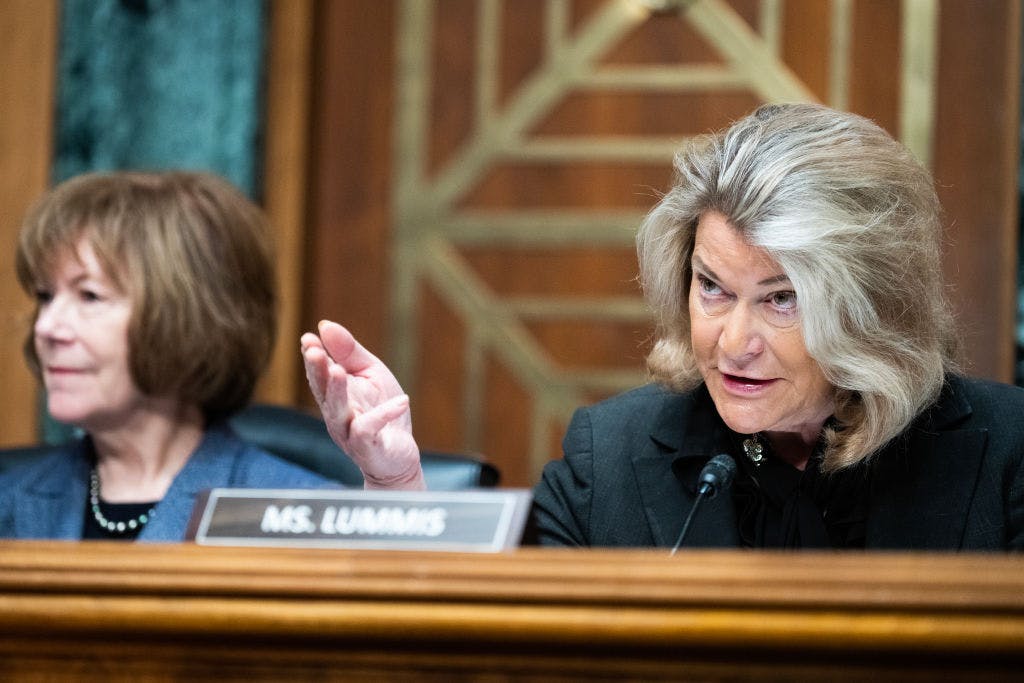
On July 31, in the wake of Donald Trump promising to create a "national stockpile" of bitcoin if he wins this year's election, Wyoming senator Cynthia Lummis introduced a bill, called the "Boosting Innovation, Technology, and Competitiveness through Optimized Investment Nationwide Act of 2024’’ (BITCOIN Act) that would have the federal government create a "strategic bitcoin reserve."
According to the bill, the Secretary of the Treasury (Janet Yellen, for now), would be tasked with the following:
Purchasing "not more than 200,000 Bitcoins per year over a five-year period, for a total acquisition of 1,000,000 bitcoins."
Establishing "a decentralized network of secure Bitcoin storage facilities distributed across the United States."
Overseeing the dispersion and security of the bitcoins around the US.
Establishing a procedure to adjust the purchase schedule based on prevailing market conditions.
Creating a proof of reserve system with quarterly reports on holdings, transactions, etc.
A proposal for the US government to acquire 1% of outstanding bitcoin is ironic, considering bitcoin's libertarian, post-financial crisis roots; however, with traditional asset managers now offering bitcoin ETFs that can be traded on centralized exchanges, the cryptocurrency has become less of a bet on an alternative financial system and more of a tool to diversify your portfolio.
So, why does Lummis want a Bitcoin reserve?
One reason: to reduce our national debt. At the Bitcoin 2024 conference, Lummis told the Block, "We know from modeling the numbers and past experience with bitcoin that it is capable of being an absolute game changer for the mess the United States has gotten itself into with its debt and its deficits."
This sounds nice, but 1,000,000 bitcoins aren't going to do much to reduce our deficit. We have $35 trillion in debt, and that number continues to climb. A $70 billion bitcoin bet, even with significant price appreciation, is a drop in the bucket.
Her argument for having a bitcoin reserve as a hedge, however, has more merit:
Just as gold reserves have historically served as a cornerstone of national financial security, Bitcoin represents a digital-age asset capable of enhancing the financial leadership and security of the United States in the 21st century global economy.
The acquisition and long-term storage of substantial quantities of Bitcoin by the United States can strengthen the financial condition of the United States, providing a hedge against economic uncertainty and monetary instability.
Despite abandoning the gold-backed Bretton Woods system in 1971, the US currently holds $480 billion in gold in facilities such as Fort Knox, and the Treasury also holds SDRs (an international reserve asset) and foreign currencies. If you're treating a bitcoin reserve like an extension of our gold reserves, the logic tracks. However, I would question whether or not bitcoin would prove to be a "hedge" if we ever experienced a situation where it needed to be.
The long-running correlation between bitcoin and the Nasdaq-100 Index is 0.805, and in 2020, when financial markets collapsed at the onset of the pandemic, bitcoin also fell from ~$10,000 to ~$4,000 per coin. Gold's decline, in contrast, was much smaller: from $1,673 to ~$1,500. While supporters often call bitcoin "digital gold" it tends to trade like a levered tech stock ETF.
One more quote from Lummis's bill:
Bitcoin, as a decentralized and finitely scarce digital asset, offers unique properties that complement existing national reserves, strengthening the position of the United States dollar in the global financial system.
Diversification of the national assets of the United States to include Bitcoin can enhance financial resilience and position the United States at the forefront of global financial innovation.
This section feels vague (for example, what "unique properties?" And how does owning bitcoin improve our position in "global financial innovation?"), but Tyler Cowen had a good point explaining how foreign nations' bitcoin usage could benefit the dollar:
Consider Argentina, where past hyperinflation has made both dollars and Bitcoin very popular. Inflation rates are declining under President Javier Milei, but Argentina’s currency future will probably still feature both currencies. Milei even suggested as much recently.
El Salvador is another case in point. The country already is fully dollarized, and President Nayib Bukele has been taking steps to encourage crypto use and investment. So far his intended crypto revolution has not taken off, but the country does offer highly favorable terms for crypto users and investors. If crypto rises in importance, some of that financial activity may take place in El Salvador, if only for regulatory reasons.
In short, there might be a number of governments that use dollars and crypto as a significant part of their natural monetary base, along with the domestic currency (if it still exists). In fact, the more dollarization spreads, the more the demand for crypto and Bitcoin may rise.
Many countries are aware of the advantages to using the dollar, but they may also come to see crypto as a useful tool that weakens the ability of the US government to apply financial sanctions. The end result may be more dollarization — but with crypto as a complementary back-up financial system.
You could make the argument, then, that because countries with more volatile currencies are increasingly using bitcoin and dollars, it would benefit the US to take an active stake in the former, to further entrench our position at the top of global financial markets.
Lastly, a bitcoin reserve presents some personal upside for the senator. As of June 2021, Senator Lummis owned 5 bitcoin, and, assuming she hasn't sold, her position is now worth more than $300,000. All of the financial innovation talk is great, but I imagine that turning the Treasury into a mandatory purchaser of your investment with a 20-year holding period could be quite lucrative, no?