Business
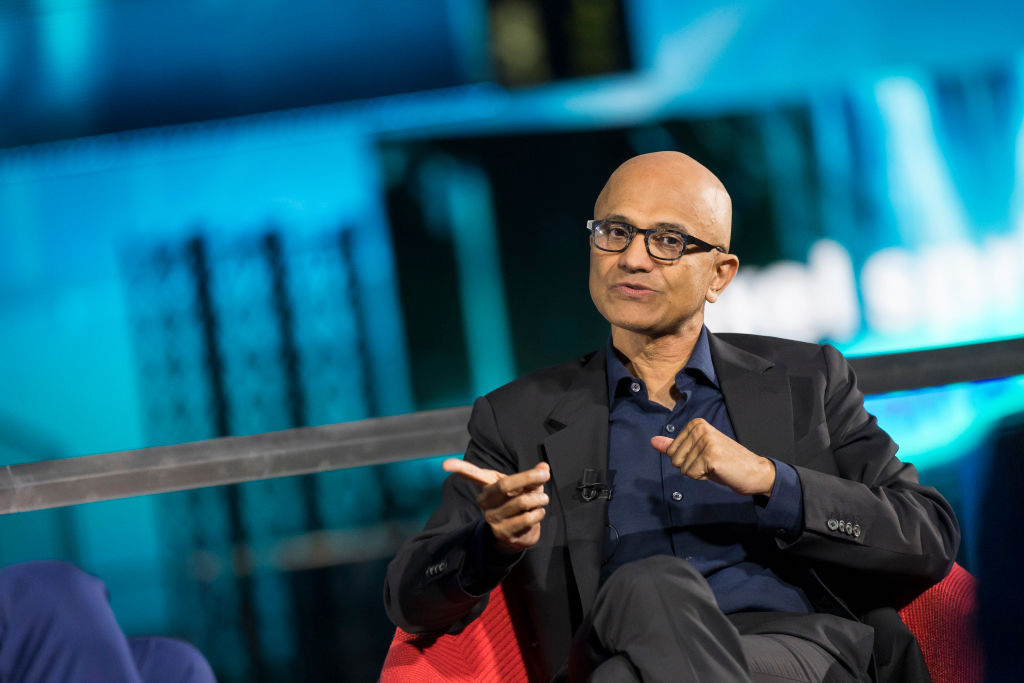
Microsoft CEO Nadella Awarded With Axel Springer Prize In Berlin
Ben Kriemann / Getty Images
What Isn't a Merger?

When you can’t acquire, Ac-Hire?

Microsoft is taking a creative approach to avoid regulator scrutiny.

Jack Raines

It’s common practice for a large company to identify a smaller company that they would like to own, and say, “Hey, I would like to pay you millions (billions?) of dollars for technology.”

To which the smaller company might reply, “Cool, we’ll take the millions (billions?) of dollars.”

However, the current regulatory environment has made that process a bit trickier for the largest of companies and especially in the tech sector. Led by FTC Chair Lina Khan, antitrust regulators in the US and Europe have been cracking down on big tech acquisitions (See: DoJ sues Visa, FTC sues Meta, FTC sues Amazon, FTC sues Microsoft, FTC sues Nvidia), creating expensive, drawn out legal battles that could culminate with a failed merger and a billion-dollar breakup fee (See: Adobe & Figma).

Furthermore, the FTC recently launched an inquiry into generative AI investments and partnerships between Microsoft and OpenAI, Amazon and Anthropic, and Google and Anthropic.

So what do you do, if you are, say, Microsoft, and you want to acquire an AI startup — such as Inflection — without regulators thinking that you are acquiring an AI startup? Perhaps you could just hire all of that startups’ employees?

From Satya Nadella (emphasis ours):

I’m very excited to announce that Mustafa Suleyman and Karén Simonyan are joining Microsoft to form a new organization called Microsoft AI, focused on advancing Copilot and our other consumer AI products and research.

Mustafa will be EVP and CEO, Microsoft AI, and joins the senior leadership team (SLT), reporting to me. Karén is joining this group as Chief Scientist, reporting to Mustafa.

Several members of the Inflection team have chosen to join Mustafa and Karén at Microsoft. They include some of the most accomplished AI engineers, researchers, and builders in the world. They have designed, led, launched, and co-authored many of the most important contributions in advancing AI over the last five years.

Is this legal? I guess? For context, last fall, Microsoft attempted a similar move by briefly hiring Sam Altman after his 72 hour firing-rehiring at OpenAI.

But what if you had invested, like, $225 million in one of Inflection’s funding rounds, just to watch half of their employees get poached by Nadella a year later? You have to be thinking “lawsuit,” right? Unless Microsoft paid you $337.5 million for your troubles.

From The Information (emphasis ours):

The software giant has agreed to pay Inflection approximately $650 million, mostly in the form of a licensing deal that makes Inflection’s models available for sale on the software giant’s Azure cloud service, according to a person involved in the transaction. The startup is using the licensing fee to provide its investors with a modest return on their capital, according to a second person who was briefed on the arrangement…

Investors in the company’s first major round of funding ... will receive one and a half times their investment, according to the person involved in the deal. Investors in a subsequent $1.3 billion funding round last year will receive 1.1 times their investment, the person said.

One reason Microsoft opted to pay for the rights to Inflection’s models was to protect itself from potential lawsuits from Inflection investors if ex-Inflection staff do similar AI development work at Microsoft, even if it doesn’t end up using the software, according to a Microsoft source briefed on the situation.

Typically, when you acquire a company, that smaller company’s employees join your company, you gain access to the smaller company’s technology, and investors who had stakes in the smaller company experience a liquidity event.

So, if the smaller company’s employees join your company, you gain access to the smaller company’s technology, and investors who had stakes in the smaller company experience a liquidity event, but it’s not called an “acquisition,” is it an acquisition?

More Business

See all Business
business

The Trump administration is reportedly planning a 50% made-in-America requirement for USMCA tariff relief

Qualifying for USMCA-related lower tariffs may soon require more US-made vehicle components, according to reporting by The Wall Street Journal.

The Trump administration is reportedly planning to introduce a 50% US content requirement for vehicles covered by the trade pact to receive lower tariffs. The content would be measured by cost, according to the WSJ.

There currently isn’t any US-specific requirement for those lower tariff rates, but in order to receive preferential tariffs, vehicles are must contain at least 75% regional content (components made in North America). Per Reuters reporting, the Trump admin is seeking to raise the regional requirement to 82%.

These reported plans are subject to change as the US negotiates USMCA terms with Mexico over the next few months.

Overall, Tesla will likely have the easiest time qualifying for any stricter requirements. The automaker’s vehicles contained the highest amount of US/Canadian content in 2025, according to American University research. Ford, GM, and Stellantis all scored lower.

Notably: the underlying government data that many domestic content measurements rely on intentionally combines US and Canadian components, so it’s difficult to know exactly how much of any given vehicle is specifically US-made.

There currently isn’t any US-specific requirement for those lower tariff rates, but in order to receive preferential tariffs, vehicles are must contain at least 75% regional content (components made in North America). Per Reuters reporting, the Trump admin is seeking to raise the regional requirement to 82%.

These reported plans are subject to change as the US negotiates USMCA terms with Mexico over the next few months.

Overall, Tesla will likely have the easiest time qualifying for any stricter requirements. The automaker’s vehicles contained the highest amount of US/Canadian content in 2025, according to American University research. Ford, GM, and Stellantis all scored lower.

Notably: the underlying government data that many domestic content measurements rely on intentionally combines US and Canadian components, so it’s difficult to know exactly how much of any given vehicle is specifically US-made.

business
Tom Jones

The $640,000 Luce makes the average Ferrari look like a bargain

Put aside the shape; put aside the smoothing out of Ferrari’s iconic sharp edges; put aside, even, the calls from former Chairman and President Luca Cordero di Montezemolo to “take the Prancing Horse off.” On the grounds of price alone, Luce detractors might have a point.

By now, many of us will have read the criticisms of Ferrari’s first fully electric vehicle, as the Luce — which was unveiled to the world earlier this week and promptly saw the company’s shares crash out in New York and Milan — gets subtly shaded by competitors online and not-so-subtly shaded by basically everyone else.

What makes all of this worse for Ferrari is that, even by the luxury car maker’s notoriously high standards, they’ve slapped a pretty hefty price tag on the Luce, and the company’s CEO, Benedetto Vigna, has already been forced to defend the €550,000 ($640,000) price point, saying yesterday that it’s “fair to pay for innovation,” per Reuters.

While Ferrari’s cars have been getting more expensive of late, as recently as 2022, Ferrari’s average revenue per car sold was around $340,000. At nearly twice that price, this new electric model is obviously proving a little much (visually, conceptually, and financially) for many loyal and long-standing fans of the Prancing Horse to stomach.

Ferrari Luce cost chart
Sherwood News

By now, many of us will have read the criticisms of Ferrari’s first fully electric vehicle, as the Luce — which was unveiled to the world earlier this week and promptly saw the company’s shares crash out in New York and Milan — gets subtly shaded by competitors online and not-so-subtly shaded by basically everyone else.

What makes all of this worse for Ferrari is that, even by the luxury car maker’s notoriously high standards, they’ve slapped a pretty hefty price tag on the Luce, and the company’s CEO, Benedetto Vigna, has already been forced to defend the €550,000 ($640,000) price point, saying yesterday that it’s “fair to pay for innovation,” per Reuters.

While Ferrari’s cars have been getting more expensive of late, as recently as 2022, Ferrari’s average revenue per car sold was around $340,000. At nearly twice that price, this new electric model is obviously proving a little much (visually, conceptually, and financially) for many loyal and long-standing fans of the Prancing Horse to stomach.

Ferrari Luce cost chart
Sherwood News

Latest Stories

Sherwood Media, LLC and Chartr Limited produce fresh and unique perspectives on topical financial news and are fully owned subsidiaries of Robinhood Markets, Inc., and any views expressed here do not necessarily reflect the views of any other Robinhood affiliate, including Robinhood Markets, Inc., Robinhood Financial LLC, Robinhood Securities, LLC, Robinhood Crypto, LLC, Robinhood Money, LLC, Robinhood U.K. Ltd, Robinhood Derivatives, LLC, Robinhood Gold, LLC, Robinhood Asset Management, LLC, Robinhood Credit, Inc., Robinhood Ventures DE, LLC and, where applicable, its managed investment vehicles.