Business
Delta at the airport
People wait at the Delta counter at JFK International Airport in New York (David Dee Delgado/Getty Images)

The two words in Delta’s profit warning that could have bigger implications

Delta’s decision to slash its forecast may indicate a deeper problem: it’s not just the consumers who are white-knuckling their wallets. It’s the companies.

If you squint at the SEC filing Delta Air Lines put out yesterday afternoon, you’ll find a reason for the slash-and-burn job it did on the quarterly profit forecast that it gave three short months ago. 

“The outlook has been impacted by the recent reduction in consumer and corporate confidence caused by increased macro uncertainty, driving softness in domestic demand,” the company wrote.

That filing sent Delta Air Lines and some of the airline industry — which has already been wounded to the tune of $24 billion in collective market cap lost over the past month — even farther into a spiral.

Delta was down as much as 11.5% in premarket trading, though it managed to rise back to about 2% down just before the opening bell.

But if you read between the lines, this isn’t just about Delta, or even just about airlines. The broader business world should pay attention to two words from that passage in the Delta filing: “corporate confidence.” 

It’s obvious things don’t feel great right now. Markets have been under sustained pressure from several angles — wild uncertainty around tariffs that could reignite inflation, an unwind of bets on riskier assets like tech stocks and cryptocurrencies, and fears that consumers are tightening up and spending more carefully. 

But Delta’s filing indicates a deeper problem: it’s not just the consumers who are white-knuckling their wallets. It’s the companies. 

When an airline says it notices that businesses aren’t as confident — i.e. Corporate America’s suits aren’t booking as many business trips — pay attention. There will be ripple effects. 

If you don’t book that business trip, you don’t book a hotel stay. If you don’t stay at the hotel, you don’t expense a drink at the hotel bar. You don’t book a rental car, pay for gas, or take an Uber to your destination. You don’t go out to dinner with friends in the city where you’re staying, you don’t tip the server, and so on.

Business expenses are a serious revenue engine. The Global Business Travel Association, an industry group that no doubt has some bias, says the US was the nation that spent the most on business travel, with total expenditures of $421.1 billion in 2022, the latest data available. To put that in perspective, that’s more than double the revenue that Amazon, the company with the most revenue in the US, generated last year. The GBTA says business travel also “supported 6 million jobs and represented 3.5% of total employment.” It’s an extreme example, but the Harvard Growth Lab in 2020 estimated that if the US were to cease all business travel, global GDP would drop by 1.1%. 

But a reduction in business travel isn’t the only impact here. The other important thing to remember is that when businesses are clamping down on travel, that means they’re undoubtedly also starting to look for other places to cut.

What happens next? People start getting laid off. Companies’ payrolls have swelled in recent years, so executives will certainly find room to cut. According to the Bureau of Labor Statistics, the number of people employed full time was 3.8% higher in January 2025 than it was in January 2020, just before COVID-19 broke into the US.

Delta’s forecast cut is also interesting because the drop was so steep in such a short time. The company had given its previous forecast on January 10, calling for earnings per share of $0.70 to $1 in the first quarter, with revenue expected to rise 7% to 9%. At the time, Delta’s CFO said, “We have good visibility as we sit here today, as it relates to first quarter, and really the first half of the year. We feel good about that.” Three months later, the situation has starkly changed. The new forecast is for $0.30 to $0.50 of earnings and revenue growth of 3% to 4%. 

It’s a remarkable pivot for an airline, and one that indicates a serious deterioration in what Delta is seeing that we can’t yet.

To be sure, there’s always the chance this moment may wind up being a blip, just a moment for investors to buy the dip. But we’re living in a time when people are credibly worried about rising prices, slowing economic growth, and being laid off all at the same time. If a cutback in business travel is already starting, like Delta says it is, it’s certainly not a good sign.

More Business

See all Business
business

Electronic Arts launches a platform to put more ads in its games

Video game publishing giant EA launched a new platform on Monday designed to make the process of selling immersive ad space in its popular games easier.

The company says the platform, called EA Advertising, allows brands to “integrate directly into gameplay through dynamic, real-time placements, from stadium signage to custom in-game content.”

More so than other studios, EA has incorporated advertising into its most popular titles. As Kotaku points out, the company’s ad efforts stretch as far back as 2006. Several of its sports franchises already feature partnerships with brands like Visa, Lowe’s, Red Bull, and PepsiCo.

In-game advertising hasn’t exactly been embraced by fans, but industry experts expect it to ramp up as companies seek more revenue to offset higher games budgets and surging memory costs. EA rival Take-Two has taken a different approach, with CEO Strauss Zelnick recently saying the company was “not at risk of doing brand partnerships” in the forthcoming “Grand Theft Auto VI,” and that ads in full-price games seems “unfair.”

The $55 billion deal to take EA private, led by Saudi Arabia’s Public Investment Fund, is set to close at the end of this month. Being the largest leveraged buyout in history, EA will likely look for more ways to boost revenue to cover interest payments.

More so than other studios, EA has incorporated advertising into its most popular titles. As Kotaku points out, the company’s ad efforts stretch as far back as 2006. Several of its sports franchises already feature partnerships with brands like Visa, Lowe’s, Red Bull, and PepsiCo.

In-game advertising hasn’t exactly been embraced by fans, but industry experts expect it to ramp up as companies seek more revenue to offset higher games budgets and surging memory costs. EA rival Take-Two has taken a different approach, with CEO Strauss Zelnick recently saying the company was “not at risk of doing brand partnerships” in the forthcoming “Grand Theft Auto VI,” and that ads in full-price games seems “unfair.”

The $55 billion deal to take EA private, led by Saudi Arabia’s Public Investment Fund, is set to close at the end of this month. Being the largest leveraged buyout in history, EA will likely look for more ways to boost revenue to cover interest payments.

business

JM Smucker says it sold $1 billion worth of Uncrustables in FY2026

After years of booming sandwich sales, JM Smucker has finally earned a billion-dollar crust.

On Tuesday, the company reported results for fiscal year 2026, highlighting better-than-expected profits driven by higher prices for coffee and sweet baked goods. However, at another point on the earnings call, CEO Mark Smucker pointed to one particularly jammy figure: in line with previous forecasts, the company sold $1 billion worth of its (almost always) crustless sandwiches, Uncrustables, in the last year alone.

business

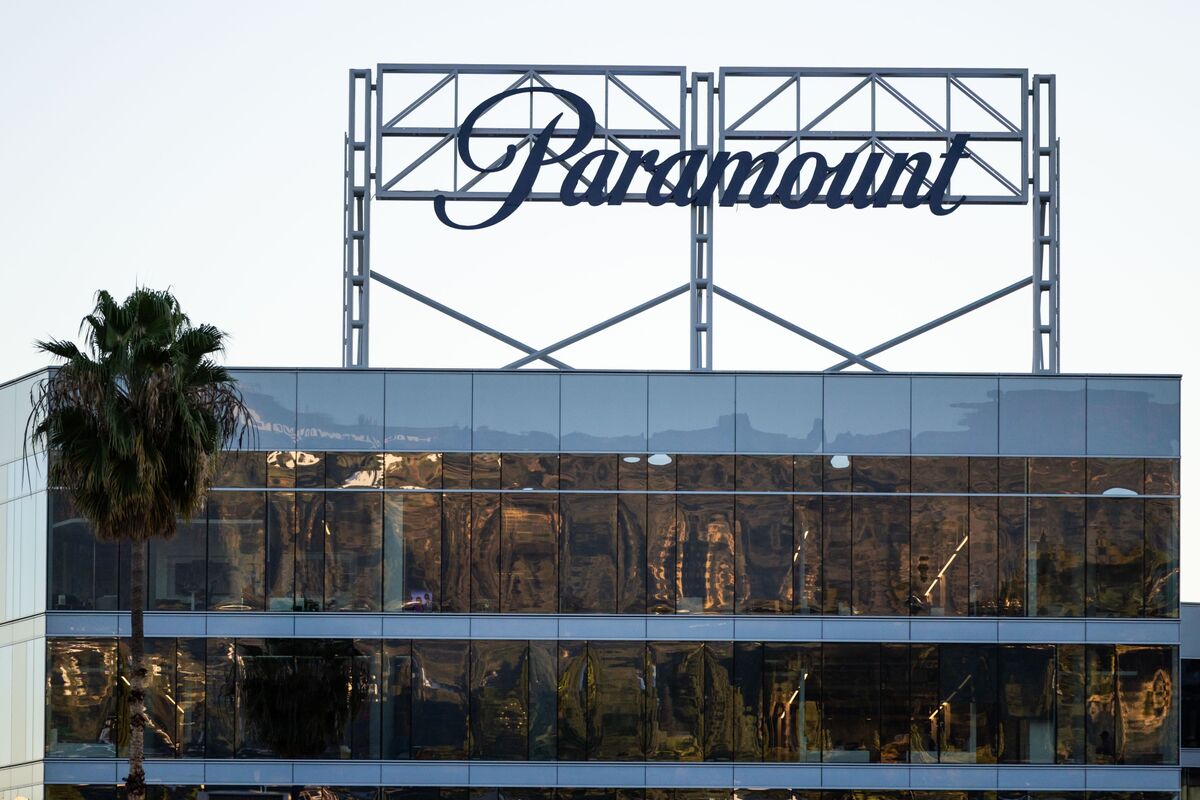
Paramount reportedly offers concessions to resolve multistate antitrust investigation

Paramount has reportedly offered up some concessions in an effort to prevent an antitrust lawsuit by California and about 10 other states, according to Bloomberg reporting on Monday.

Reuters first reported on the potential suit from a group of unnamed states last week, which could throw a wrench in Paramount’s plans to buy rival Warner Bros. Discovery in a Hollywood megamerger.

The list of concessions is unknown, though Bloomberg previously reported that Paramount is open to divesting some of its kids TV assets to appease EU regulators.

Late last month, reports said US regulators appeared likely to approve the $110 billion merger, following a meeting between Paramount CEO David Ellison and DOJ antitrust staffers.

The list of concessions is unknown, though Bloomberg previously reported that Paramount is open to divesting some of its kids TV assets to appease EU regulators.

Late last month, reports said US regulators appeared likely to approve the $110 billion merger, following a meeting between Paramount CEO David Ellison and DOJ antitrust staffers.

$98B ⛽

The IATA released its latest financial outlook for the airline industry over the weekend, forecasting a $98 billion jump in the sector’s collective fuel bill. The world’s largest trade group representing airlines expects the oil spike to halve profits by 49% from last year to $23 billion.

The group also expects profit margins to halve year over year, falling from 2025’s 4.2% to 2%. Still, revenue is expected to climb to $1.17 trillion from $1.07 trillion.

A surge in the cost of jet fuel has rocked US and global airlines this year, leading Delta Air Lines, United Airlines, American Airlines, Southwest Airlines, JetBlue, and others to raise fares and ancillary charges like bag fees. Low-cost carriers, which operate on smaller margins, have been squeezed the hardest, resulting in Spirit’s shutdown.

“It’s a tough year for all airlines, especially those whose balance sheets had not yet recovered from COVID. And, of course, for those operating in the Gulf,” said IATA Director General Willie Walsh, who added that demand is holding up and about half of passengers expect to spend more on travel this year. “That bodes well for a strong northern summer peak season. The big unknown is how long travelers and shippers can tolerate the higher costs of connectivity.”

Hollywood Exteriors And Landmarks - 2025

1 year into the Switch 2, we might’ve seen the top of the console market

The Switch 2 launched on this day in 2025. Amid a rough year for consoles, Nintendo has logged a good one.

Latest Stories

Sherwood Media, LLC and Chartr Limited produce fresh and unique perspectives on topical financial news and are fully owned subsidiaries of Robinhood Markets, Inc., and any views expressed here do not necessarily reflect the views of any other Robinhood affiliate, including Robinhood Markets, Inc., Robinhood Financial LLC, Robinhood Securities, LLC, Robinhood Crypto, LLC, Robinhood Money, LLC, Robinhood U.K. Ltd, Robinhood Derivatives, LLC, Robinhood Gold, LLC, Robinhood Asset Management, LLC, Robinhood Credit, Inc., Robinhood Ventures DE, LLC and, where applicable, its managed investment vehicles.