

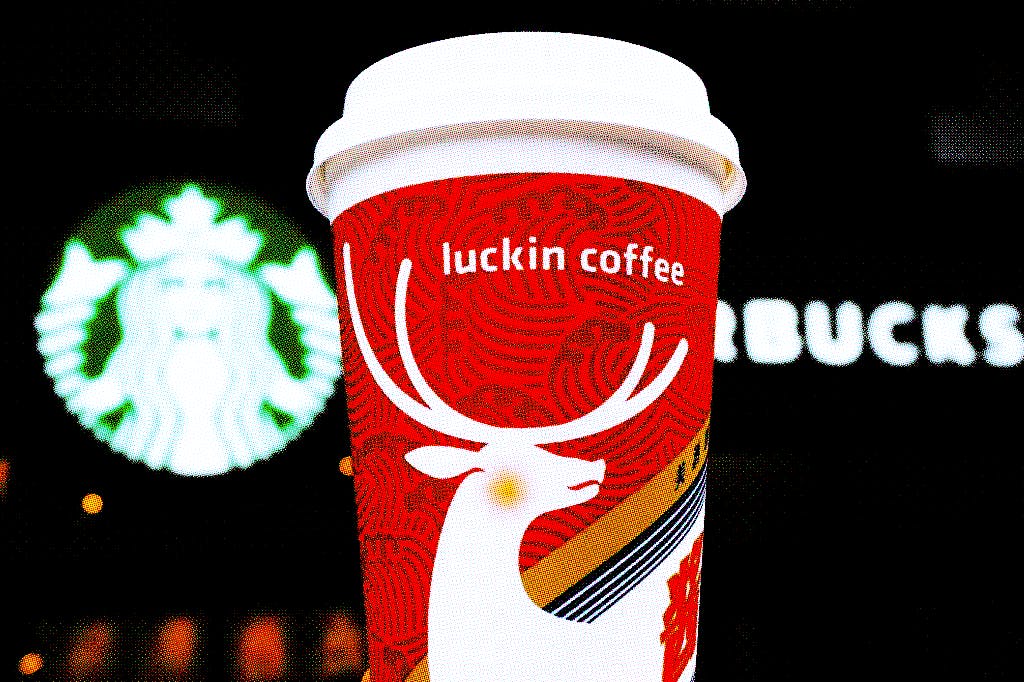
Starbucks is really struggling in America — in China, things are much worse
New CEO Brian Niccol has serious work to do.
The world’s largest coffee chain is losing customers. Yesterday, Starbucks reported that its profits (earnings per share) fell by 25% in the last year, driven by a major slowdown in the US. In short, Americans went to Starbucks a lot less but paid more when they got there: comparable US transaction volumes fell 10% in the quarter, but were offset by a 4% rise in the average ticket size (for a net fall of ~6%).
That’s a bitter brew to swallow for new CEO Brian Niccol, who only started in September, as he works to implement his “Back to Starbucks” strategy, which includes reestablishing Starbucks as “the community coffeehouse.”
But the problems in the American business look relatively mild compared to China — a market where Starbucks has spent billions of dollars opening more than 7,000 restaurants in the last 2.5 decades. There, comparable store sales are almost in free fall. Per Starbucks:
“China comparable store sales declined 14%, driven by an 8% decline in average ticket compounded by a 6% decline in comparable transactions, weighed down by intensified competition and a soft macro environment that impacted consumer spending.”
So, unlike in the US, there’s a double shot of disappointment for the coffee giant in China: people are going to Starbucks less and spending less when they get there.
In premarket trading this morning, Starbucks shares were trading 5% lower, although they have since recovered much of their early losses. The company has suspended its financial guidance for 2025.
Ground to a halt
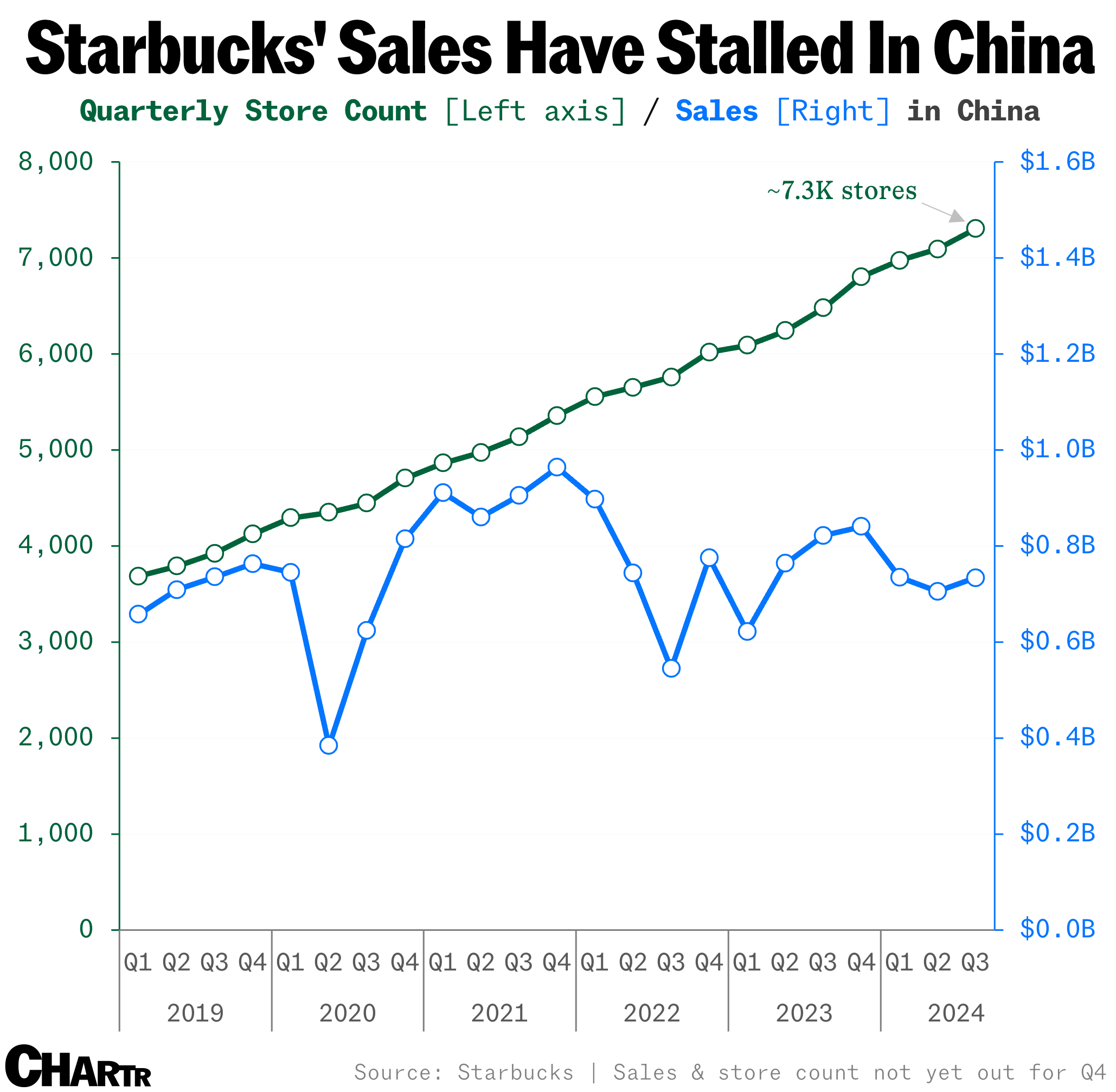
As we wrote earlier this year, Starbucks’ China business has been strained for years. Despite the company’s relentless expansion in China, same-store sales in the country have been falling. Since the start of 2019, the company has nearly doubled its store count in the country — sales haven’t followed anywhere near the same trajectory.
The company has been running just to stay still, as competition from domestic companies like Luckin Coffee intensifies, putting pressure on Starbucks at a time when Chinese consumers are growing increasingly fond of homegrown brands rather than Western imports.
By the time Luckin Coffee was even founded (2017), Starbucks’ business in China was a teenager, with the first of the American coffeehouses opened all the way back in 1999 in Beijing. It took just a few short years, even with a nearly fatal accounting scandal thrown in the mix, for Luckin Coffee to overtake Starbucks’ footprint — and this summer the company celebrated opening its 20,000th store, the result of a hypergrowth strategy that has spread the chain across much of mainland China.

Culturally known for a love of tea, China has become a coffee-addicted country, and just like consumers in America, China’s caffeine-seekers are price sensitive. With beverages that are reportedly ~30% cheaper than those offered by Starbucks, Luckin Coffee’s rapid expansion, which makes heavy use of mobile ordering, has been extraordinary.
In light of Luckin’s remarkable growth and the increasing competition in the battle to caffeinate China’s coffee-loving population, Starbucks looked to lean on a long-standing and successful part of the business earlier this year: rewards.
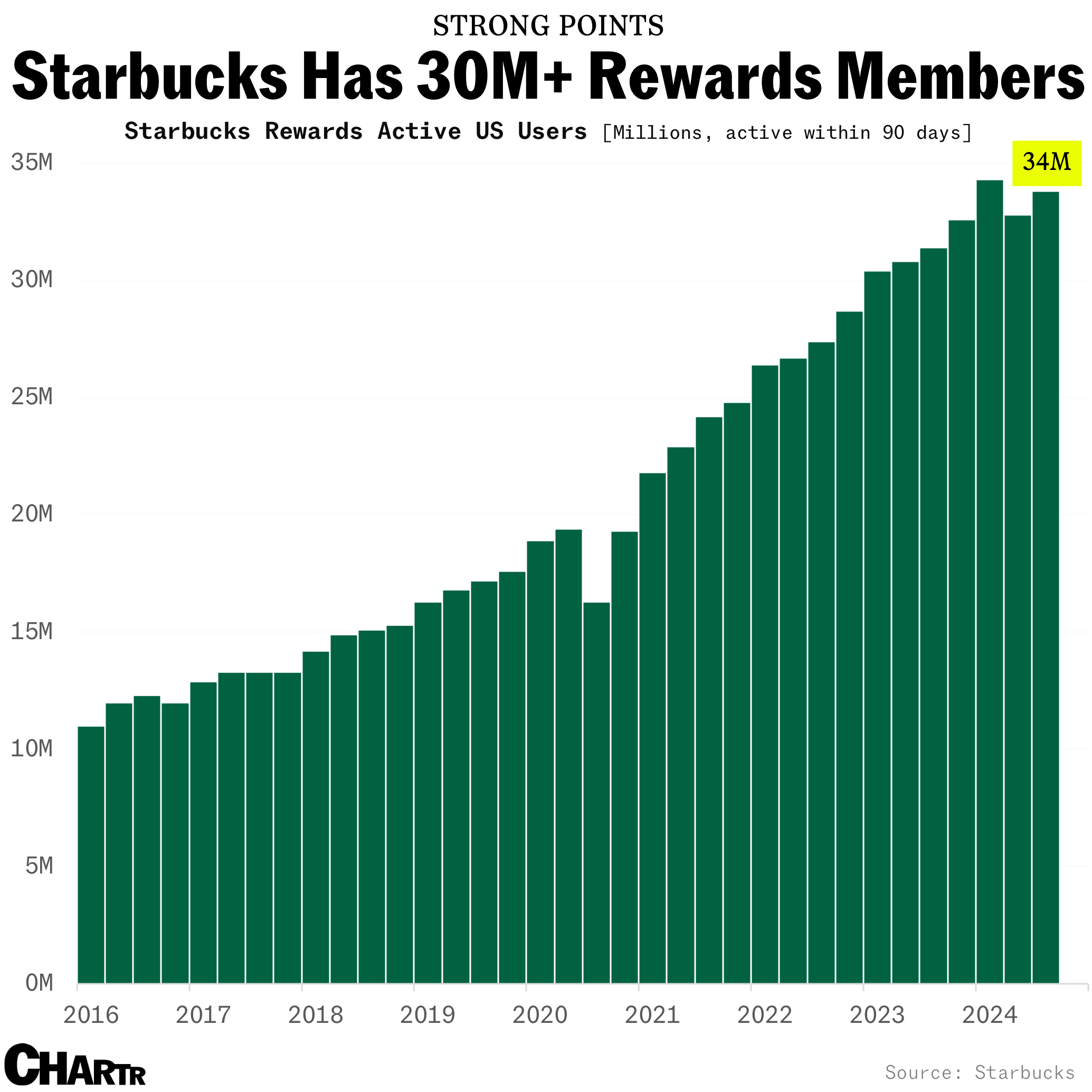
The company rolled out some big upgrades to its rewards offering in China over the summer — including a collab with the Hilton Group in the region to allow customers to sync their loyalty accounts for the two chains — to entice customers away from homeland alternatives. And who can blame them for trying? Starbucks’ rewards program has proved a huge hit around the world, counting 34 million active users in the US alone. In fact, the amount of cash that Starbs loyalists have sitting in their rewards accounts often runs into the billions each quarter, sparking regular discourse around whether the company should be actively investing those assets.
The rewards-strategy efforts won’t necessarily be music to Brian Niccol’s ears, though, with the new chief reportedly looking to move away from offering so many promos, deals, and discounts going forward. His aversion to relying on rewards aside, the Starbucks CEO has a bigger question to answer when it comes to China: if same-store sales keep dropping, how long can the chain afford to keep expanding there?
That question is an important one. But then again, lots of questions about Starbucks’ business — whether its workers will keep unionizing in droves, if it can revitalize the core US coffeehouses, and whether the Pumpkin Spice Latte was brought out too early this year — seem pressing.



