Business
Nvidia CEO Jensen Huang
Jensen Huang, CEO of Nvidia (Johannes Neudecker/Getty Images)

Over half of Nvidia’s AI direct hardware sales revenue comes from just three customers

In its Q2 earnings release, Nvidia revealed its “concentration of revenue” from six unnamed companies that purchase directly from the company.

Jon Keegan

Nvidia’s solid second-quarter earnings report showed how good it is to be the seller of the best pickax in the town with the big gold mine.

All of the big AI players are racing to pour hundreds of billions of dollars into ever-larger data centers to out-gigawatt their competitors in the space. And those data centers are usually stacked to the rafters with Nvidia’s powerful GPUs.

Meta, OpenAI, and xAI are all likely handing over many of those billions to Nvidia. For the second quarter, Nvidia reported $41.3 billion in revenue in its “Compute & Networking” segment — which includes all the gear it sells for data centers. That’s up 56% year on year.

Concentration of revenue

In Nvidia’s 10-Q filing, the company gave us a peek at who is buying all this gear, and how much — but without naming names.

“Customer A,” the largest single customer in this segment buying directly from Nvidia, represented 23% of sales for the second quarter, which works out to about $9.5 billion.

Which company could this be? We know that both OpenAI and Meta are currently building what might be the two largest AI data centers in the world. Meta’s $10 billion (or maybe it costs $50 billion?) Manhattan-sized “Hyperion” data center, currently under construction in Richland Parish, Louisiana, has been described by Meta CEO Mark Zuckerberg as “2GW+” but may scale up to 5 gigawatts, with several other multi-gigawatt projects on the horizon.

And let’s not forget OpenAI’s Stargate project, a $500 billion partnership with Nvidia, Oracle, and SoftBank thats currently under construction in Texas. OpenAI recently announced a plan to develop 4.5 gigawatts of data center capacity at the Abilene, Texas, Stargate site.

The number of GPUs that will be needed to fill these data centers is absolutely enormous. We don’t have an easy way of knowing if OpenAI and Meta buy directly from Nvidia, but its hard to imagine that Customer A’s hardware won’t end up in one of the two megaprojects.

We’d be remiss not to mention Elon Musk’s xAI. xAI built its Tennessee “Colossus” data center in record time, and Musk has thrown out some crazy numbers regarding the number of GPUs he wants for his data center’s expansion.

Last month, Musk tweeted:

“The @xAI goal is 50 million in units of H100 equivalent-AI compute (but much better power-efficiency) online within 5 years”

Customers B and C aren’t messing around either, spending $6.6 billion and $5.7 billion, respectively, last quarter.

Together, Customers A, B, and C add up to 53% of second-quarter revenue for the Compute & Networking segment, or about $21.9 billion.

Is having so much revenue coming from so few customers a bad thing?

Not necessarily! The argument goes that having tight relationships with deep-pocketed customers allows a company to sell more stuff with less friction and more efficiency.

But the potential downside of being reliant on a handful of big spenders is that huge revenue streams could disappear overnight if one day a big customer starts using its own chips, or decides they are spending too much on AI data centers.

And, of course, there’s always the risk of a mercurial CEO just deciding to stop using your products for any reason.

For the time being, this doesn’t seem to be a problem. Everyone wants Nvidia’s latest chips, it can’t make enough of them, and everyone is planning to buy as many as they can get their hands on.

More Business

See all Business
business

Electronic Arts launches a platform to put more ads in its games

Video game publishing giant EA launched a new platform on Monday designed to make the process of selling immersive ad space in its popular games easier.

The company says the platform, called EA Advertising, allows brands to “integrate directly into gameplay through dynamic, real-time placements, from stadium signage to custom in-game content.”

More so than other studios, EA has incorporated advertising into its most popular titles. As Kotaku points out, the company’s ad efforts stretch as far back as 2006. Several of its sports franchises already feature partnerships with brands like Visa, Lowe’s, Red Bull, and PepsiCo.

In-game advertising hasn’t exactly been embraced by fans, but industry experts expect it to ramp up as companies seek more revenue to offset higher games budgets and surging memory costs. EA rival Take-Two has taken a different approach, with CEO Strauss Zelnick recently saying the company was “not at risk of doing brand partnerships” in the forthcoming “Grand Theft Auto VI,” and that ads in full-price games seems “unfair.”

The $55 billion deal to take EA private, led by Saudi Arabia’s Public Investment Fund, is set to close at the end of this month. Being the largest leveraged buyout in history, EA will likely look for more ways to boost revenue to cover interest payments.

More so than other studios, EA has incorporated advertising into its most popular titles. As Kotaku points out, the company’s ad efforts stretch as far back as 2006. Several of its sports franchises already feature partnerships with brands like Visa, Lowe’s, Red Bull, and PepsiCo.

In-game advertising hasn’t exactly been embraced by fans, but industry experts expect it to ramp up as companies seek more revenue to offset higher games budgets and surging memory costs. EA rival Take-Two has taken a different approach, with CEO Strauss Zelnick recently saying the company was “not at risk of doing brand partnerships” in the forthcoming “Grand Theft Auto VI,” and that ads in full-price games seems “unfair.”

The $55 billion deal to take EA private, led by Saudi Arabia’s Public Investment Fund, is set to close at the end of this month. Being the largest leveraged buyout in history, EA will likely look for more ways to boost revenue to cover interest payments.

business

JM Smucker says it sold $1 billion worth of Uncrustables in FY2026

After years of booming sandwich sales, JM Smucker has finally earned a billion-dollar crust.

On Tuesday, the company reported results for fiscal year 2026, highlighting better-than-expected profits driven by higher prices for coffee and sweet baked goods. However, at another point on the earnings call, CEO Mark Smucker pointed to one particularly jammy figure: in line with previous forecasts, the company sold $1 billion worth of its (almost always) crustless sandwiches, Uncrustables, in the last year alone.

business

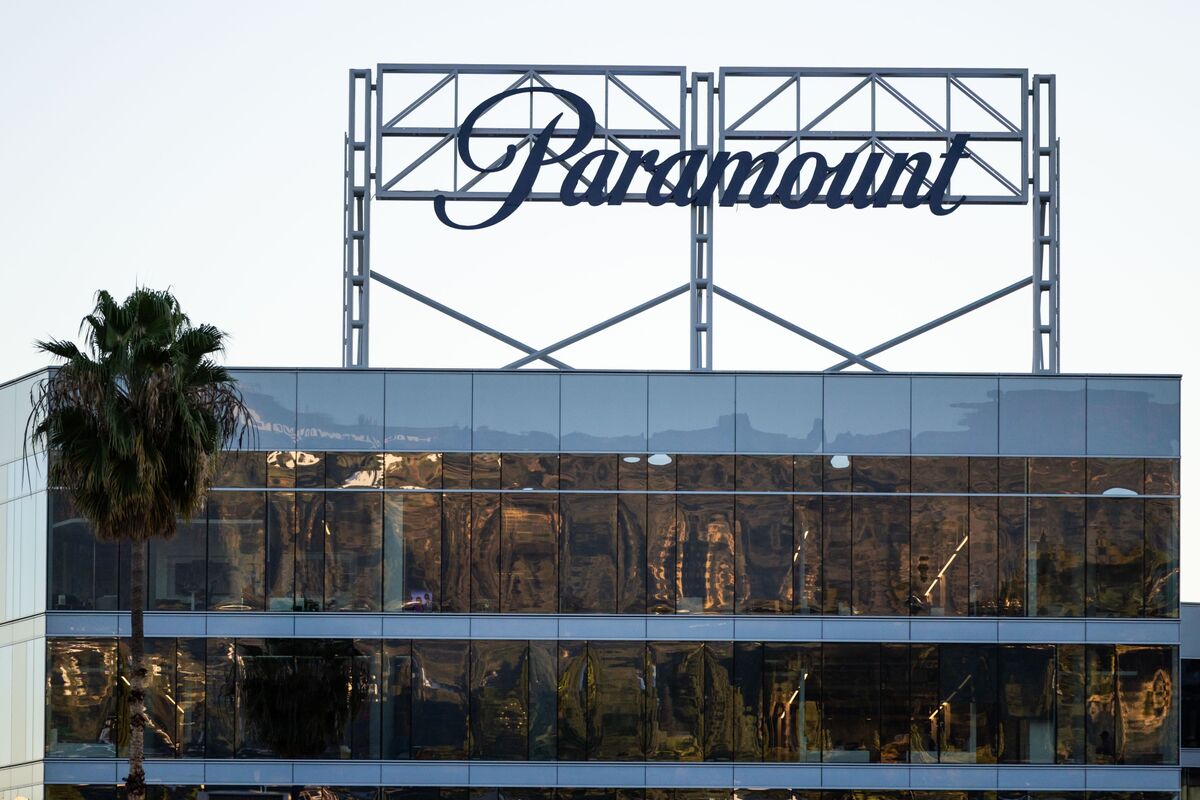
Paramount reportedly offers concessions to resolve multistate antitrust investigation

Paramount has reportedly offered up some concessions in an effort to prevent an antitrust lawsuit by California and about 10 other states, according to Bloomberg reporting on Monday.

Reuters first reported on the potential suit from a group of unnamed states last week, which could throw a wrench in Paramount’s plans to buy rival Warner Bros. Discovery in a Hollywood megamerger.

The list of concessions is unknown, though Bloomberg previously reported that Paramount is open to divesting some of its kids TV assets to appease EU regulators.

Late last month, reports said US regulators appeared likely to approve the $110 billion merger, following a meeting between Paramount CEO David Ellison and DOJ antitrust staffers.

The list of concessions is unknown, though Bloomberg previously reported that Paramount is open to divesting some of its kids TV assets to appease EU regulators.

Late last month, reports said US regulators appeared likely to approve the $110 billion merger, following a meeting between Paramount CEO David Ellison and DOJ antitrust staffers.

$98B ⛽

The IATA released its latest financial outlook for the airline industry over the weekend, forecasting a $98 billion jump in the sector’s collective fuel bill. The world’s largest trade group representing airlines expects the oil spike to halve profits by 49% from last year to $23 billion.

The group also expects profit margins to halve year over year, falling from 2025’s 4.2% to 2%. Still, revenue is expected to climb to $1.17 trillion from $1.07 trillion.

A surge in the cost of jet fuel has rocked US and global airlines this year, leading Delta Air Lines, United Airlines, American Airlines, Southwest Airlines, JetBlue, and others to raise fares and ancillary charges like bag fees. Low-cost carriers, which operate on smaller margins, have been squeezed the hardest, resulting in Spirit’s shutdown.

“It’s a tough year for all airlines, especially those whose balance sheets had not yet recovered from COVID. And, of course, for those operating in the Gulf,” said IATA Director General Willie Walsh, who added that demand is holding up and about half of passengers expect to spend more on travel this year. “That bodes well for a strong northern summer peak season. The big unknown is how long travelers and shippers can tolerate the higher costs of connectivity.”

Hollywood Exteriors And Landmarks - 2025

1 year into the Switch 2, we might’ve seen the top of the console market

The Switch 2 launched on this day in 2025. Amid a rough year for consoles, Nintendo has logged a good one.

Latest Stories

Sherwood Media, LLC and Chartr Limited produce fresh and unique perspectives on topical financial news and are fully owned subsidiaries of Robinhood Markets, Inc., and any views expressed here do not necessarily reflect the views of any other Robinhood affiliate, including Robinhood Markets, Inc., Robinhood Financial LLC, Robinhood Securities, LLC, Robinhood Crypto, LLC, Robinhood Money, LLC, Robinhood U.K. Ltd, Robinhood Derivatives, LLC, Robinhood Gold, LLC, Robinhood Asset Management, LLC, Robinhood Credit, Inc., Robinhood Ventures DE, LLC and, where applicable, its managed investment vehicles.