On Running is widening its lead over rival shoe brand Hoka
On just reported sales up 38% on a constant currency basis, as the Swiss brand eyes Nike-level numbers.
For those in the business of Reading Things Online, it felt like you couldn’t go more than a few weeks last summer without seeing a new piece on how upstart running shoe brands like On and Hoka had industry behemoths like Adidas, Nike, and New Balance quaking in their sneakers.
Media (and investor) hype for the two athletic shoe sellers might have subsided a little, but both brands continue to make huge strides forward as runners around the world add Clifton 10s and Cloudsurfers to their collections and workers adopt the comfort-first sneakers to return to the office in style.
Build phase
With strikingly similar origin stories — Hoka was founded in the French Alps by two athletes in 2009, while On Holding was launched by three a year later in Zurich, Switzerland — the brands’ tracks have barely diverged in the years since. In 2012, American footwear giant Deckers snapped up Hoka One One, as it was at the time, for a reported $1.1 million. On, meanwhile, signed Swiss tennis legend Roger Federer as a brand representative in 2019, giving him a 3% stake in the company, and went public two years later.
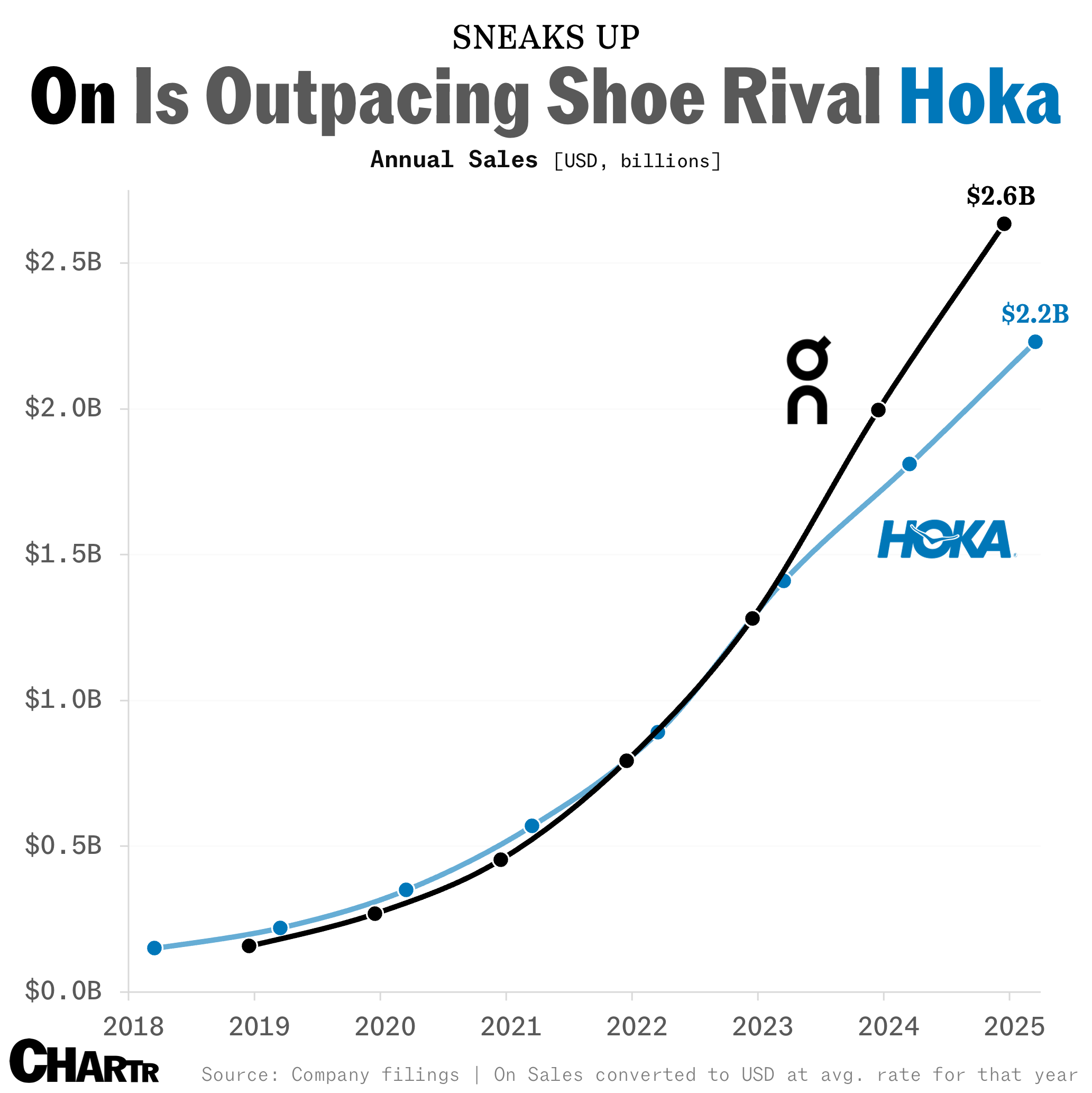
For most of the past six or so years, On and Hoka’s sales had broadly run neck and neck, with not much to split the two Europe-birthed brands. However, the former has really started to kick on in recent years, with the Swiss company reporting ~$2.6 billion in sales last year and announcing another impressive quarter yesterday, in which sales jumped 38% (currency adjusted).
The Hoka brand isn’t exactly a slouch, posting $2.2 billion in revenue for the last fiscal year, but investors’ expectations maybe got ahead of reality. Hoka notched just ~20% sales growth in its latest quarter, and Deckers’ stock has been crushed this year, dropping nearly 50%, as Hoka sales slow down in the all-important US market.