Thescammyadsfuelingappgaming

Why are mobile game ads so weird and bad?
How a multibillion-dollar industry tries to reel you in by infuriating you.
A bearded king stands in a maroon room, looking upset. He has good reason to be — the room is on fire. Above him, a terrifying amount of water sloshes around, blocked by a wall of colorful tiles. If only someone, anyone, could find enough matching tiles, they could save him.
Thankfully, a faceless gamer clears a path in the tiles, sending water cascading down on him and saving his life. But now there’s a new problem: all that water fills up the tiny room, and the king quickly drowns. As he does, the word “FAIL” slams onto the screen.
This is an ad for “Royal Match,” a mobile game similar to “Candy Crush,” except instead of matching candy, you match tiles. You’ve probably seen it: “Royal Match” was the sixth most advertised game on the app store last year, according to MobileAction.
Killing the king has been a core part of the “Royal Match” advertising strategy since Dream Games first released the app in 2021. It’s an odd approach — McDonald’s probably wouldn’t drown Grimace if you didn’t buy a hamburger — but it seems to be working. In April, “Royal Match” surpassed $3 billion in lifetime user spending, just five months after hitting $2 billion.
For the supposed 3 billion people around the world who play these games, sometimes until our phones are hot enough to cook an egg, these unsettling ads are part of life. Popping up on Instagram, X, and YouTube, and in between levels of other games, mobile-game ads are a key part of a massive business.

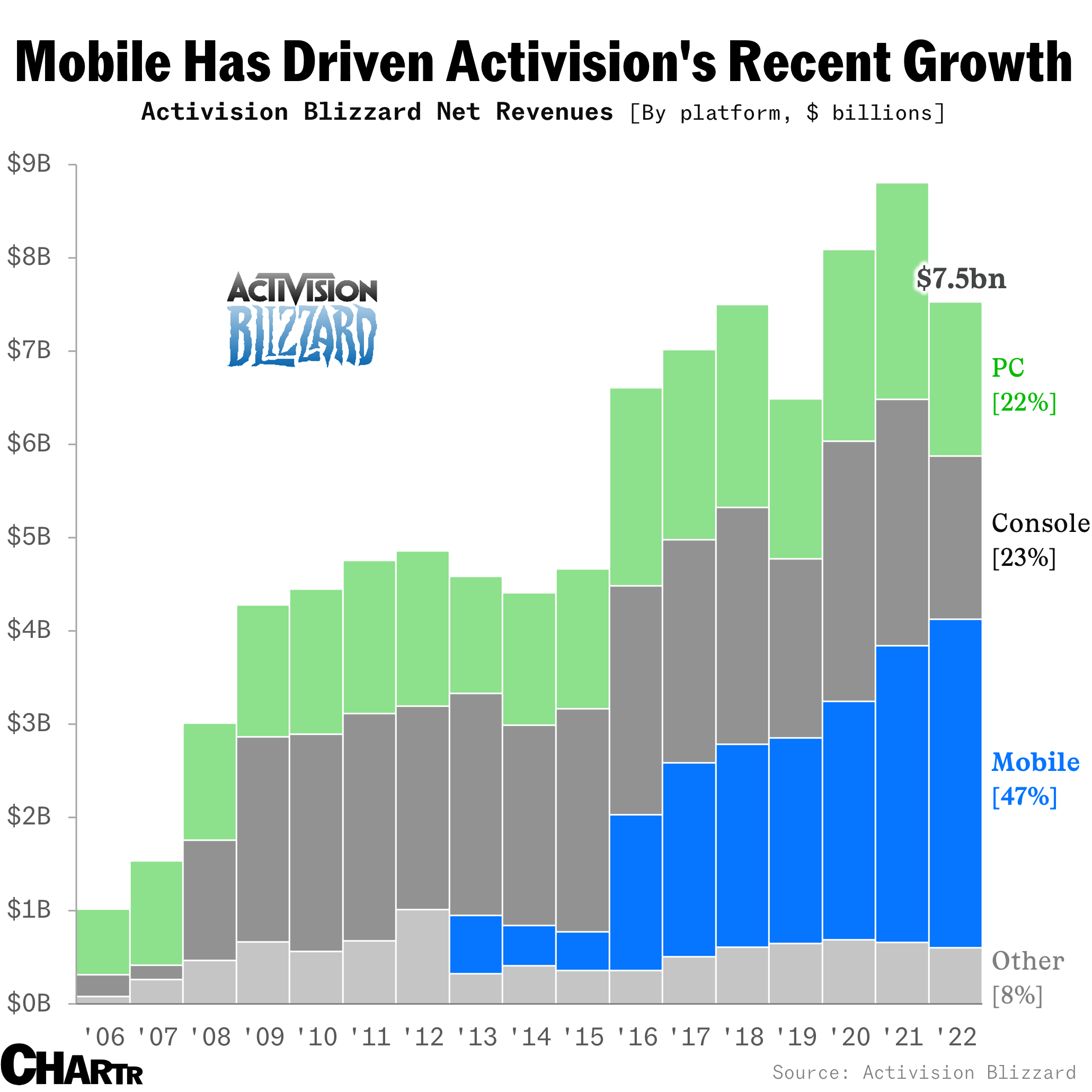
Mobile-gaming revenue reached an estimated $90 billion last year, according to gaming-analytics company Newzoo. That’s half of the total games market, and about $40 billion more than what console games from PlayStation, Xbox, and Nintendo made (excluding the consoles themselves) over the same period. Back-of-the-napkin math puts the industry’s average revenue per user at $30 per year.
The business is so mainstream that it makes you wonder: why are the ads so weird and deceptive? And are they even allowed to be that way?
“Royal Match” ads fit into a category I call “someone’s playing a game wrong.” The ads will feature a clip of a word game, shooter game, or puzzle, but the person controlling the gameplay is a masochist. In a 30-second ad for a word-unscrambling game, they’ll repeatedly attempt something like “hitnk” but never “think.” In a shooting game where players control a mob that moves through barriers that change in size, the ad’s player will frequently select a counterintuitive option like “subtract 10” instead of “add 50.”
Stupid stuff, but the psychology is pretty clear: create an ad so unsatisfying, with so obvious an answer, that someone might be just outraged enough to download the game and try to beat it themselves. The strategy has ruffled some feathers; a Reddit community dedicated to the niche industry, r/shittymobilegameads, has almost 160,000 subscribers.
Jamie Cohen, a professor of media studies at CUNY Queens College, says mobile-game ads are designed to be upsetting.
“It’s rage bait in the end,” Cohen said. “Their goal is engagement… It’s like the ‘Let's Play’ attitude of watching somebody else play. And when you do that, you do want to grab the controller.”
Intentionally upsetting your potential customers is a strategy you don’t often see outside the mobile-game space. People would probably have some questions if Honda released a minute-long ad that was just a test driver unsuccessfully trying to parallel park.
Adding to the rage bait is the fact that oftentimes the gameplay that’s advertised isn’t even the gameplay that’s found in the downloaded game. Even in “Royal Match,” saving the king is a rare game mode, found only in special levels called “King’s Nightmare.”
That’s far from the only example; in an ad for a game called “Last War: Survival,” a community note on X reads, “The video shown in the advertisement does not match the actual gameplay.”
The prevalence of “fake game” ads is significant enough that Japanese studio Monkeycraft created a parody game for PC, Switch, and PlayStation that allows players to actually play the games promised in common ads. The title? “Yeah! You Want ‘Those Games,’ Right? So Here You Go! Now, Let’s See You Clear Them!” (Funny enough, you can’t play the game on mobile even if you want to — it’s not available on the Google or Apple app stores.)
Even while the formats are routinely mocked, mobile-game advertising doesn’t seem to want to change. Aside from the ad content, the user experience is also harmed by a variety of common ills: the little “X” to close the ad is often too small to press accurately, the mute button is sometimes hidden or nonexistent, and the “countdown to reward” timer is occasionally inaccurate (implying users need to watch an ad for longer than necessary).
Andrew Susman, president of the Institute for Advertising Ethics, says that misrepresenting how to interact with ads and failing to provide truthful examples of gameplay are both deceptive practices that violate common advertising-ethics rules.
“It’s part of this cynicism of, perhaps, some of the designers of these ads, which is, ‘Well, everyone expects a bad experience anyhow,’” Susman said, adding that designers would be aware that a huge number of ad click-throughs are accidental (probably around half). “It almost gives them more permission to do this bleeding-edge manipulation.”
I despise every single company that makes ads like this, I know it's dramatic but it is just outright false advertising, to the point that they are quite literally laughing at people they're duping pic.twitter.com/jQ0cHCBSC7
— Ed Zitron (@edzitron) June 2, 2024
That can be frustrating for other advertisers in the mobile-games space. Andrew Katz, who works in sales for Admazing, a mobile-game ad platform, says it can be a struggle to convince some brands that the space is worth advertising in.
“One of the things that we battle a lot is that, historically, mobile-gaming companies also sell a lot to other mobile games,” Katz said. “To be honest, a lot of those are poor advertising experiences for the user. And I think sometimes there’s this misconception that the opportunity is not premium, because they see these ads.”
Thomas Mercier, a former global media director at Activision (the parent company of King, the “Candy Crush” developer), says it's an issue of amateurism and automation.
“You have something called DCO, dynamic creative optimization. You can dump images, messaging, and calls to action into a platform, and that platform is going to spit out dozens of different ads,” Mercier said. These programmatic ad platforms include pre-created assets and templates that publishers will use either to save time or because they’ve been shown to work.
While large publishers like Activision have legal teams enforcing advertising rules and standards, smaller studios are taking more of a “move fast and break things” approach. Spreading their ads across a variety of games and social sites, these teams are more likely to make errors building ads (hence the janky user experience) and automate the design using assets and templates they didn’t create (hence the fake gameplay).
“Best practices would be to write on the ad, ‘not real gameplay footage,’” Mercier said. “But who’s stopping you if you don’t have a legal team on your back to make sure you’re doing the right thing?”
For as much revenue as they bring in, mobile-game ads haven’t been the subject of all that much regulation. In 2020, the UK’s advertising regulator banned ads from Playrix (the “Homescapes” and “Gardenscapes” developer) that appeared on Facebook featuring a pin-pulling puzzle that the regulator ruled was not “core gameplay.” Of the 4,000-plus levels on “Homescapes” at the time, just 10 featured the pin-pulling mini games.
In the US, the FTC has taken some notice of mobile gaming. In 2021, the agency reached a settlement with Tapjoy, a mobile-ad company, over allegations that the company misled consumers about in-game rewards they could earn by completing actions like taking surveys or purchasing a product. In a statement, two FTC commissioners said that app-store giants Apple and Google share most of the blame:
Tapjoy is not the only platform squeezing developers. In fact, the firm is a minnow next to the gatekeeping giants of the mobile gaming industry, Apple and Google. By controlling the dominant app stores, these firms enjoy vast power to impose taxes and regulations on the mobile gaming industry, which was generating nearly $70 billion annually even before the pandemic. ...
Under heavy taxation by Apple and Google, developers have been forced to adopt alternative monetization models that rely on surveillance, manipulation, and other harmful practices.
Jeff Greenbaum, a New York advertising lawyer, says the FTC may not be done looking into the industry, particularly given its relatively recent focus on deceptive and manipulative design tactics called dark patterns. Common examples of dark patterns include hidden or too-small X’s and subscription or download trickery.
“If you have a pop-up ad, and it’s not clear how to make that go away or you don’t have the ability to make that go away, that’s something the FTC might consider to be a dark pattern,” Greenbaum said. “I think that with the FTC’s increasing focus on dark patterns, it’s going to put a spotlight on some of the practices that are currently commonly employed in some mobile-game advertising.”
Last year, “Fortnite” maker Epic Games was ordered to pay a $245 million FTC fine to settle charges that it “used dark patterns to trick players into making unwanted purchases” and “made it easy for children to make purchases while playing Fortnite without requiring any parental consent.”
“Incentivization works,” said Cohen, who, like many of us, has previously paid about the cost of a coffee to remove ads from an addictive, ad-clogged game. That’s something that he says the game developers are counting on. “My one sale probably returns their investment thousands of times over. At that point my question is, what are they building next? Where’s the money going?”
One potential destination is diversification. This month, French mobile-gaming company Voodoo (behind “Helix Jump” and “Mob Control”) acquired the pandemic social-media app BeReal for about $540 million.
Voodoo’s first order of business? Implementing advertising “ASAP.”