
Business
US-HEALTH-VAPING-JUUL
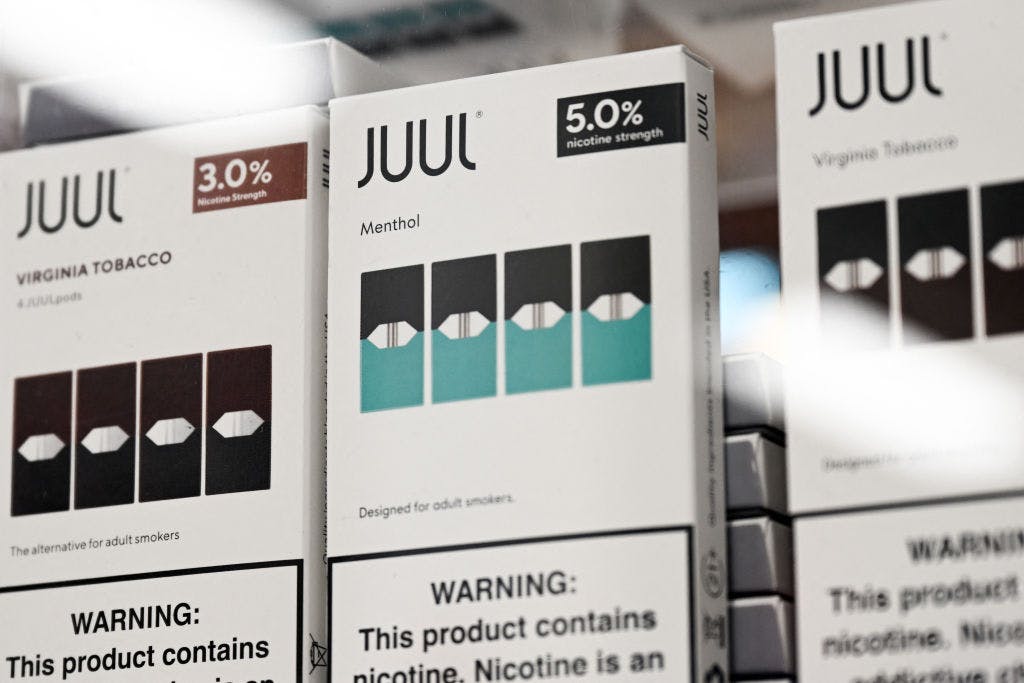
Juul Labs Inc. vaping e-cigarettes (Patrick T. Fallon/Getty Images)
Weird Money

Four-figure Juul settlements are the hot new social-media trend

As part of a $200 million+ settlement, Juul has been Venmoing former customers thousands of dollars.

Jack Raines

While researching (read: scrolling through X mindlessly) yesterday, I came across some interesting screenshots showing that folks were receiving four-figure Venmo payments from “Juul Labs, Inc. Settlement Administrator.”

A class-action lawsuit was filed against Juul and tobacco company Altria, which bought 35% of Juul Labs for $12.8 billion in 2018, with the plaintiffs alleging that Altria and Juul had led consumers to overpay for Juul products by misleading them about the products’ addictiveness and safety, and that Juul products were unlawfully marketed to minors.

In 2022, Juul agreed to a $245 million settlement, and earlier in 2024, Altria agreed to a $45 million settlement. After fees and taxes, this worked out to $201.9 million being paid out to verified claimants, and on October 18, 2024, those payments started to be distributed, hence the screenshots I saw floating around social media.

According to the BBC, 14 million people tried to claim a share of the settlement, but ultimately, about 842,000 claims were officially validated, averaging out to a ~$240 payout per person. However, as you can see from the screenshots, many of these settlements are more than a magnitude greater than $240, so I decided to look into how exactly this settlement worked. The details are just fantastic.

First, claimants had to submit proofs of purchase, which included date of birth, month and year of a claimant’s first Juul purchase, their frequency of purchase, proof of identification, payment information, and, for claims over $300, proof of purchase via receipts. Claimants who were approved were then allocated “points” based on their age and the years in which they made their purchases, and the total settlement would be distributed pro rata based on claimants’ points.

Claimants who purchased between 2019 and 2022 would get one point, claimants who purchased between 2015 and 2018 would get two points, and “Youth Purchases,” which meant any made by an individual whose first purchase occurred before their 18th birthday, were worth four points.

So if you were a 17-year-old in 2016 who bought, and consequently got hooked on, Juuls, and you continued to buy said Juuls through college, all of your purchases got a 4x point multiplier. Not bad! Unfortunately, there were a few factors that limited the total payouts one could receive:

First, “no Retail Expenditure used to assign Points may exceed $1600 per year,” and second, there was a payment cap for claimants equal to 150% of eligible retail expenditures, or 300% of expenditures in the case of Youth Purchases. However, the largest hypothetical payout from this settlement is still pretty good.

Using the settlement’s class-payment cap, if a 17-year-old in 2015 bought at least $1,600 of Juuls and Juul accessories, and proceeded to do so every year through age 24 in 2022, they could, hypothetically, receive $38,400 (300% times $1,600 per year for eight years). It’s unlikely that anyone received that amount, given that expenditures used to assign points couldn’t exceed $1,600 per year, and the distributions were paid out pro rata based on points, but it is possible.

The logic behind this settlement fascinates me. As someone who was in college between the years of 2015 and 2019, I had plenty of friends (not me) whod bought Juuls, and not a single one of them was shocked to find out that Juul may have been less healthy than advertised. They were smoking flavored nicotine from a battery-powered Wii remote. Also, the rationale that someone who bought a Juul in 2015 at age 17 would still be eligible for a 4x higher distribution on their purchases from 2022 at age 24 is fantastic, too.

Still, I wish the class-payment cap didn’t exist, so we could see how large some of these distributions would have been. In our social-media age where dopamine is more valuable than gold, folks all over TikTok and X are chasing engagement by showing off their $3,000 Juul Venmo payments. You have to think that, somewhere, an upper-class 17-year-old in 2015 with access to an Amex black card was dropping $20,000+ on Juuls every year, and I would love to see the viral TikTok of a Juul settlement whale sharing their $200,000+ Juul payout for social-media clout.

For now, it looks like we’ll have to settle for (no pun intended) the $3,000 TikTok reaction videos.

More Business

See all Business
business

The Trump administration is reportedly planning a 50% made-in-America requirement for USMCA tariff relief

Qualifying for USMCA-related lower tariffs may soon require more US-made vehicle components, according to reporting by The Wall Street Journal.

The Trump administration is reportedly planning to introduce a 50% US content requirement for vehicles covered by the trade pact to receive lower tariffs. The content would be measured by cost, according to the WSJ.

There currently isn’t any US-specific requirement for those lower tariff rates, but in order to receive preferential tariffs, vehicles are must contain at least 75% regional content (components made in North America). Per Reuters reporting, the Trump admin is seeking to raise the regional requirement to 82%.

These reported plans are subject to change as the US negotiates USMCA terms with Mexico over the next few months.

Overall, Tesla will likely have the easiest time qualifying for any stricter requirements. The automaker’s vehicles contained the highest amount of US/Canadian content in 2025, according to American University research. Ford, GM, and Stellantis all scored lower.

Notably: the underlying government data that many domestic content measurements rely on intentionally combines US and Canadian components, so it’s difficult to know exactly how much of any given vehicle is specifically US-made.

There currently isn’t any US-specific requirement for those lower tariff rates, but in order to receive preferential tariffs, vehicles are must contain at least 75% regional content (components made in North America). Per Reuters reporting, the Trump admin is seeking to raise the regional requirement to 82%.

These reported plans are subject to change as the US negotiates USMCA terms with Mexico over the next few months.

Overall, Tesla will likely have the easiest time qualifying for any stricter requirements. The automaker’s vehicles contained the highest amount of US/Canadian content in 2025, according to American University research. Ford, GM, and Stellantis all scored lower.

Notably: the underlying government data that many domestic content measurements rely on intentionally combines US and Canadian components, so it’s difficult to know exactly how much of any given vehicle is specifically US-made.

business
Tom Jones

The $640,000 Luce makes the average Ferrari look like a bargain

Put aside the shape; put aside the smoothing out of Ferrari’s iconic sharp edges; put aside, even, the calls from former Chairman and President Luca Cordero di Montezemolo to “take the Prancing Horse off.” On the grounds of price alone, Luce detractors might have a point.

By now, many of us will have read the criticisms of Ferrari’s first fully electric vehicle, as the Luce — which was unveiled to the world earlier this week and promptly saw the company’s shares crash out in New York and Milan — gets subtly shaded by competitors online and not-so-subtly shaded by basically everyone else.

What makes all of this worse for Ferrari is that, even by the luxury car maker’s notoriously high standards, they’ve slapped a pretty hefty price tag on the Luce, and the company’s CEO, Benedetto Vigna, has already been forced to defend the €550,000 ($640,000) price point, saying yesterday that it’s “fair to pay for innovation,” per Reuters.

While Ferrari’s cars have been getting more expensive of late, as recently as 2022, Ferrari’s average revenue per car sold was around $340,000. At nearly twice that price, this new electric model is obviously proving a little much (visually, conceptually, and financially) for many loyal and long-standing fans of the Prancing Horse to stomach.

Ferrari Luce cost chart
Sherwood News

By now, many of us will have read the criticisms of Ferrari’s first fully electric vehicle, as the Luce — which was unveiled to the world earlier this week and promptly saw the company’s shares crash out in New York and Milan — gets subtly shaded by competitors online and not-so-subtly shaded by basically everyone else.

What makes all of this worse for Ferrari is that, even by the luxury car maker’s notoriously high standards, they’ve slapped a pretty hefty price tag on the Luce, and the company’s CEO, Benedetto Vigna, has already been forced to defend the €550,000 ($640,000) price point, saying yesterday that it’s “fair to pay for innovation,” per Reuters.

While Ferrari’s cars have been getting more expensive of late, as recently as 2022, Ferrari’s average revenue per car sold was around $340,000. At nearly twice that price, this new electric model is obviously proving a little much (visually, conceptually, and financially) for many loyal and long-standing fans of the Prancing Horse to stomach.

Ferrari Luce cost chart
Sherwood News

Latest Stories

Sherwood Media, LLC and Chartr Limited produce fresh and unique perspectives on topical financial news and are fully owned subsidiaries of Robinhood Markets, Inc., and any views expressed here do not necessarily reflect the views of any other Robinhood affiliate, including Robinhood Markets, Inc., Robinhood Financial LLC, Robinhood Securities, LLC, Robinhood Crypto, LLC, Robinhood Money, LLC, Robinhood U.K. Ltd, Robinhood Derivatives, LLC, Robinhood Gold, LLC, Robinhood Asset Management, LLC, Robinhood Credit, Inc., Robinhood Ventures DE, LLC and, where applicable, its managed investment vehicles.
