Business
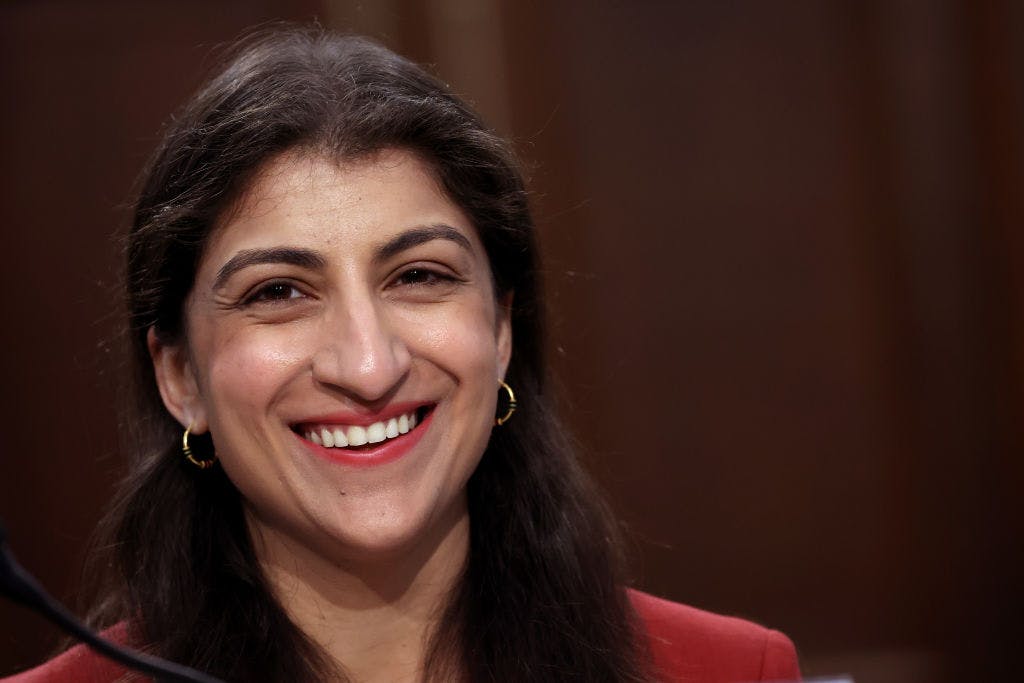
FTC Chair Lina Khan Testifies In House Appropriations Committee Hearing
Lina Khan, Chair of the Federal Trade Commission (Kevin Dietsch/Getty Images)
Weird Money

Faking your influencer status just got way more expensive

The FTC's new rule outlines heavy penalties for folks who buy fake engagement on their social media accounts.

Jack Raines

Most headlines about the Federal Trade Commission (FTC) over the past few years have involved the agency suing to block big tech acquisitions (see here, here, and here). However, preventing anticompetitive business practices is only part of their job description.

Per the FTC’s website, the mission of the FTC is “to prevent business practices that are anticompetitive or deceptive or unfair to consumers; to enhance informed consumer choice and public understanding of the competitive process; and to accomplish this without unduly burdening legitimate business activity.”

Earlier today, my colleague Jon Keegan highlighted excellent news from the CFTC on the “deceptive to consumers” front: The FTC today announced a final rule that will combat fake reviews and testimonials by prohibiting their sale or purchase and allowing the agency to seek civil penalties against knowing violators, with civil penalties of up to $51,744 per violation.

The new rule prohibits six actions, the first five of which are related to manipulation of reviews:

  • Fake or false consumer reviews, consumer testimonials, or celebrity testimonials

  • Buying positive or negative reviews

  • Insider reviews and consumer testimonials

  • Company-controlled review websites

  • Review suppression

However, it’s the sixth rule that I find the most interesting:

  • Misuse of fake social media indicators

The FTC further defined “fake social media indicators” as such:

It is an unfair or deceptive act or practice and a violation of this part for anyone to:

(a) sell or distribute fake indicators of social media influence that they knew or should have known to be fake and that can be used by individuals or businesses to materially misrepresent their influence or importance for a commercial purpose; or

(b) purchase or procure fake indicators of social media influence that they knew or should have known to be fake and that materially misrepresent their influence or importance for a commercial purpose.

One of the more annoying parts of social media is the existence of “influencers” who purchase fake followers to mislead their actual audiences and/or deceive potential business partners for financial gain. For example, showing that you have 1.2 million “followers” on Instagram, while maybe 100,000 of those are real people, for the sake of landing sponsorship deals or speaking engagements, or using Twitter bots to amplify your content to mislead other users on your reach, validity or influence.

Punishment for these bad actors has been long-overdue, and it’s interesting that the FTC emphasized that it can seek civil penalties against violators, adding teeth to the rule:

As an additional benefit, the rule will enable the Commission to seek civil penalties against violators. Without an efficient way to seek civil penalties, bad actors have little fear of being penalized for using fraud and deception in connection with reviews and endorsements. Increased deterrence will have consumer welfare benefits and will benefit honest competition. Moreover, the final rule is likely to impose relatively small compliance costs on honest businesses.

Basically, if you get caught cheating the system, the consequences could be expensive. Huge W for Lina Khan — the internet thanks you.

More Business

See all Business
business

The Trump administration is reportedly planning a 50% made-in-America requirement for USMCA tariff relief

Qualifying for USMCA-related lower tariffs may soon require more US-made vehicle components, according to reporting by The Wall Street Journal.

The Trump administration is reportedly planning to introduce a 50% US content requirement for vehicles covered by the trade pact to receive lower tariffs. The content would be measured by cost, according to the WSJ.

There currently isn’t any US-specific requirement for those lower tariff rates, but in order to receive preferential tariffs, vehicles are must contain at least 75% regional content (components made in North America). Per Reuters reporting, the Trump admin is seeking to raise the regional requirement to 82%.

These reported plans are subject to change as the US negotiates USMCA terms with Mexico over the next few months.

Overall, Tesla will likely have the easiest time qualifying for any stricter requirements. The automaker’s vehicles contained the highest amount of US/Canadian content in 2025, according to American University research. Ford, GM, and Stellantis all scored lower.

Notably: the underlying government data that many domestic content measurements rely on intentionally combines US and Canadian components, so it’s difficult to know exactly how much of any given vehicle is specifically US-made.

There currently isn’t any US-specific requirement for those lower tariff rates, but in order to receive preferential tariffs, vehicles are must contain at least 75% regional content (components made in North America). Per Reuters reporting, the Trump admin is seeking to raise the regional requirement to 82%.

These reported plans are subject to change as the US negotiates USMCA terms with Mexico over the next few months.

Overall, Tesla will likely have the easiest time qualifying for any stricter requirements. The automaker’s vehicles contained the highest amount of US/Canadian content in 2025, according to American University research. Ford, GM, and Stellantis all scored lower.

Notably: the underlying government data that many domestic content measurements rely on intentionally combines US and Canadian components, so it’s difficult to know exactly how much of any given vehicle is specifically US-made.

business
Tom Jones

The $640,000 Luce makes the average Ferrari look like a bargain

Put aside the shape; put aside the smoothing out of Ferrari’s iconic sharp edges; put aside, even, the calls from former Chairman and President Luca Cordero di Montezemolo to “take the Prancing Horse off.” On the grounds of price alone, Luce detractors might have a point.

By now, many of us will have read the criticisms of Ferrari’s first fully electric vehicle, as the Luce — which was unveiled to the world earlier this week and promptly saw the company’s shares crash out in New York and Milan — gets subtly shaded by competitors online and not-so-subtly shaded by basically everyone else.

What makes all of this worse for Ferrari is that, even by the luxury car maker’s notoriously high standards, they’ve slapped a pretty hefty price tag on the Luce, and the company’s CEO, Benedetto Vigna, has already been forced to defend the €550,000 ($640,000) price point, saying yesterday that it’s “fair to pay for innovation,” per Reuters.

While Ferrari’s cars have been getting more expensive of late, as recently as 2022, Ferrari’s average revenue per car sold was around $340,000. At nearly twice that price, this new electric model is obviously proving a little much (visually, conceptually, and financially) for many loyal and long-standing fans of the Prancing Horse to stomach.

Ferrari Luce cost chart
Sherwood News

By now, many of us will have read the criticisms of Ferrari’s first fully electric vehicle, as the Luce — which was unveiled to the world earlier this week and promptly saw the company’s shares crash out in New York and Milan — gets subtly shaded by competitors online and not-so-subtly shaded by basically everyone else.

What makes all of this worse for Ferrari is that, even by the luxury car maker’s notoriously high standards, they’ve slapped a pretty hefty price tag on the Luce, and the company’s CEO, Benedetto Vigna, has already been forced to defend the €550,000 ($640,000) price point, saying yesterday that it’s “fair to pay for innovation,” per Reuters.

While Ferrari’s cars have been getting more expensive of late, as recently as 2022, Ferrari’s average revenue per car sold was around $340,000. At nearly twice that price, this new electric model is obviously proving a little much (visually, conceptually, and financially) for many loyal and long-standing fans of the Prancing Horse to stomach.

Ferrari Luce cost chart
Sherwood News

Latest Stories

Sherwood Media, LLC and Chartr Limited produce fresh and unique perspectives on topical financial news and are fully owned subsidiaries of Robinhood Markets, Inc., and any views expressed here do not necessarily reflect the views of any other Robinhood affiliate, including Robinhood Markets, Inc., Robinhood Financial LLC, Robinhood Securities, LLC, Robinhood Crypto, LLC, Robinhood Money, LLC, Robinhood U.K. Ltd, Robinhood Derivatives, LLC, Robinhood Gold, LLC, Robinhood Asset Management, LLC, Robinhood Credit, Inc., Robinhood Ventures DE, LLC and, where applicable, its managed investment vehicles.