


Figma just filed for IPO, revealing its financials for the first time publicly
Ignoring some one-offs, Figma is a profit machine growing at nearly 50% year on year — no wonder Adobe wanted to drop $20 billion to snap up its disruptive rival.
Silicon Valley likes the enigmatic founder who does things differently, so when Dylan Field wrote “chocolate is repulsive” in his essay for his application for the Thiel Fellowship, he was already fitting into the archetypal tech founder mold.
In the years since, Field and cofounder Evan Wallace went on to start Figma, a design software company that eschewed the collective wisdom that you couldn’t build a powerful, collaborative design tool on the open web. Now, with the stock market climbing a wall of worry to reach new heights, Figma has finally filed for an IPO — revealing its financials publicly for the first time.
So, is this the classic cash-incinerating disruptive startup with a bunch of super-founder shares, tapping the public markets for an enormous payday for early employees and investors? Sort of.
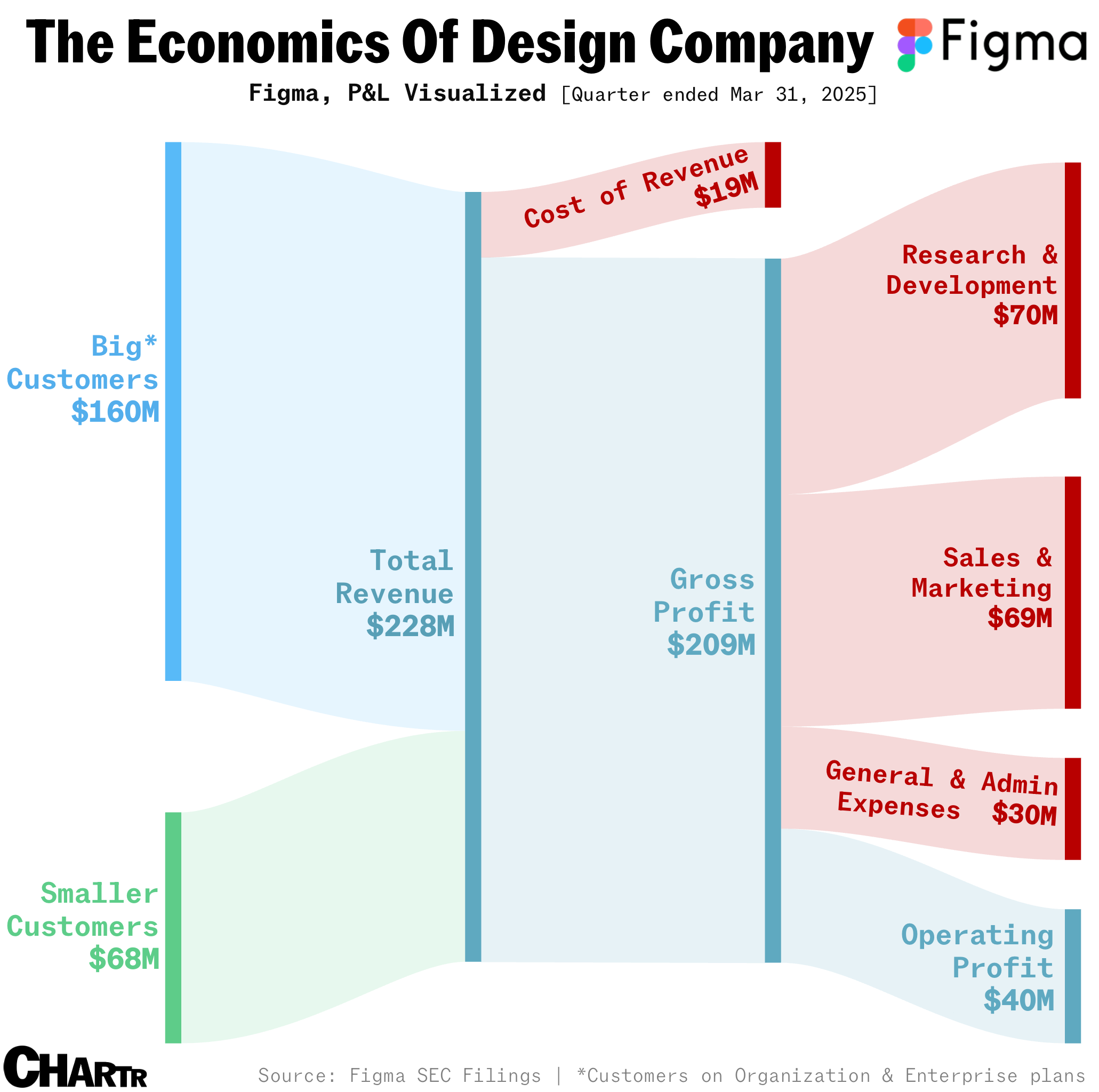
CEO Dylan Field does indeed have a vicelike grip on the company, controlling ~75% of the voting rights pre-IPO, and many employees will no doubt become liquid millionaires once the stock starts trading, but the company’s financials are remarkably mature. In its latest quarter, the company racked up $228 million in revenue (up 46% year on year), with typically tasty software gross margins and an operating profit margin of more than 17%.
The IPO filing also reveals that it holds nearly $70 million in bitcoin ETFs and $30 million in stablecoins for future bitcoin purchases — a corporate strategy that traders loved initially, but might be starting to sour on.
What’s particularly interesting is just how well Figma has infiltrated the design teams of America’s largest companies. According to the S-1 filing, a whopping “95% of the Fortune 500 and 78% of the Forbes Global 2000 used Figma in March 2025” — and those companies are spending big for the privilege to Draw, Design, and FigJam. Over the past two years, Figma has more than doubled the customers that pay it more than $100,000 annually.
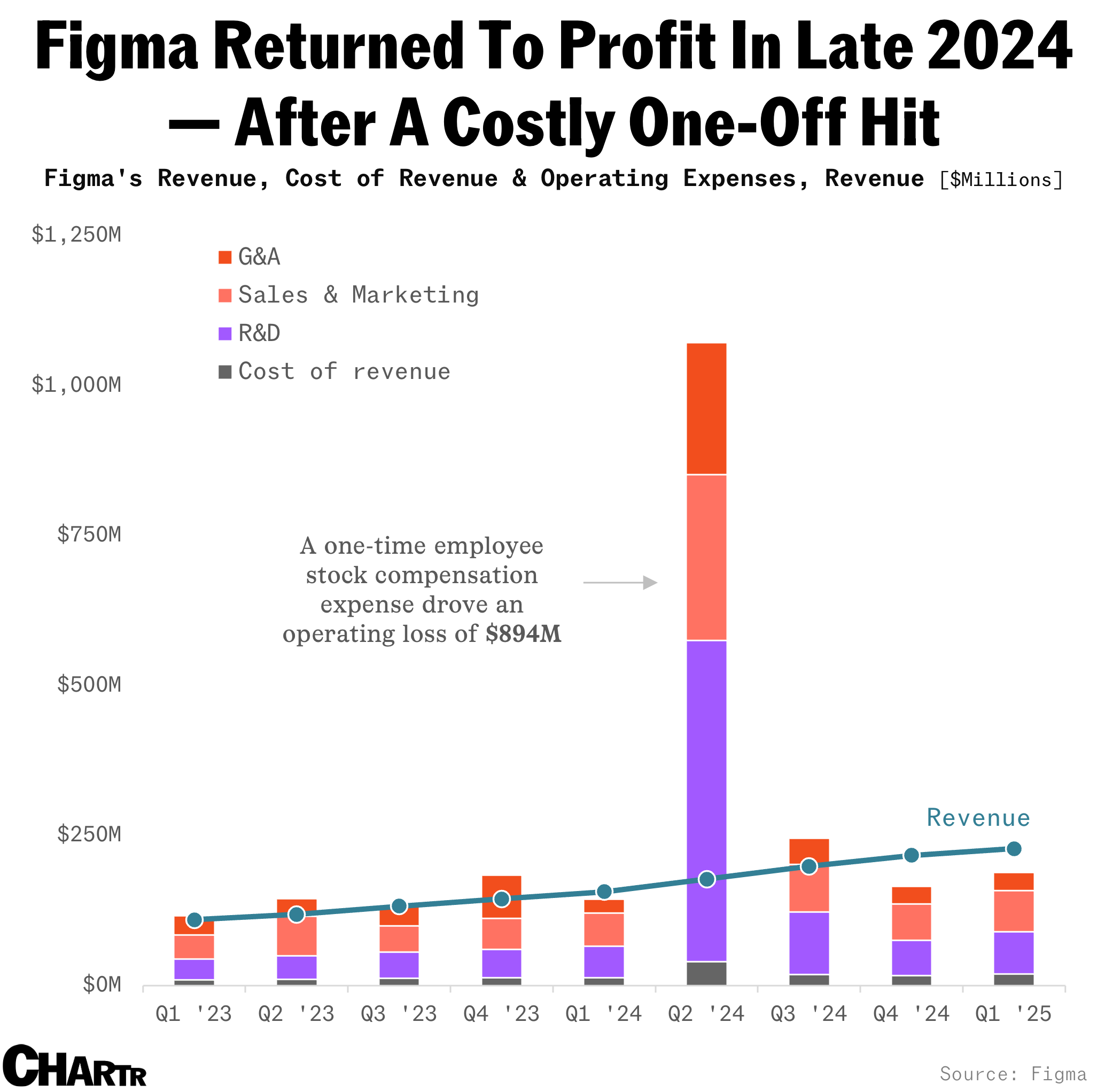
Indeed, with the exception of a one-off stock-based compensation expense in Q2 2024, Figma has slowly but surely trudged toward consistent profitability. Its balance sheet was also bolstered by a $1 billion termination fee from its breakup with Adobe, which had tried to acquire Figma for $20 billion in 2022 — a deal that fell apart because of regulatory hurdles.
Now, Figma will be the IPO guinea pig for a swath of still private startups — and none will be watching the Figma offering more closely than Canva, another hot design company that’s rumored to be looking at a public offering of its own, having recently been valued at $49 billion.



