Business
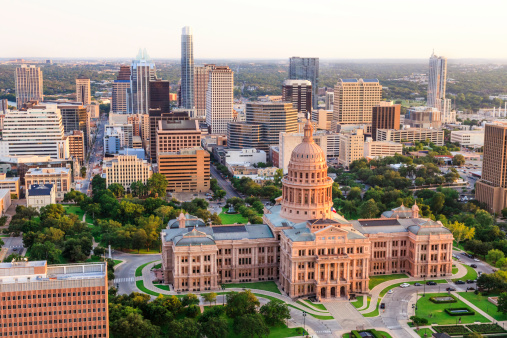
Austin Texas Capitol building sunset aerial with downtown skyline background
Austin's Capitol (Getty Images)

Austin was supposed to be America's next big tech hub. Here's how it all went wrong.

Austin has lost its hot growth streak as the market cools.

Jack Raines

In October 2021, Elon Musk made headlines when he announced that he would be moving Tesla’s headquarters to Austin, Texas, following similar moves from tech giants Hewlett Packard Enterprise and Oracle the year before. These company relocations were part of a broader demographic shift: Austin was the fastest-growing metro area with at least a million people in 2021, with 107,000 people moving from California to Texas that year alone.

But three years later, the momentum is fizzling. Last year Austin lost its 12-year streak as the fastest-growing large metro area in the US, and Texas’ capital currently has the third-largest office-vacancy rate among major US metro areas, behind Dallas and Houston.

In April, Oracle chairman Larry Ellison said the software giant would be moving its world headquarters to Nashville, Tennessee, in a blow to Austin; and that same day, Tesla announced it was eliminating 2,688 jobs in Austin as part of a restructuring. In the venture-capital world, startup accelerator Techstars announced in December it was closing its Austin operations too. Meanwhile, Bloomberg noted the number of companies relocating their headquarters or major operations to Austin kept declining, from 64 in 2022 to 37 in 2023, to just 11 so far in 2024.

What went wrong in Austin?

For starters, the pandemic proved to be a big but short-lived tailwind for Austin’s growth.

America is a coastal country with four cities: New York and DC for finance and politics, and San Francisco and LA for tech and media. Every large financial firm in the world has its headquarters or a major office in New York. Meantime, the venture-capital industry in San Francisco dwarfs the rest of the country, with Bay Area startups raising $170 billion between 2019 and 2021 (compared to $11.8 billion in Austin).

Residents of San Francisco and Manhattan pay a premium for access to social and professional opportunities these cities offer. When companies around the country told their employees to work from home indefinitely, in 2020, and restaurants and bars enforced social-distancing policies, those opportunities disappeared, and paying coastal-city rent to answer Zoom calls from your apartment didn’t make sense. Why not move somewhere cheaper?

Austin became one of the more popular destinations.

It was cheaper and warmer than the coastal cities, dozens of companies were establishing larger offices there, and pandemic restrictions were more lax. Most important, you could keep your salary while cutting your living expenses in half. The appeal of Austin was obvious, and you would've been crazy not to take advantage of the geographic arbitrage.

However, that arbitrage didn't last long. While New York's and San Francisco’s populations fell by 2.5% and 3.7% from 2020 to 2023, Austin’s population grew by 7.5%, and the influx of new residents pressured the housing market.

As thousands of people moved to the city, housing prices jumped more than 60% from 2020 to spring 2022, despite per-capita income increasing by just 23% in that same time. By 2022, Austin was no longer the bargain it used to be, and, according to Redfin, more homebuyers are now looking to leave Austin than move in, for the first time on record.

Beyond home prices, Austin's infrastructure has struggled to keep up with its population growth. In February 2021, a winter storm caused Austin's worst energy infrastructure failure in history, with millions of people across Texas losing power, causing hundreds of deaths, and last summer, Austin almost had power blackouts during a series of brutal heat waves.

While many workers moved to Austin to work remotely during the pandemic, the city failed to establish a critical mass of talent large enough disrupt one of the larger coastal cities, and its lack of accessibility (Austin's primary airport is only the 27th-largest hub in the country) proved to be an issue as companies called their employees back to the office and Zoom calls were replaced by in-person meetings.

Austin’s pandemic growth ultimately played a large role in its undoing, as soaring real-estate prices forced many out of the market, and unlike coastal cities, the Texas capital had neither the jobs nor the weather to persuade them to pay up and stay.

More Business

See all Business
business

The Trump administration is reportedly planning a 50% made-in-America requirement for USMCA tariff relief

Qualifying for USMCA-related lower tariffs may soon require more US-made vehicle components, according to reporting by The Wall Street Journal.

The Trump administration is reportedly planning to introduce a 50% US content requirement for vehicles covered by the trade pact to receive lower tariffs. The content would be measured by cost, according to the WSJ.

There currently isn’t any US-specific requirement for those lower tariff rates, but in order to receive preferential tariffs, vehicles are must contain at least 75% regional content (components made in North America). Per Reuters reporting, the Trump admin is seeking to raise the regional requirement to 82%.

These reported plans are subject to change as the US negotiates USMCA terms with Mexico over the next few months.

Overall, Tesla will likely have the easiest time qualifying for any stricter requirements. The automaker’s vehicles contained the highest amount of US/Canadian content in 2025, according to American University research. Ford, GM, and Stellantis all scored lower.

Notably: the underlying government data that many domestic content measurements rely on intentionally combines US and Canadian components, so it’s difficult to know exactly how much of any given vehicle is specifically US-made.

There currently isn’t any US-specific requirement for those lower tariff rates, but in order to receive preferential tariffs, vehicles are must contain at least 75% regional content (components made in North America). Per Reuters reporting, the Trump admin is seeking to raise the regional requirement to 82%.

These reported plans are subject to change as the US negotiates USMCA terms with Mexico over the next few months.

Overall, Tesla will likely have the easiest time qualifying for any stricter requirements. The automaker’s vehicles contained the highest amount of US/Canadian content in 2025, according to American University research. Ford, GM, and Stellantis all scored lower.

Notably: the underlying government data that many domestic content measurements rely on intentionally combines US and Canadian components, so it’s difficult to know exactly how much of any given vehicle is specifically US-made.

business
Tom Jones

The $640,000 Luce makes the average Ferrari look like a bargain

Put aside the shape; put aside the smoothing out of Ferrari’s iconic sharp edges; put aside, even, the calls from former Chairman and President Luca Cordero di Montezemolo to “take the Prancing Horse off.” On the grounds of price alone, Luce detractors might have a point.

By now, many of us will have read the criticisms of Ferrari’s first fully electric vehicle, as the Luce — which was unveiled to the world earlier this week and promptly saw the company’s shares crash out in New York and Milan — gets subtly shaded by competitors online and not-so-subtly shaded by basically everyone else.

What makes all of this worse for Ferrari is that, even by the luxury car maker’s notoriously high standards, they’ve slapped a pretty hefty price tag on the Luce, and the company’s CEO, Benedetto Vigna, has already been forced to defend the €550,000 ($640,000) price point, saying yesterday that it’s “fair to pay for innovation,” per Reuters.

While Ferrari’s cars have been getting more expensive of late, as recently as 2022, Ferrari’s average revenue per car sold was around $340,000. At nearly twice that price, this new electric model is obviously proving a little much (visually, conceptually, and financially) for many loyal and long-standing fans of the Prancing Horse to stomach.

Ferrari Luce cost chart
Sherwood News

By now, many of us will have read the criticisms of Ferrari’s first fully electric vehicle, as the Luce — which was unveiled to the world earlier this week and promptly saw the company’s shares crash out in New York and Milan — gets subtly shaded by competitors online and not-so-subtly shaded by basically everyone else.

What makes all of this worse for Ferrari is that, even by the luxury car maker’s notoriously high standards, they’ve slapped a pretty hefty price tag on the Luce, and the company’s CEO, Benedetto Vigna, has already been forced to defend the €550,000 ($640,000) price point, saying yesterday that it’s “fair to pay for innovation,” per Reuters.

While Ferrari’s cars have been getting more expensive of late, as recently as 2022, Ferrari’s average revenue per car sold was around $340,000. At nearly twice that price, this new electric model is obviously proving a little much (visually, conceptually, and financially) for many loyal and long-standing fans of the Prancing Horse to stomach.

Ferrari Luce cost chart
Sherwood News

Latest Stories

Sherwood Media, LLC and Chartr Limited produce fresh and unique perspectives on topical financial news and are fully owned subsidiaries of Robinhood Markets, Inc., and any views expressed here do not necessarily reflect the views of any other Robinhood affiliate, including Robinhood Markets, Inc., Robinhood Financial LLC, Robinhood Securities, LLC, Robinhood Crypto, LLC, Robinhood Money, LLC, Robinhood U.K. Ltd, Robinhood Derivatives, LLC, Robinhood Gold, LLC, Robinhood Asset Management, LLC, Robinhood Credit, Inc., Robinhood Ventures DE, LLC and, where applicable, its managed investment vehicles.