Business
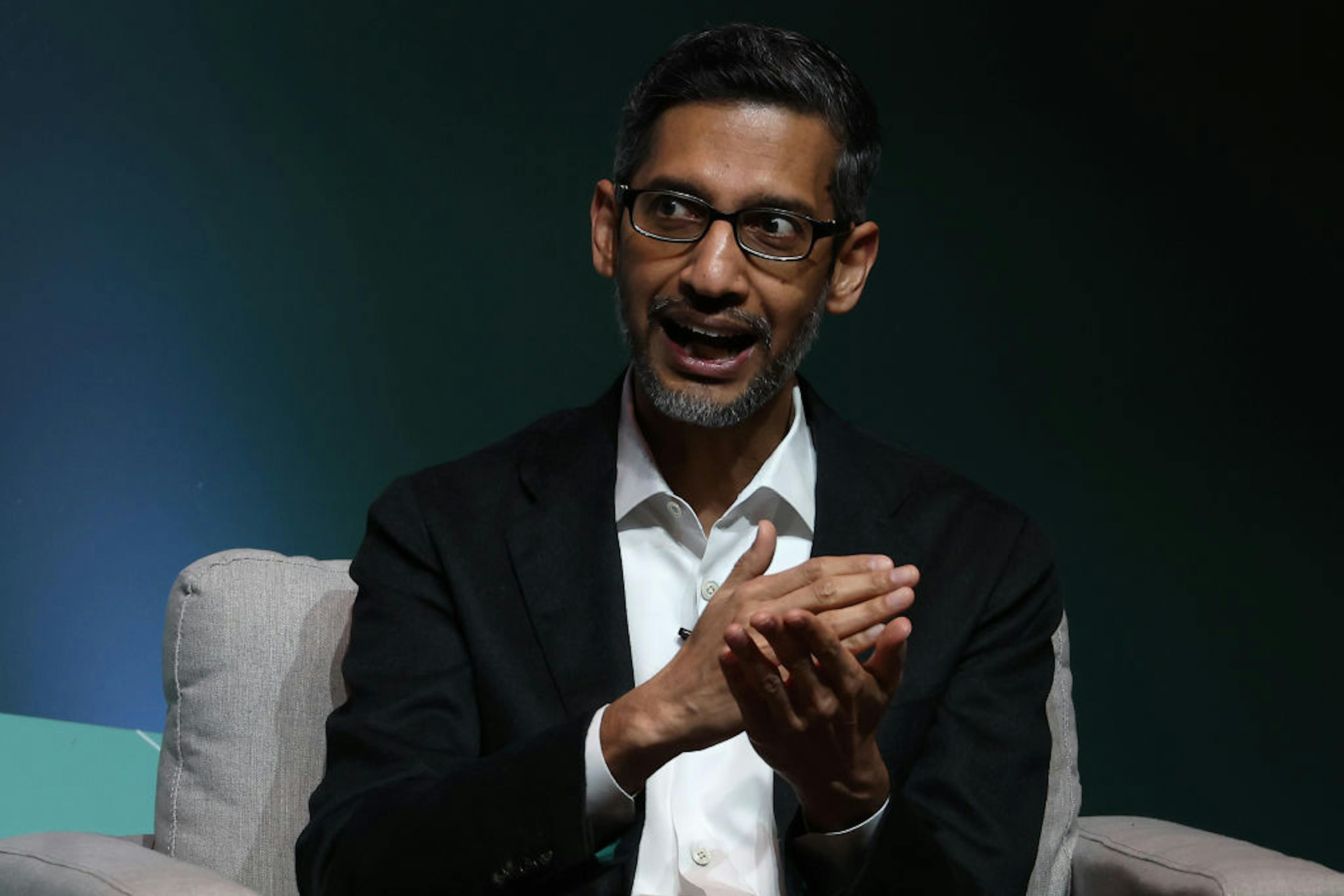
Sundar Pichai
Google CEO Sundar Pichai (Justin Sullivan/Getty Images)

Artificial intelligence is fueling a nuclear renaissance

Google is investing in a nuclear-energy startup to help fuel its AI ambitions.

One of my favorite unexpected developing stories in the artificial-intelligence saga has been the role that AI usage by big tech companies has played in shaping the development of new energy projects in the US. In July, I discussed how in 2021, Google set a goal to reach net-zero emissions by 2030 and reduce its total emissions by 50% compared to a base level of 2019, but in 2023, its emissions had actually increased over the last four years. The reason? “Data center energy consumption and supply chain emissions,” and Google stated that “reducing emissions may be challenging due to increasing energy demands from the greater intensity of AI compute.”

On Monday, The Wall Street Journal reported that Google is taking an interesting approach to addressing this emissions problem: by investing in the construction of new nuclear reactors.

Google will back the construction of seven small nuclear-power reactors in the U.S., a first-of-its-kind deal that aims to help feed the tech company’s growing appetite for electricity to power AI and jump-start a U.S. nuclear revival.

Under the deal’s terms, Google committed to buying power generated by seven reactors to be built by nuclear-energy startup Kairos Power. The agreement targets adding 500 megawatts of nuclear power starting at the end of the decade, the companies said Monday. …

The 500 megawatts of generation that would be built by Kairos for Google is about enough to power a midsize city—or one AI data-center campus.

Google isn’t the first, or even the second, big tech company to agree to a deal like this. Last month, Microsoft signed a deal to restart a nuclear power plant on Three Mile Island, and six months before that, Amazon signed a $650 million deal with Talen Energy to buy nuclear power for an AWS data center.

The logic behind these deals is simple: nuclear energy is roughly four times more efficient than solar, it’s safer than all other forms of energy except solar (and that includes deaths from Chernobyl and Fukushima), and it’s the cleanest form of energy we have, generating just 11% of the emissions of solar. 
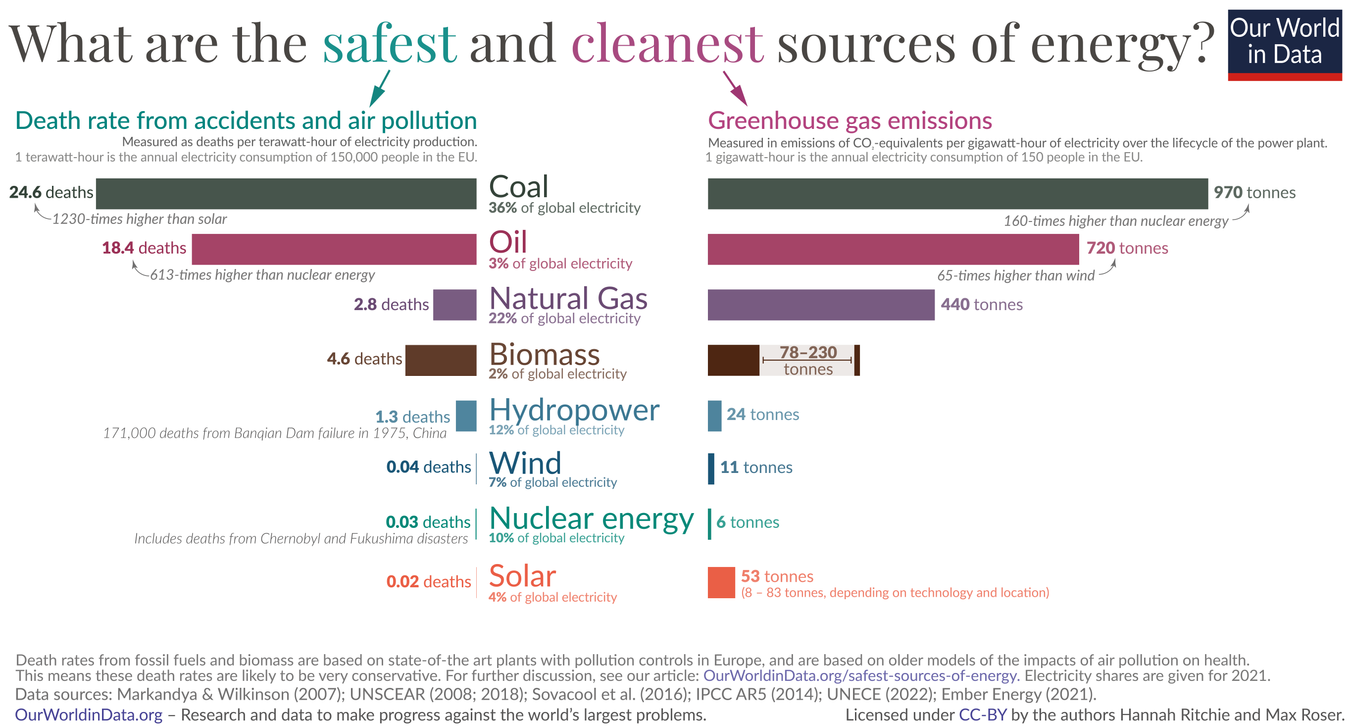
Our World in Data Cleanest Energy Sources
Source: Our World in Data

But the up-front costs of building new reactors is expensive, and nuclear still has PR struggles due to, you know, meltdowns at Fukushima, Chernobyl, and Three Mile Island. However, big tech companies have a lot of money to spend (Alphabet, Google’s parent company, had $108 billion of cash and cash equivalents on its balance sheet as of March), and nuclear presents the most readily available path to managing their emissions as they continue to invest in AI infrastructure.

It will be ironic if, 10 years from now, the lasting impact of generative AI wasn’t the content created by LLMs, but the proliferation of nuclear power across the US.

More Business

See all Business
business

The Trump administration is reportedly planning a 50% made-in-America requirement for USMCA tariff relief

Qualifying for USMCA-related lower tariffs may soon require more US-made vehicle components, according to reporting by The Wall Street Journal.

The Trump administration is reportedly planning to introduce a 50% US content requirement for vehicles covered by the trade pact to receive lower tariffs. The content would be measured by cost, according to the WSJ.

There currently isn’t any US-specific requirement for those lower tariff rates, but in order to receive preferential tariffs, vehicles are must contain at least 75% regional content (components made in North America). Per Reuters reporting, the Trump admin is seeking to raise the regional requirement to 82%.

These reported plans are subject to change as the US negotiates USMCA terms with Mexico over the next few months.

Overall, Tesla will likely have the easiest time qualifying for any stricter requirements. The automaker’s vehicles contained the highest amount of US/Canadian content in 2025, according to American University research. Ford, GM, and Stellantis all scored lower.

Notably: the underlying government data that many domestic content measurements rely on intentionally combines US and Canadian components, so it’s difficult to know exactly how much of any given vehicle is specifically US-made.

There currently isn’t any US-specific requirement for those lower tariff rates, but in order to receive preferential tariffs, vehicles are must contain at least 75% regional content (components made in North America). Per Reuters reporting, the Trump admin is seeking to raise the regional requirement to 82%.

These reported plans are subject to change as the US negotiates USMCA terms with Mexico over the next few months.

Overall, Tesla will likely have the easiest time qualifying for any stricter requirements. The automaker’s vehicles contained the highest amount of US/Canadian content in 2025, according to American University research. Ford, GM, and Stellantis all scored lower.

Notably: the underlying government data that many domestic content measurements rely on intentionally combines US and Canadian components, so it’s difficult to know exactly how much of any given vehicle is specifically US-made.

business
Tom Jones

The $640,000 Luce makes the average Ferrari look like a bargain

Put aside the shape; put aside the smoothing out of Ferrari’s iconic sharp edges; put aside, even, the calls from former Chairman and President Luca Cordero di Montezemolo to “take the Prancing Horse off.” On the grounds of price alone, Luce detractors might have a point.

By now, many of us will have read the criticisms of Ferrari’s first fully electric vehicle, as the Luce — which was unveiled to the world earlier this week and promptly saw the company’s shares crash out in New York and Milan — gets subtly shaded by competitors online and not-so-subtly shaded by basically everyone else.

What makes all of this worse for Ferrari is that, even by the luxury car maker’s notoriously high standards, they’ve slapped a pretty hefty price tag on the Luce, and the company’s CEO, Benedetto Vigna, has already been forced to defend the €550,000 ($640,000) price point, saying yesterday that it’s “fair to pay for innovation,” per Reuters.

While Ferrari’s cars have been getting more expensive of late, as recently as 2022, Ferrari’s average revenue per car sold was around $340,000. At nearly twice that price, this new electric model is obviously proving a little much (visually, conceptually, and financially) for many loyal and long-standing fans of the Prancing Horse to stomach.

Ferrari Luce cost chart
Sherwood News

By now, many of us will have read the criticisms of Ferrari’s first fully electric vehicle, as the Luce — which was unveiled to the world earlier this week and promptly saw the company’s shares crash out in New York and Milan — gets subtly shaded by competitors online and not-so-subtly shaded by basically everyone else.

What makes all of this worse for Ferrari is that, even by the luxury car maker’s notoriously high standards, they’ve slapped a pretty hefty price tag on the Luce, and the company’s CEO, Benedetto Vigna, has already been forced to defend the €550,000 ($640,000) price point, saying yesterday that it’s “fair to pay for innovation,” per Reuters.

While Ferrari’s cars have been getting more expensive of late, as recently as 2022, Ferrari’s average revenue per car sold was around $340,000. At nearly twice that price, this new electric model is obviously proving a little much (visually, conceptually, and financially) for many loyal and long-standing fans of the Prancing Horse to stomach.

Ferrari Luce cost chart
Sherwood News

Latest Stories

Sherwood Media, LLC and Chartr Limited produce fresh and unique perspectives on topical financial news and are fully owned subsidiaries of Robinhood Markets, Inc., and any views expressed here do not necessarily reflect the views of any other Robinhood affiliate, including Robinhood Markets, Inc., Robinhood Financial LLC, Robinhood Securities, LLC, Robinhood Crypto, LLC, Robinhood Money, LLC, Robinhood U.K. Ltd, Robinhood Derivatives, LLC, Robinhood Gold, LLC, Robinhood Asset Management, LLC, Robinhood Credit, Inc., Robinhood Ventures DE, LLC and, where applicable, its managed investment vehicles.